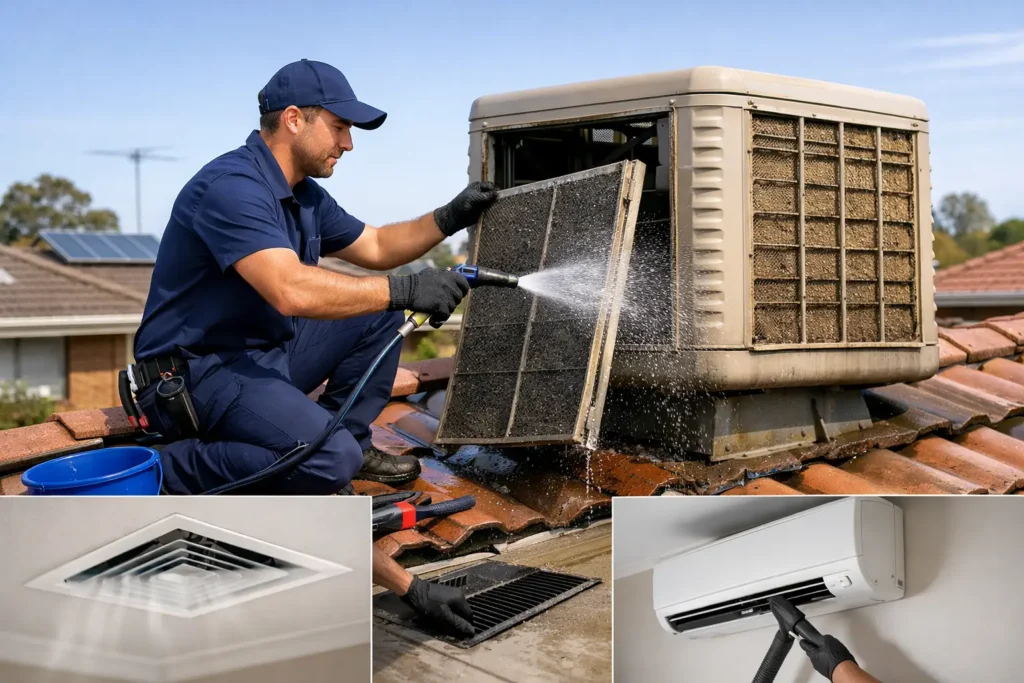
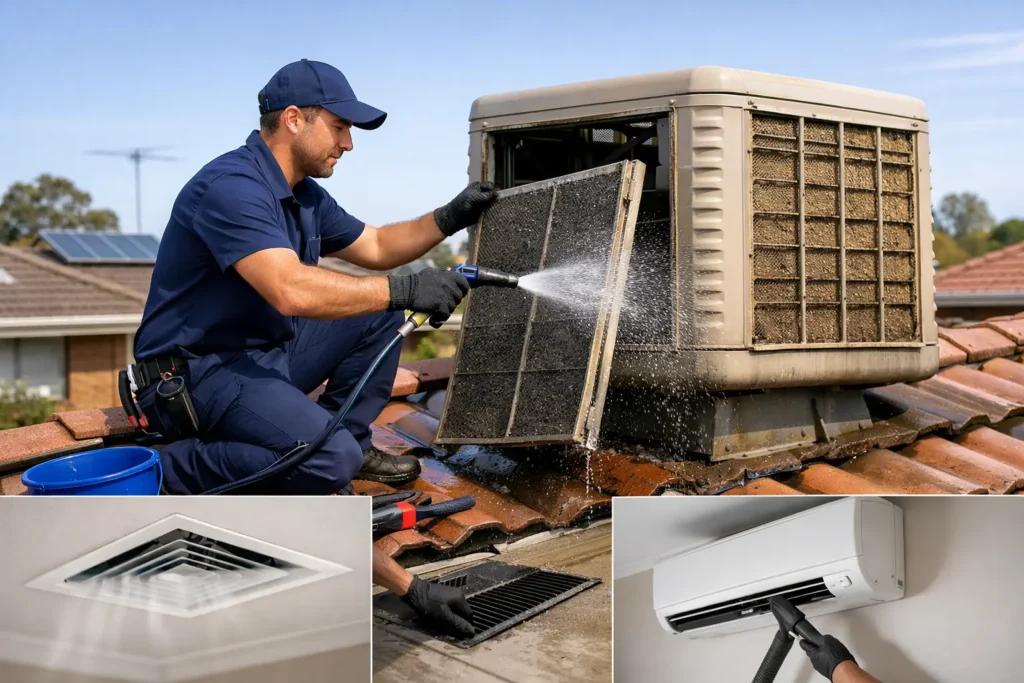
If your evaporative cooler smells musty the moment it starts, pushes out weak airflow, or leaves dust around the vents, the problem usually is not the weather – it is buildup inside the system. Evaporative cooler cleaning is one of the most overlooked maintenance jobs in Australian homes and commercial properties, yet it has a direct impact on air quality, cooling performance and the lifespan of the unit.
Unlike refrigerated systems, evaporative coolers rely on water, pads and constant airflow to do their job. That makes them effective in dry heat, but it also means dirt, mineral deposits, mould and bacteria can build up surprisingly fast. Once that happens, the system does not just cool less efficiently. It can start spreading stale odours, fine dust and contaminants through the property.
Why evaporative cooler cleaning matters
A dirty evaporative cooler rarely fails all at once. It usually declines in small ways. Airflow drops off. Cooling becomes uneven. The unit uses more water than expected. There may be a damp smell, or a grinding sound from a fan working harder than it should. These are all signs that cleaning has moved from a nice-to-have to a necessary maintenance job.
For households, the biggest concern is often indoor air quality. If the pads are clogged, the reservoir is dirty, or the vents have collected dust, those contaminants can circulate through bedrooms, living areas and hallways. For property managers and commercial operators, there is another layer – poor maintenance can lead to avoidable breakdowns, tenant complaints and reduced system efficiency during peak demand.
There is also a hygiene issue that should not be ignored. Standing water, organic debris and warm conditions can create an environment where mould and bacteria thrive. It depends on the age of the unit and how often it is used, but once microbial growth takes hold, a quick rinse is rarely enough.
What builds up inside an evaporative cooler
Most people assume the pads are the only part that gets dirty. In reality, several components can collect debris and affect performance.
The cooling pads often trap dust, pollen and minerals from the water supply. If they are heavily clogged, air cannot pass through properly, which reduces cooling efficiency. The water reservoir can collect sludge, scale and organic matter over time, particularly if seasonal shutdowns are skipped or rushed. Pumps and water lines can also develop blockages, while fan blades and internal housing tend to gather fine dust that gets redistributed once the unit is running.
Then there is the ducting and vent side of the system. Even if the cooler itself is cleaned, dust inside connected vents can still blow into occupied areas. That is why proper inspection matters. Cleaning one section while ignoring another often leads to disappointing results.
Evaporative cooler cleaning signs you should not ignore
Some warning signs are obvious, while others are easy to dismiss until the problem becomes expensive.
A musty or sour smell is one of the clearest indicators that the unit needs attention. Visible dust around ceiling vents is another common sign. If the airflow feels weaker than normal, or certain rooms are not cooling as well as they used to, dirty pads or internal buildup may be restricting performance. Unusual water use, inconsistent moisture levels, or pooling water can also point to blockages or maintenance issues.
Noise is worth paying attention to as well. A fan straining against dust buildup or worn parts often becomes louder over time. That does not always mean a major mechanical fault, but it does mean the system should be checked before the issue escalates.
What proper cleaning should include
A basic wipe-down is not the same as a professional clean. Effective evaporative cooler cleaning should deal with both hygiene and performance, not just surface dirt.
The process usually starts with isolating power and inspecting the unit for wear, scale and contamination. Cooling pads need to be assessed for condition, not just rinsed. In some cases they can be cleaned. In others, replacement is the smarter option, especially if they are brittle, mouldy or badly clogged. The reservoir should be emptied and cleaned thoroughly to remove sludge, sediment and mineral deposits.
The pump, float valve and water distribution components should also be checked to make sure water is flowing correctly across the pads. Fan blades and internal surfaces need cleaning to reduce dust circulation and restore airflow. If the system connects to ducting, vents and outlets may also require attention so the cleaned air path is not compromised by buildup further downstream.
For older systems, the trade-off is straightforward. A more detailed service may cost more upfront, but it can prevent poor cooling, repeated call-outs and shortened equipment life.
DIY cleaning versus professional service
There are parts of evaporative cooler maintenance that capable property owners can manage, especially basic seasonal checks. Clearing obvious debris, checking for visible pad damage and making sure the unit is drained at the end of the season are sensible steps.
But full cleaning is different. Roof-mounted units can be difficult and unsafe to access without the right equipment. Internal contamination is easy to miss, and if mould, heavy scale or dirty ducting are involved, the problem often goes beyond what can be handled with household products. There is also the risk of damaging pads, pumps or electrical components through over-wetting or improper handling.
For commercial sites, schools and managed properties, professional servicing is usually the better decision. It supports compliance, reduces disruption and gives decision-makers a clearer picture of the system’s condition. For homeowners, it often comes down to confidence and results. If you want the unit cleaned thoroughly, checked for faults and restored to proper operation, specialist service is worth it.
How often should an evaporative cooler be cleaned?
There is no single schedule that suits every property. Usage patterns, local dust levels, water quality and the age of the system all affect how quickly buildup occurs.
As a general rule, evaporative coolers should be inspected and cleaned before the cooling season begins, then checked again if performance drops during heavy summer use. Homes in dusty areas, properties near construction activity, and commercial buildings with higher operating hours may need more frequent servicing. End-of-season shutdown maintenance is also important, because leaving dirty water and debris sitting in the unit over cooler months can create avoidable problems by the time summer returns.
If the system has not been serviced for more than a year, there is a good chance cleaning alone will improve both airflow and freshness.
The indoor air quality connection
Clean cooling is not just about comfort. It is about what is moving through the building. When an evaporative cooler is dirty, the system can circulate dust, mould spores and stale odours through occupied spaces. That matters in family homes, but it matters just as much in childcare settings, offices, retail sites and shared commercial environments.
A properly cleaned system supports better airflow and a cleaner indoor environment. It can also reduce the amount of dust settling around vents and surfaces. While no HVAC cleaning service should promise miracle health outcomes, maintaining clean equipment is a sensible and practical step for anyone concerned about comfort, cleanliness and everyday air quality.
When cleaning is not enough
Sometimes cleaning reveals a bigger issue. Pads may be beyond recovery. Water distribution may be uneven due to worn components. Ducting may be heavily contaminated, or the unit may have corrosion and age-related faults that cleaning alone cannot solve.
That is why inspection matters as much as the cleaning itself. A trustworthy technician should tell you when a system will benefit from cleaning and when it needs repair, part replacement or broader HVAC attention. Transparent advice saves time and money, especially for property owners trying to avoid repeat issues.
For Melbourne homes and businesses, seasonal heat can place real pressure on cooling systems. Getting ahead of maintenance before the hottest period is usually far cheaper than dealing with a breakdown when the temperature spikes.
If your unit smells off, airflow has dropped, or you simply cannot remember the last proper service, now is the time to act. Top Air Duct Cleaning provides dependable, results-driven evaporative cooler and HVAC cleaning services with transparent quotes, professional workmanship and same-day availability where possible. To arrange a free quote, call 0457 666 469 or visit www.topairductcleaning.com.au. Clean air and reliable cooling start with a system that is properly looked after.