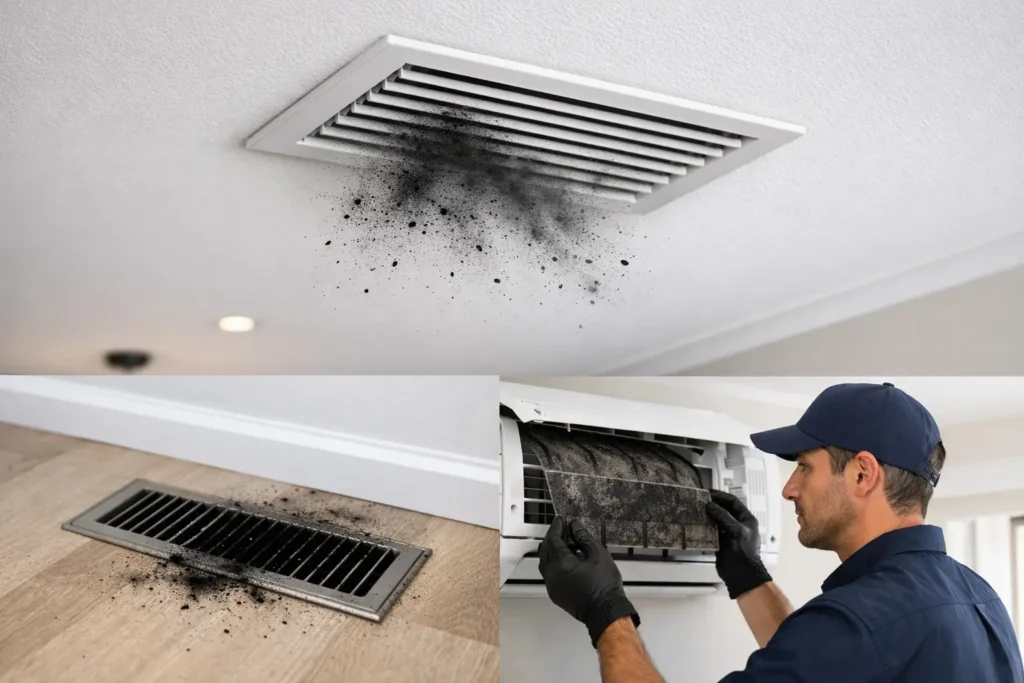
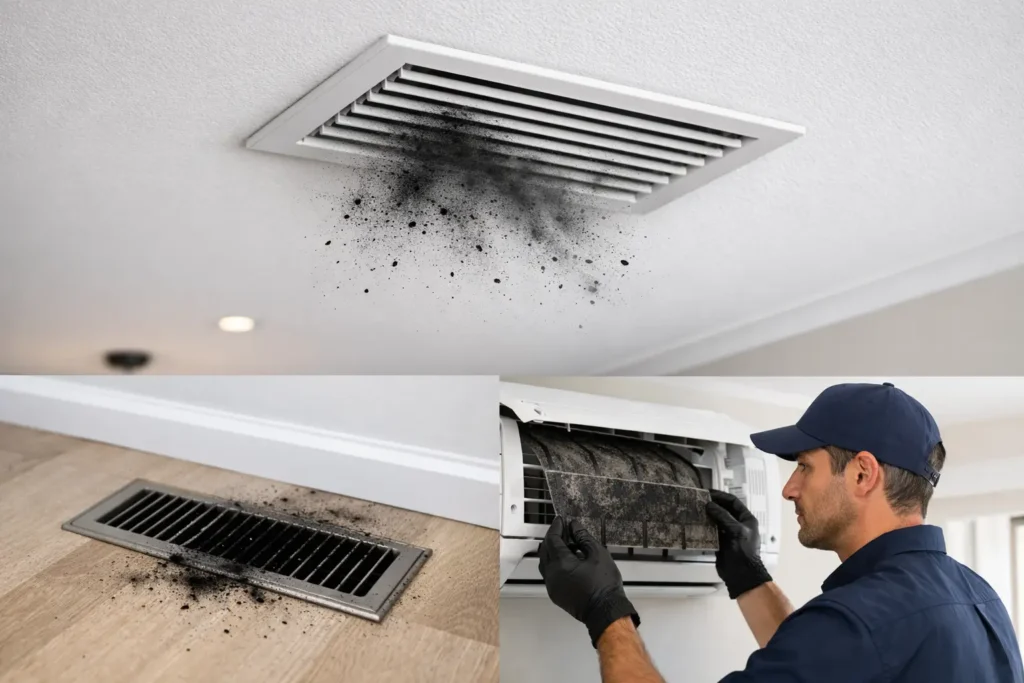
Black dust around a ceiling vent, floor register or return-air grille is not something to wipe away and ignore. If you are asking, “why is black dust coming from vents?”, the answer is usually that airborne particles are being drawn through, or pushed out of, your heating and cooling system. The source may be harmless household residue, but it can also point to soot, mould, a neglected duct system or an appliance fault that needs prompt attention.
The pattern matters. A light grey film that returns slowly is often ordinary dust. Black marks that build up quickly, appear in streaks around the vent, or come with a stale or burnt smell deserve a closer inspection. For Melbourne homes and commercial properties, identifying the source early helps protect indoor air quality and prevents a small cleaning issue becoming a larger HVAC or safety concern.
Why is black dust coming from vents?
Black dust is usually a mixture rather than one single substance. Heating and cooling systems constantly move air through return grilles, filters, ductwork and supply vents. Any fine particles suspended in that air can settle inside the system and then collect at the vent edges where airflow changes direction.
In many properties, the black colour comes from very fine carbon-based particles. These are smaller and stickier than normal household dust, which is why they can leave a dark shadow on white ceilings, walls and vent covers. A blocked filter, dirty return duct or poorly maintained system can make the buildup more obvious, but the HVAC system is not always the original source.
Soot from candles, cooking or combustion
Burning candles, incense, fireplaces, wood heaters and poorly vented gas appliances can release fine soot into indoor air. Even occasional candle use can create black residue in tightly sealed rooms, especially if several candles are burned for long periods. Frying, grilling and cooking without effective kitchen exhaust can produce similar fine particles.
Your return-air vents draw this contaminated air back into the system. The particles can then settle on filters, duct interiors and outlet grilles. If black dust is most noticeable near the kitchen, living room fireplace or rooms where candles are used, soot is a likely contributor.
A black, greasy film near kitchen exhaust vents is especially common. In commercial kitchens, it may be grease-laden residue rather than standard dust. This requires proper exhaust cleaning, as accumulated grease can affect performance and create a serious fire risk.
Filtration soiling, sometimes called ghosting
Filtration soiling occurs when very fine airborne particles are attracted to cooler surfaces around vents, wall studs and ceiling framing. The particles adhere to these areas and create dark lines or smudges, often mistaken for mould. It is sometimes called ghosting because the marks can trace the structure behind a wall or ceiling.
This is more likely during winter heating, when temperature differences are greater. It can be worsened by candle soot, tobacco smoke, unvented combustion, a dirty HVAC filter or high levels of household dust. Cleaning the vent cover alone may improve its appearance, but the marks can return unless the particle source and airflow issues are addressed.
Mould growth around a vent
Mould can look black, dark green or brown, but colour alone cannot confirm it. Where moisture, condensation and organic dust are present, mould may grow on or around a vent cover, in a damp ceiling cavity, or within sections of poorly insulated ductwork.
Look for a musty smell, fuzzy or spotty growth, water staining, condensation, peeling paint or repeated marks in bathrooms, laundries and rooms with limited ventilation. Mould should not be brushed off dry, as this can release spores into the air. The moisture source must be corrected as well, whether it is roof leakage, condensation, poor extraction or an HVAC drainage problem.
Dirty filters and contaminated ductwork
A clogged filter cannot capture particles effectively and can restrict airflow through your system. Dust, pet dander, lint, pollen and fine soot may then accumulate more rapidly at registers and inside ducts. In some cases, a filter is missing, fitted incorrectly or too low in quality for the property’s needs.
Ductwork can also collect years of debris, particularly after renovations, nearby construction work, pest activity or long gaps between professional maintenance. When heating or cooling starts, settled material can be disturbed and carried towards the vents. If the black residue returns soon after cleaning, professional inspection and duct cleaning can identify whether the system itself is contributing.
Deteriorating materials or an equipment fault
Less commonly, black particles can come from degrading internal materials, such as old duct insulation, foam components or rubber belts in older equipment. A burnt odour, visible smoke, unusual noises, repeated tripping, or residue that appears suddenly after the system runs are warning signs.
Turn the system off and arrange a qualified HVAC technician if you suspect an electrical or mechanical problem. Do not continue operating equipment that smells burnt. For ducted gas heating, any concern about combustion, flue operation or carbon monoxide requires urgent professional assessment. Carbon monoxide has no smell or colour, so do not rely on the appearance of dust to judge safety.
Is black dust from air vents harmful?
It depends on what the dust contains, how much is present and who uses the building. A small amount of ordinary dust is not unusual, but repeated black buildup can irritate the eyes, nose and throat, particularly for people with asthma, allergies or other respiratory conditions. Children, older people and anyone with reduced immunity may be more sensitive to poor indoor air quality.
Soot and smoke particles are a concern because they are very fine and can remain airborne for longer. Mould may trigger respiratory symptoms in susceptible people. In workplaces, schools and rental properties, recurring vent contamination can also affect comfort, complaints and building maintenance obligations.
The practical rule is simple: if the residue is frequent, spreading, musty, oily or accompanied by a burnt smell, treat it as an issue to investigate rather than a cosmetic problem.
What you can safely check before booking a service
Start by switching the heating or cooling system off. Remove and inspect accessible vent covers, then wipe them with a damp microfibre cloth. Avoid dry dusting, which can send fine particles back into the room. Take photos before cleaning so you can see how quickly the marks return.
Next, check the air filter if your system has a user-accessible filter. Replace it with the correct type and size if it is visibly loaded with dust, but do not force a filter into place or use a higher-restriction product without checking that it suits your system. A filter change is basic maintenance, not a substitute for cleaning contaminated ducts.
Pay attention to where the dust appears and what happens when the system operates. Is it concentrated at return grilles or supply vents? Does it appear after heating, cooling or both? Are there candles, a fireplace, indoor smoking, renovations, pets, dampness or kitchen grease nearby? These details help a technician pinpoint the likely cause.
Do not spray deodoriser, bleach, mould killer or household chemicals into ductwork. These products can leave residues, damage components and circulate fumes through the property. Likewise, avoid pushing a domestic vacuum hose deep into a vent, as it can dislodge duct connections or damage flexible ducting.
When professional cleaning is the right next step
Professional duct cleaning is worthwhile when there is visible buildup, persistent dust despite filter changes, musty odours, reduced airflow, post-renovation debris or signs that dirt is being redistributed through multiple rooms. A proper service should focus on the full system, not just the visible grilles.
At Top Air Duct Cleaning, our technicians use professional cleaning methods and HEPA filtration equipment to remove built-up dust and contaminants from ducted heating and cooling systems. We also assess the condition of vents and accessible system components so customers can make informed decisions about filters, maintenance and any follow-up HVAC repairs.
For mould, suspected combustion soot, electrical smells or gas-heating concerns, cleaning may be only one part of the solution. The underlying moisture, appliance or ventilation issue must be resolved first. That approach delivers cleaner air and reduces the chance of black residue returning soon after the job.
A clean vent should stay clean for a reasonable period. If black dust keeps coming back, the most useful next step is to find out what your system is carrying and why. For a free quote across Melbourne and surrounding suburbs, call Top Air Duct Cleaning on 0457 666 469 or visit www.topairductcleaning.com.au.