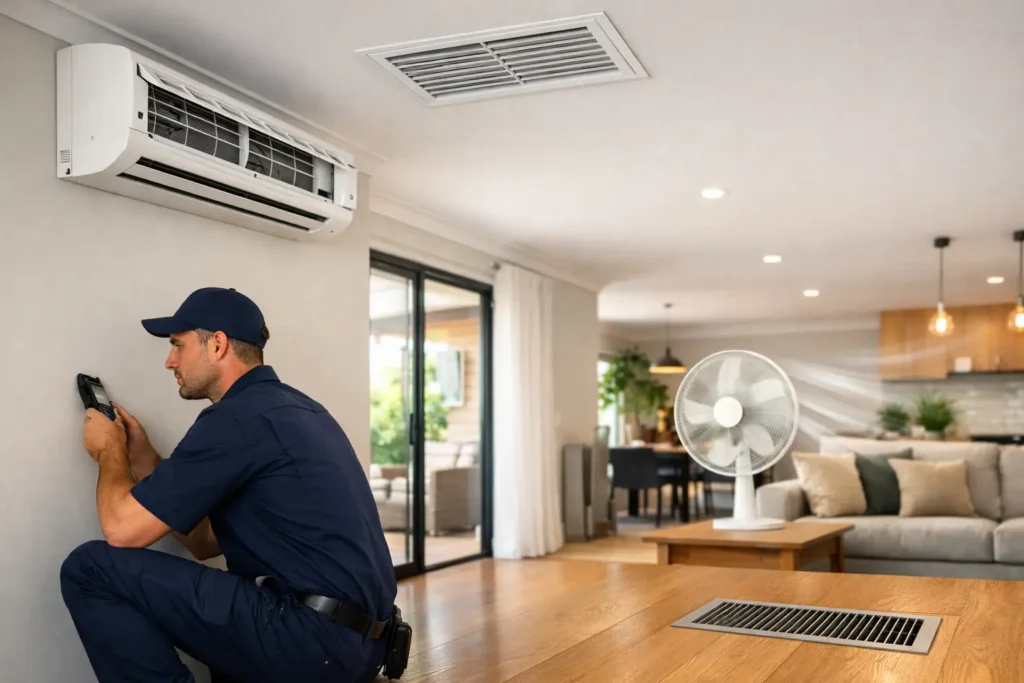
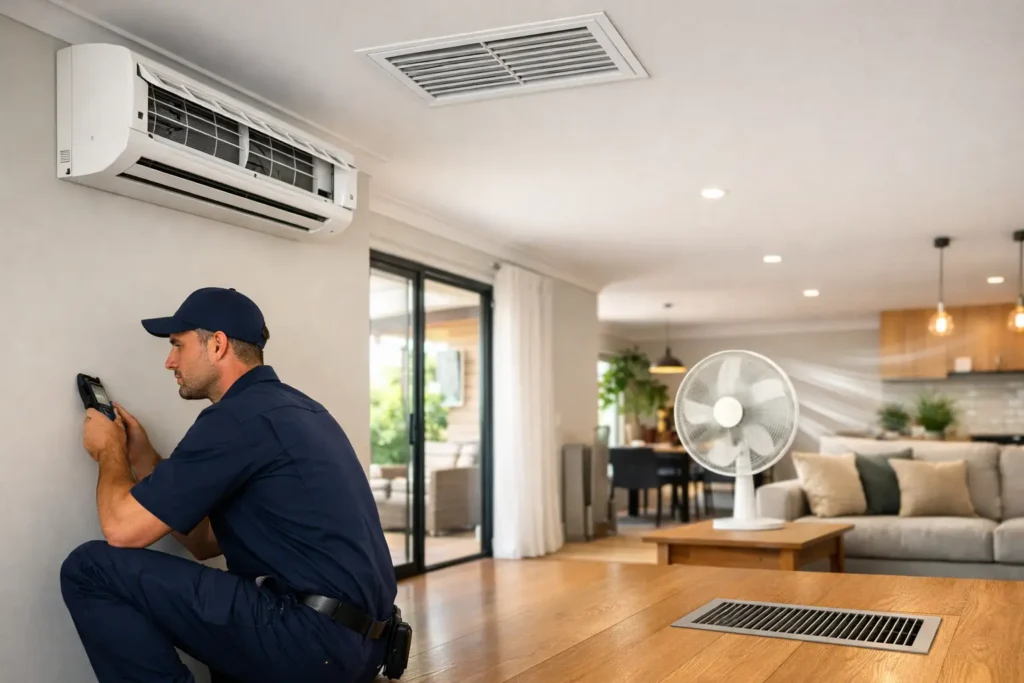
A room that feels stuffy by mid-afternoon, a bedroom that is always warmer than the rest of the house, or dust returning just after you clean are not small comfort issues. They can point to poor airflow. When air cannot move freely through your home, heating and cooling systems work harder, moisture lingers longer and indoor air can feel noticeably less fresh.
Knowing how to improve airflow in home starts with identifying where the restriction is happening. Sometimes the fix is as simple as clearing a blocked return-air grille. In other cases, dirty ductwork, an overdue filter change or an incorrectly balanced system needs professional attention. The best result usually comes from addressing airflow at every point: fresh air entering, conditioned air moving through the home and stale air leaving safely.
Start with the obvious airflow restrictions
Walk through each room while your ducted heating or cooling is running. Check that supply vents are fully open and that furniture, rugs, curtains or storage boxes are not covering them. A sofa pushed directly over a floor vent can reduce the air delivered to an entire section of a room. Likewise, closing too many vents in unused rooms can create extra pressure in the duct system and reduce efficiency elsewhere.
Return-air grilles deserve the same attention. These are the larger grilles that draw air back to the heating and cooling unit to be filtered and recirculated. If a return grille is obstructed by furniture, laundry, pet hair or a heavy coating of dust, the system cannot pull enough air through. That can leave rooms unevenly conditioned and place unnecessary strain on the fan motor.
Keep internal doors in mind too. Closed doors can prevent air from circulating, especially in homes where there is little clearance beneath the door. Opening doors while the system runs may improve comfort in problem rooms. If a bedroom must remain closed overnight, a technician can advise whether door undercuts, transfer grilles or a system adjustment are appropriate.
Replace or clean HVAC filters on schedule
A clogged filter is one of the most common reasons for reduced airflow. It traps dust, pollen, fibres and other airborne particles, but eventually that build-up restricts the passage of air. Your system may still turn on, yet it will take longer to heat or cool the home and may produce weaker airflow from the vents.
Check the filter type recommended for your system and follow the manufacturer’s cleaning or replacement instructions. Homes with pets, smokers, ongoing renovations, nearby construction or allergy sufferers may need more frequent attention. There is a trade-off with very high-efficiency filters: they can capture finer particles, but an unsuitable filter can also restrict airflow. Choose a filter compatible with your unit rather than simply selecting the densest option available.
Split systems need regular filter cleaning as well. Dust-loaded filters reduce the volume of air leaving the indoor head unit and can contribute to unpleasant odours. If cleaning the accessible filters does not restore performance, the internal coil, fan barrel or drain components may require a professional clean.
Use fans to support, not fight, your system
Ceiling fans are an effective and affordable way to make rooms feel more comfortable without forcing the air conditioner to do all the work. In warmer weather, they should generally rotate anticlockwise to create a downward breeze. In cooler weather, a gentle clockwise setting can help move warm air that has gathered near the ceiling without creating a direct draught.
Portable fans can help move air into stagnant corners, but they are a temporary solution rather than a cure for a ventilation problem. Positioning a fan near an open window can help draw cooler air in during the evening, while another fan facing outward at a different opening can help push warm indoor air out. This works best when outdoor conditions are cooler and cleaner than the air inside.
Do not run fans merely to circulate air during bushfire smoke events, high-pollen days or when outdoor humidity is excessive. In those conditions, keeping windows closed and relying on correctly filtered mechanical cooling may be the better choice.
Improve natural ventilation at the right time
Melbourne weather can change quickly, so natural ventilation needs a practical approach. Opening windows on opposite sides of the home creates cross-ventilation, allowing air to travel through rather than sitting still near one opening. Opening a high window or clerestory window can also help hot air escape because warm air rises.
For security, weather or noise reasons, leaving windows wide open may not be realistic. Window locks, security screens and limited opening positions can still allow controlled airflow. In bathrooms and laundries, use exhaust fans during and after showers or clothes drying to remove humid air before it settles on walls, ceilings and windows.
If condensation keeps returning, do not assume airflow alone will solve it. Persistent moisture can also be caused by roof leaks, plumbing leaks, inadequate insulation or moisture entering through the building structure. Mould should be treated seriously, with the moisture source identified and corrected.
Check exhaust fans and external vents
Bathrooms, kitchens and laundries produce a large share of the moisture and airborne contaminants in a home. An exhaust fan that is noisy, weak or venting into the roof cavity rather than outdoors will not provide the protection you need. Over time, dust and lint can coat fan blades and grilles, reducing extraction performance.
Kitchen rangehood filters also need regular cleaning. Grease build-up restricts air movement and can become a hygiene and fire-safety concern. Commercial kitchens require a more rigorous maintenance approach because grease-laden exhaust systems face far greater loads and must operate reliably to protect staff, customers and the premises.
Outside, inspect vent covers for leaves, nesting material and other blockages. Never block fixed ventilation openings in an effort to stop draughts. These openings may be necessary for safe appliance operation, subfloor ventilation or moisture control. If an external vent is damaged or repeatedly blocked, arrange an inspection rather than sealing it off.
When duct cleaning can improve airflow in home
Ducted systems depend on clear pathways between the unit, ducts, supply vents and return-air grilles. Dust, building debris, pet hair and loose material can accumulate over time, particularly after renovations or in properties that have not had duct maintenance for years. Contaminated ducting does not always cause a dramatic airflow loss, but significant build-up, collapsed flexible duct, disconnected sections or blocked grilles certainly can.
Professional duct cleaning removes accumulated debris using specialist equipment designed to capture particles rather than redistribute them through the home. It can also reveal issues that cleaning alone cannot fix, such as crushed ducts, damaged insulation, poor connections or undersized return-air pathways. Those faults may require HVAC repair or system balancing by a qualified technician.
A professional inspection is particularly worthwhile if you notice weak airflow from several vents, heavy dust around grilles, musty odours when the system starts, unexplained allergy symptoms indoors or a sharp rise in heating and cooling running costs. Property managers and facility teams should also consider maintenance before seasonal demand puts extra pressure on systems.
Avoid quick fixes that create bigger problems
It is tempting to close vents, block gaps or use heavily scented products to mask stale air. These measures can make a problem less visible without improving the air itself. Closing too many vents can increase system pressure, while fragrances may irritate people with asthma or chemical sensitivities.
Be cautious with do-it-yourself work inside ducting and electrical exhaust fans. Flexible ducts can tear easily, and incorrect handling can dislodge insulation or worsen blockages. Basic cleaning of accessible grilles and filter maintenance is sensible. Internal duct cleaning, fan servicing and fault diagnosis are best left to insured professionals with the right equipment.
Healthy airflow is not about creating a constant draught. It is about delivering conditioned air where it is needed, removing moisture and pollutants where they are produced, and keeping the system clean enough to operate efficiently. Small checks done regularly can prevent the stuffy rooms, excess dust and avoidable wear that make a home less comfortable.
For a clear assessment of ducted heating, cooling vents, exhaust fans or indoor air quality in Melbourne, contact Top Air Duct Cleaning for a free quote on 0457 666 469 or visit www.topairductcleaning.com.au. A cleaner, better-functioning ventilation system helps your home feel fresher in every season.