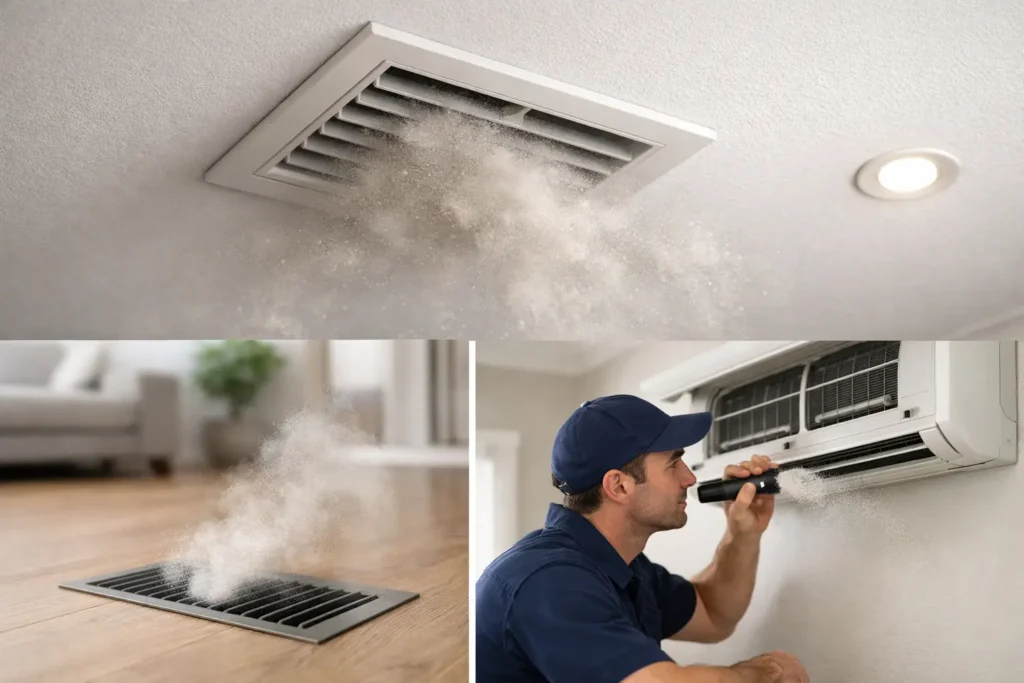
A clean home can develop a dusty film surprisingly quickly when dust coming through air vents is part of the problem. You may notice it on furniture beneath ceiling registers, around return-air grilles, or across rooms that have just been vacuumed. While some household dust is normal, visible dust blowing from vents is a sign worth investigating – especially if it is affecting comfort, allergies, or the performance of your ducted heating and cooling system.
Why dust comes through air vents
Your HVAC system moves large volumes of air through the property every day. Along with conditioned air, it can circulate fine particles from living areas, roof spaces, ductwork, filters and outdoor air leaks. If the system is clean, sealed and properly maintained, most of that material should be captured or remain settled inside the ducting. When it is not, dust can find its way back into occupied rooms.
The most common cause is dust buildup inside supply ducts and return-air pathways. Over time, normal household particles such as skin cells, fibres, pet dander, pollen, soil and cooking residue can collect along duct surfaces. Each heating or cooling cycle may disturb some of that material, particularly when airflow is strong or the ducts have not been professionally cleaned for years.
A dirty or poorly fitted filter can make the issue worse. Filters are designed to protect the system by trapping airborne particles before they reach sensitive components. If a filter is clogged, damaged, too low-grade for the household’s needs, or incorrectly installed, air can bypass it. This allows dust to build up in the system and reduces airflow at the same time.
Duct leaks are another common culprit. In roof cavities and underfloor spaces, unsealed joins or damaged flexible ducting can draw in dust from areas that are not part of the conditioned space. This is particularly relevant in older Melbourne homes, where ductwork may have shifted, deteriorated or been affected by renovation work, pests or roof-space debris.
Is dust coming through air vents a health concern?
Not all vent dust is dangerous, but it should not be ignored when it is frequent or excessive. Fine dust can irritate the eyes, nose and throat, and it may aggravate symptoms for people with asthma, hay fever or other respiratory sensitivities. Homes with pets, smokers, young children or occupants with allergies often notice the effects sooner because the indoor air contains more particles or because occupants are more sensitive to them.
The concern rises when dust is accompanied by a musty smell, visible mould around vents, water damage, pest activity, or dark debris that returns soon after cleaning. These signs do not automatically mean mould is growing throughout the duct system, but they do warrant a professional inspection. Moisture, restricted airflow and dirty components can create conditions where mould growth becomes more likely.
For commercial sites, schools and property-managed buildings, the issue is also operational. Dusty vents can lead to complaints from tenants, staff or customers, while blocked filters and dirty system components can put extra strain on heating and cooling equipment. A clean, well-maintained HVAC system supports a healthier and more presentable indoor environment.
Signs the problem is inside the ductwork
Dust on the outside of a register can simply be wiped away. The more telling question is how quickly it returns and what else is happening with the system. A professional duct inspection is sensible when you notice dust collecting around vents within days, reduced airflow in certain rooms, uneven heating or cooling, unpleasant odours, or an increase in allergy symptoms when the system is running.
It is also worth checking whether the dust appears only when heating or cooling starts. If so, the source is more likely to be linked to the HVAC system than everyday activity in the room. Return-air grilles deserve particular attention because they pull air – and airborne dust – back towards the unit. A heavily soiled return grille or filter often points to a wider cleaning and maintenance need.
Keep in mind that a vent can be the exit point without being the original source. Construction dust, recent carpet replacement, renovation work, dirty roof cavities, open windows during windy weather and heavy traffic near the property can all increase the airborne particles available for the system to circulate.
What you can do before booking a service
Start with the simple checks that are safe and accessible. Turn the system off, remove and inspect the return-air filter according to the manufacturer’s instructions, and replace or clean it if it is due. Disposable filters should not be vacuumed and reused unless the manufacturer specifically says they are washable. Using the wrong replacement filter can restrict airflow, so choose one that suits your unit’s specifications.
Wipe visible dust from supply and return grilles using a damp microfibre cloth. Vacuum around the external vent opening with a brush attachment, taking care not to push debris deeper into the duct. Regular household cleaning will reduce the amount of dust available to circulate, particularly around return-air points, soft furnishings and entryways.
However, avoid trying to clean deep into the ducts with a household vacuum, broom, compressed air or loose brush. These methods can dislodge contaminants without removing them, damage flexible ducts, or spread dust further through the home. They also cannot properly address dust on internal components such as the fan, coils or return-air pathways.
When professional air duct cleaning is the better answer
If dust is repeatedly coming through vents after basic cleaning and a filter change, professional duct cleaning provides a more complete solution. The right process does more than clean the visible grille. It targets the duct runs, return-air sections and accessible system components where dust has accumulated.
A quality service should use professional equipment designed to capture debris as it is removed, rather than simply blowing it through the system. HEPA filtration is especially valuable because it helps contain fine particles during the cleaning process. Technicians should also assess visible duct condition, check for likely leakage points and identify issues that may need repair by a qualified HVAC technician.
There is a practical trade-off here. Duct cleaning cannot stop new dust from entering a property, and it will not fix a severely damaged duct system on its own. But when internal buildup is the cause, cleaning can significantly reduce the dust load being recirculated, improve airflow and help heating and cooling equipment operate more efficiently. Ongoing filter replacement and regular maintenance are what keep the benefit going.
Preventing dusty vents from returning
The best prevention plan depends on the property. A household with pets or allergy sufferers may need more frequent filter checks than a low-occupancy home. A commercial kitchen, childcare centre or busy office may need a more structured cleaning schedule because of higher use and greater expectations around air quality.
For most properties, focus on keeping filters maintained, reducing dust at the source and having ducted systems inspected when performance changes. Seal gaps around roof penetrations and access hatches where practical, control dust during renovations, and ensure return-air grilles are not blocked by furniture or stored items. If airflow has declined, do not assume the solution is simply a stronger filter – restriction, duct damage or dirty components may be contributing.
Top Air Duct Cleaning provides professional ducted heating and cooling cleaning for Melbourne homes and commercial properties, using advanced HEPA filtration equipment and careful cleaning techniques to remove built-up dust and improve indoor air quality. Our fully insured technicians provide transparent quotes and same-day service when available.
If dust keeps appearing around your vents, a proper inspection can replace guesswork with a clear solution. For a free quote, call Top Air Duct Cleaning on 0457 666 469 or visit www.topairductcleaning.com.au. Cleaner vents are not just about a tidier home or workplace – they help your heating and cooling system deliver the cleaner, more comfortable air it was designed to provide.
