
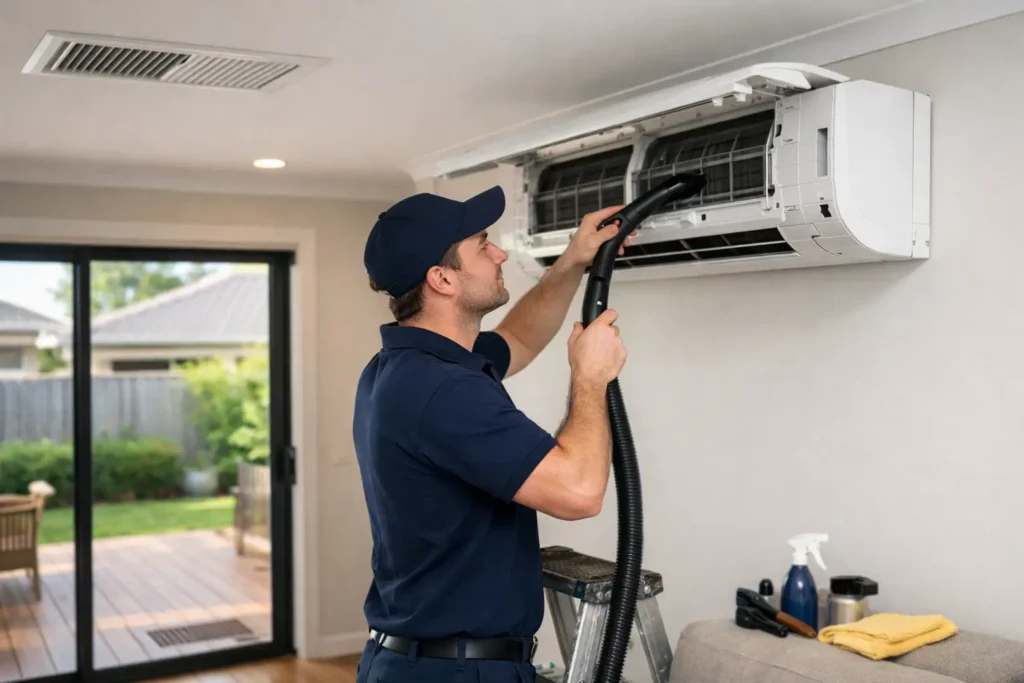
A split system can look clean from across the room while the parts that move air through your home tell a different story. Behind the front cover, filters collect dust, pet hair and fine debris. Deeper inside, the coil, fan barrel and drain system can hold grime and moisture. This Melbourne split system cleaning guide explains what you can safely maintain yourself, what requires a professional, and when a dirty unit is affecting comfort and indoor air quality.
Why split system cleaning matters
Your split system repeatedly draws room air across its filters and indoor coil. Over time, that process leaves a layer of dust on the components responsible for cooling, heating and circulating air. In Melbourne homes, this can be made worse by pollen, pets, nearby traffic, renovation dust and long periods with the windows closed.
A dirty split system does not always stop working immediately. More often, the warning signs build gradually: weaker airflow, musty odours when the unit starts, inconsistent temperatures, visible dust around the louvres, dripping water or higher running costs. When airflow is restricted, the system has to work harder to deliver the same result.
Cleaning is also about the air you live or work in. Dust and allergens caught in the unit can be recirculated through bedrooms, living areas, classrooms and offices. If moisture remains around a dirty coil or drain tray, mould growth can become a concern. A properly cleaned system supports cleaner airflow, more reliable performance and a more comfortable indoor environment.
What you can clean safely at home
Regular filter care is the most useful task for most property owners. It is simple, low-risk and helps prevent excessive build-up between professional services.
First, turn the split system off at the remote and isolate power if practical. Open the indoor unit’s front cover gently and remove the mesh filters according to the manufacturer’s instructions. Take them outside, vacuum loose dust with a soft brush attachment, then rinse them with lukewarm water. Avoid harsh cleaners, high-pressure water and scrubbing that could damage the filter mesh.
Allow the filters to dry completely in a shaded, well-ventilated area before reinstalling them. Fitting damp filters back into the unit can introduce unnecessary moisture. While the filters are out, use a dry microfibre cloth to wipe the front cover, accessible louvres and surrounding wall area.
For many households, cleaning filters every one to three months is sensible. A home with pets, smokers, young children, allergies or frequent use may need more frequent attention. In a lightly used guest room, the interval may be longer. The best guide is the filter itself: if it is visibly coated in dust, it is time to clean it.
Do not spray cleaners into the indoor head
Consumer sprays can mask odours without removing the grime causing them. They can also leave residue on the coil, fan barrel or electrical components. Never insert tools into the unit, pull apart internal covers, or pour water into the indoor head. These methods can damage fins, disrupt drainage or create an electrical safety risk.
The outdoor condenser also needs clear space to operate. Keep leaves, grass clippings, stored boxes and garden items away from it, and ensure nothing blocks the intake or discharge areas. Beyond a light external wipe-down, leave detailed outdoor unit cleaning to a trained technician.
When professional split system cleaning is needed
A professional clean reaches the areas behind the filters where household maintenance cannot. This commonly includes the evaporator coil, fan barrel, drain tray, drain line, louvres and internal housing. These surfaces need the right tools, controlled water use and careful protection of nearby walls, flooring and electronics.
Book a professional service if your unit has a persistent musty smell, visible mould, weak airflow after filter cleaning, water leaks, black marks around the vents or ongoing dust discharge. A system that makes unusual noises, struggles to cool or heat, or trips power should also be assessed promptly. Cleaning may resolve a contamination or airflow issue, but it is not a substitute for repairing a faulty motor, refrigerant leak or electrical component.
Professional cleaning is particularly worthwhile before summer and winter, when Melbourne households rely most heavily on air conditioning. For a regularly used home system, an annual professional clean is a practical benchmark. High-use commercial spaces, rental properties, childcare settings and homes with vulnerable occupants may benefit from more frequent servicing based on occupancy, usage and air quality conditions.
What a proper professional clean should involve
A quality split system clean is more than removing filters and applying deodoriser. The technician should inspect the condition of the indoor unit, protect the work area and clean the parts where dust and moisture accumulate. HEPA filtration equipment helps capture fine particles during the process rather than spreading them back into the room.
The internal coil and fan barrel are key areas. Even a thin coating of dirt can reduce airflow and encourage odours. The condensate tray and drain line also deserve attention because blocked drainage can lead to water leaks, staining and mould risk. Once cleaning is complete, the unit should be checked for normal airflow, drainage and operation.
Ask what is included before you book. Transparent pricing and a clear scope help avoid a service that only covers the filters you could have cleaned yourself. For commercial sites, it is also useful to discuss access requirements, the number of units, operating hours and whether work needs to be completed outside normal business hours.
Signs your split system is affecting indoor comfort
Not every dusty room is caused by the air conditioner, but the split system is worth checking when symptoms appear soon after it runs. A stale or damp smell on start-up can point to build-up around the indoor coil, fan or drain area. If family members notice more sneezing, irritated eyes or coughing while the system is operating, accumulated dust and allergens may be contributing.
Reduced airflow is another common clue. If you need to lower the temperature further than usual or run the system longer to cool the same room, clean filters may help. If the problem remains after filter maintenance, the internal components may need professional attention. In some cases, the cause could be incorrect sizing, a mechanical fault or poor room insulation, so an honest assessment matters.
Water dripping from the indoor unit should not be ignored. It may be caused by a blocked drain, but it can also relate to installation, insulation or refrigeration issues. Turn the unit off if water is running onto walls, furniture or electrical points, then arrange an inspection.
A practical maintenance routine for Melbourne properties
The most effective approach is regular, simple care rather than waiting for a strong odour or leak. Check filters during peak heating and cooling seasons, keep the outdoor unit clear, and listen for changes in airflow or noise. If you manage multiple properties, record cleaning dates for each unit so maintenance does not depend on tenant reports alone.
For landlords and property managers, a clean split system also protects the property presentation. Dusty louvres, mould marks or water staining can quickly become an end-of-tenancy dispute. Scheduling preventative cleaning before a new tenancy, before peak season or after renovation work is often easier and less disruptive than responding to a complaint.
A clean air conditioner should feel like a quiet part of a well-maintained property: it starts without a musty smell, moves air freely and drains properly. If your unit is overdue for a deeper clean, Top Air Duct Cleaning provides professional split system cleaning across Melbourne and surrounding suburbs, with fully insured technicians, transparent quotes and same-day service when available. Call 0457 666 469 or visit www.topairductcleaning.com.au for a free quote and give your home or workplace cleaner, fresher airflow.
