A wood fire should leave your lounge room warm, not leave you guessing about what is building up above the ceiling. If you are asking how often should a chimney be cleaned, the practical answer for most Melbourne homes is at least once a year, preferably before the colder months and before regular fireplace use begins. However, the right frequency depends on how often you burn wood, the type of fuel you use, and what a professional inspection finds inside the flue.
Chimney cleaning is not just a cosmetic job. Soot, creosote, ash, bird nests and other obstructions can restrict the path that smoke and combustion gases need to take out of your home. Left alone, that buildup can increase fire risk, cause smoky rooms and reduce the safe performance of your fireplace.
How often should a chimney be cleaned?
For a fireplace or wood heater that is used regularly through winter, annual chimney cleaning and inspection is the sensible baseline. This applies whether you have an open fireplace, a slow-combustion wood heater or another appliance vented through a chimney or flue.
A household that only lights a fire a few times each winter may not need a full sweep every year if the chimney is proven clean and clear at inspection. Even then, an annual check remains worthwhile. Chimneys can become blocked without being used, particularly after warmer months when birds, leaves, nesting material and weather debris can enter an uncapped flue.
Properties that burn wood most days during the heating season should consider cleaning more often. Heavy use produces more soot and creosote, especially when the fire is frequently smouldering overnight or burning damp timber. In these cases, a mid-season inspection can identify buildup before it becomes a more serious safety issue.
For property managers, schools and commercial premises with fireplaces or solid-fuel heaters, the schedule should reflect actual use and be documented as part of planned building maintenance. A reliable record makes it easier to protect occupants, respond to maintenance issues and plan work before the busy winter period.
Why chimney cleaning cannot be put off
The residue inside a chimney is not harmless dust. Creosote is a dark, sticky or crust-like deposit created when wood smoke cools and condenses in the flue. It can be combustible. The thicker the deposit, the greater the potential for a chimney fire if high heat or sparks ignite it.
Not every problem involves a dramatic fire. A partly blocked flue can stop smoke from drafting properly, sending odours, fine soot and smoke back into the room. You might notice a smoky smell after lighting the fire, black marks around the fireplace opening, or a fire that struggles to establish a steady flame. These symptoms affect comfort, but they can also indicate that the chimney is not venting as it should.
A professional clean also gives the technician a chance to identify visible concerns such as deteriorated flue components, loose debris, nesting activity or an unsuitable buildup level. Cleaning and inspection work together. Sweeping away soot is useful, but confirming the flue is clear and functioning safely is the real outcome homeowners need.
Signs your chimney may need cleaning sooner
The calendar is helpful, but it should not be your only trigger. Arrange an inspection promptly if smoke enters the room when the fireplace is operating, if there is a strong burnt or tar-like odour, or if you can see heavy black deposits around the firebox or damper area.
Poor draft is another common warning sign. A fire that is hard to light, continually goes out or fills the room with smoke may be affected by chimney buildup, a blockage or air-pressure issues in the home. Do not assume opening a window solves the underlying problem. A qualified technician can assess whether the flue needs cleaning and whether another fault requires attention.
You should also book a check after a chimney fire, even if it seemed minor and the fireplace still appears usable. High heat can damage internal components and leave remaining deposits that should not be ignored. The fireplace should stay out of use until it has been professionally assessed.
Other situations that warrant an earlier inspection include buying a home with an existing fireplace, moving into a long-vacant property, discovering birds or pests near the chimney, or noticing debris falling into the fireplace. These are practical reasons to check the system before the next fire is lit.
Your wood-burning habits change the schedule
The wood you burn has a direct impact on how quickly your chimney becomes dirty. Well-seasoned, dry hardwood burns hotter and cleaner than wet, green or treated timber. Damp wood creates more smoke, and more smoke means more opportunity for creosote to settle inside the cooler parts of the flue.
How you run the fire matters too. Restricting airflow so the wood smoulders for long periods can create dense smoke and heavier deposits. It may seem like a way to make fuel last longer, but the trade-off can be a dirtier chimney and poorer combustion. Burning suitable dry wood with adequate airflow helps reduce buildup, although it does not remove the need for cleaning.
Avoid burning household rubbish, painted timber, treated timber or manufactured wood products that are not approved for your appliance. These materials can release unpleasant or hazardous fumes, leave excessive residue and damage the flue over time. Your fireplace should be used only with the fuel specified by its manufacturer.
Cleaning is different from a quick visual check
Looking up from the fireplace opening cannot show the full condition of a chimney. Deposits can collect higher up the flue, where bends, cooler surfaces and restricted sections make them difficult to see. A torch inspection from below may spot obvious soot, but it cannot confirm that the entire passage is clear.
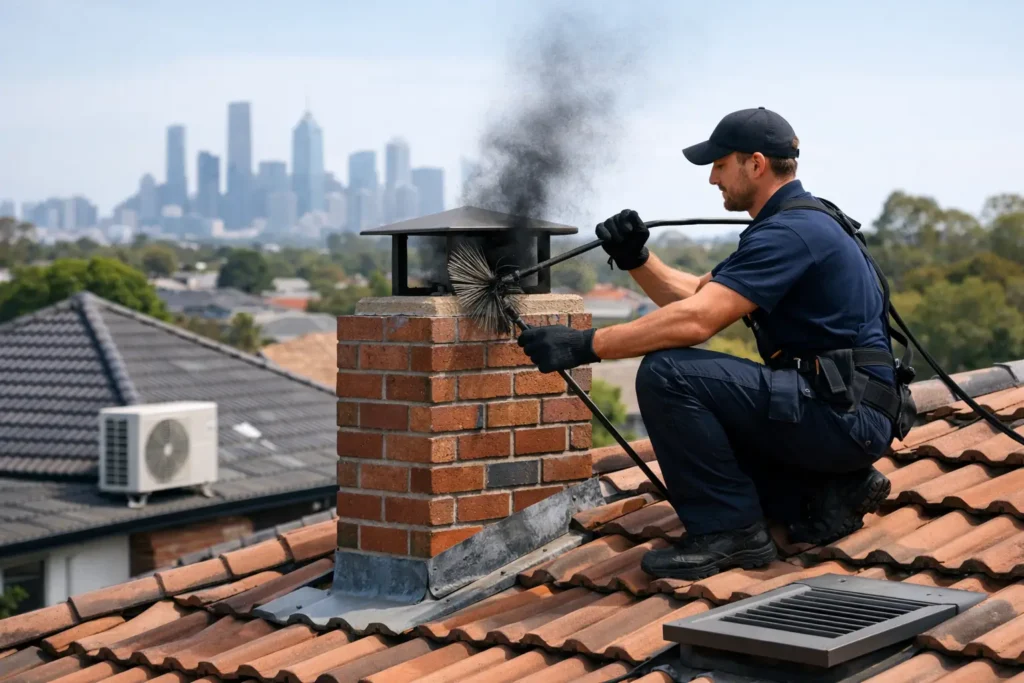
Professional chimney cleaning uses purpose-built equipment and containment methods to remove soot and residue while minimising mess inside the property. The work should focus on the firebox, flue and accessible areas where debris can collect, followed by an assessment of any visible concerns. For occupied homes and busy commercial sites, clean work practices matter just as much as the sweep itself.
Be cautious of treating a chimney clean as a simple DIY task. Apart from working at height, incomplete cleaning can leave dangerous deposits behind or push debris into areas where it continues to obstruct the flue. If you are unsure about the chimney’s condition, professional service is the safer decision.
A practical maintenance plan for Melbourne properties
The best time to arrange chimney cleaning is before winter, rather than after the first cold spell has everyone turning on their fireplace. Booking ahead gives you time to address any issues found and means your heating is ready when you need it.
If your fireplace has already been used heavily this season, it is still worth arranging a clean now. Do not wait for visible smoke problems. A professional can advise whether the chimney is suitable to keep using, whether a further inspection is required, and when your next service should be scheduled based on the amount of buildup found.
For landlords and facility managers, include chimney cleaning in the same maintenance planning as ventilation, exhaust systems and heating equipment. Each system affects the safety, comfort and air quality of the people using the building. Clear records and timely servicing prevent small maintenance jobs from becoming urgent disruptions.
A clean chimney supports safer fires, clearer airflow and a more comfortable home through winter. If your chimney is overdue, heavily used or showing any warning signs, Top Air Duct Cleaning can provide dependable chimney cleaning across Melbourne and surrounding suburbs. Call 0457 666 469 or visit www.topairductcleaning.com.au for a free quote and practical advice on the right service timing for your property.
