
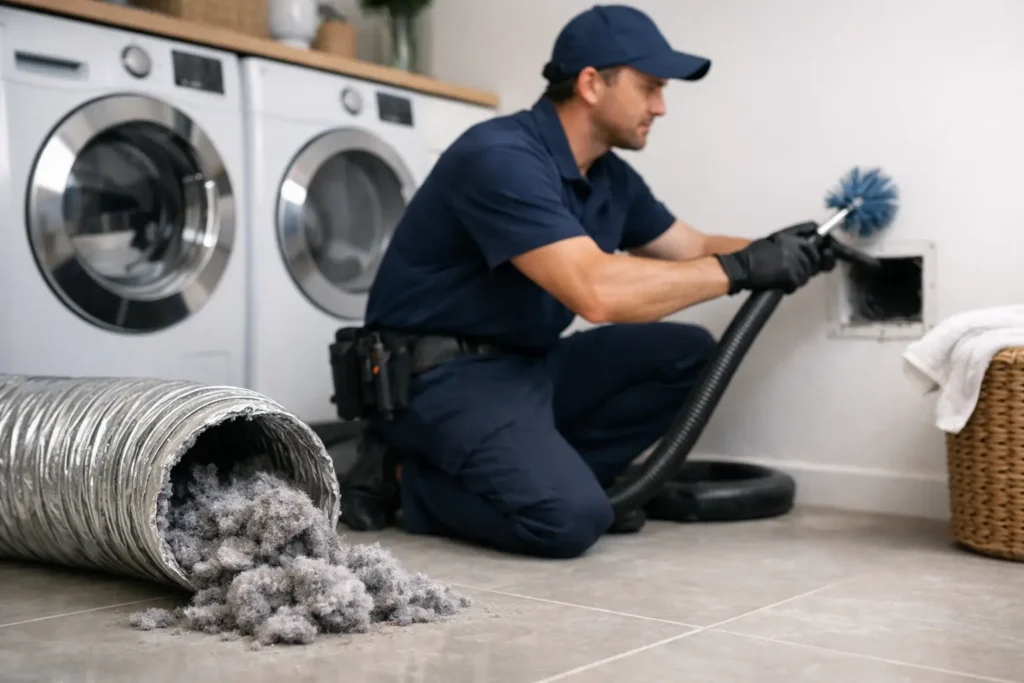
A dryer that suddenly takes two or three cycles to dry a load is not just frustrating. It can be a warning that lint is building up beyond the filter. Professional dryer vent cleaning removes the trapped fluff, dust and debris that restrict airflow through the ducting, helping your laundry operate more safely and efficiently.
For Melbourne homes, apartments, rental properties and commercial laundries, the vent is easy to forget because much of it is hidden behind walls, ceilings or cabinetry. The lint screen catches a portion of the fluff, but fine fibres still pass through and collect along the vent run. Left long enough, that buildup can create overheating issues, excess moisture and an avoidable fire risk.
Why dryer vents need professional attention
Every dryer relies on airflow. It draws in air, warms it and pushes moisture-laden air out through a vent. When that pathway is clear, clothes dry in the expected time and the appliance can release heat properly. When the pathway narrows with lint, the dryer has to work harder for longer.
That extra running time increases power use and places unnecessary strain on the appliance. More importantly, lint is highly combustible. If heat cannot escape as intended, a restricted vent can contribute to a dangerous overheating situation. Cleaning the lint filter after every load is essential, but it is not a substitute for cleaning the ductwork and external vent outlet.
Moisture is another concern. A blocked or partially blocked duct can cause damp air to linger in the laundry or discharge where it should not. In enclosed laundries, apartments and internal utility rooms, this can contribute to condensation, musty odours and conditions that support mould growth.
Signs your dryer vent may be blocked
The clearest sign is longer drying times. If a normal load that once dried in one cycle now needs another cycle, poor vent airflow is a likely cause. Clothing may also feel unusually hot at the end of the cycle, while the laundry itself can become hot, humid or smell slightly burnt.
Look outside as well. On a vented dryer, the external vent bonnet or grille should release a noticeable flow of warm air while the machine is running. Weak airflow, lint gathering around the outlet, a flap that does not open properly, or visible debris are all reasons to arrange an inspection.
Other warning signs include a dryer that shuts off unexpectedly, excess lint behind the machine, condensation on nearby windows or walls, and a sudden increase in electricity costs without a clear reason. None of these signs proves that the vent is the only problem. A faulty appliance, damaged duct or incorrect installation may also be involved. However, they should not be ignored.
What builds up inside a dryer vent?
Laundry lint is a mix of fabric fibres, hair, dust and particles released during washing and drying. Towels, fleece, bedding and heavily used workwear can produce significant amounts. Dryer sheets and softener residue can also leave a film that makes lint cling more readily to surfaces.
The design of the ducting matters too. Long runs, multiple bends, flexible foil-style ducting, crushed sections behind a dryer and poorly positioned outlets all reduce airflow. A short, straight metal duct is generally easier to maintain than a long path that travels through roof spaces or wall cavities.
External vents create their own issues. Dust, leaves, spider webs and insect activity can obstruct the outlet. In some properties, birds may attempt to nest near an unprotected vent. A professional clean should address the full airflow path, not only the section visible behind the dryer.
How often should dryer vent cleaning be booked?
There is no single interval for every property. A household that uses the dryer once or twice a week may need less frequent service than a family running daily loads, a shared apartment laundry or a commercial operation processing linen all day.
As a practical guide, most households should have the vent inspected every 12 months and cleaned when buildup or reduced airflow is found. High-use households, pet owners, property managers overseeing common laundry facilities and commercial operators may require cleaning every six months or more often.
The vent layout also changes the answer. A dryer positioned close to an external wall with a short duct is easier to keep clear. A unit connected to a long concealed run, especially one with several bends, deserves more regular checks. If drying times have changed, do not wait for the next scheduled service.
What a proper dryer vent cleaning service involves
A professional service begins with an assessment of the dryer connection, accessible ducting, vent route and external outlet. This helps identify crushed duct sections, disconnected joints, unsuitable materials and blockages that may be limiting airflow.
Using appropriate professional equipment, technicians remove accumulated lint and debris from the accessible vent system rather than simply pushing it further along the duct. HEPA filtration equipment is especially valuable when cleaning nearby ventilation areas because it helps contain fine dust and lint instead of redistributing it through the laundry.
The outlet is then checked for obstruction and airflow is assessed after cleaning. If the duct is damaged, excessively long, poorly installed or inaccessible, the technician should explain the issue clearly and outline the practical next step. Cleaning improves an existing vent, but it cannot fix unsafe duct design or a mechanical fault inside the dryer.
At Top Air Duct Cleaning, our approach is focused on the condition of the full ventilation pathway. We provide clear advice, professional workmanship and transparent quoting so property owners can make an informed decision before work begins.
What you can safely do between services
Regular care makes a real difference. Clean the lint filter before or after every load, depending on your manufacturer’s instructions, and wash the screen periodically if it has a residue that reduces airflow. Keep the area behind the dryer free from lint, dust and stored items, particularly cardboard boxes, clothing and cleaning products.
It is also worth checking that the dryer has enough clearance from the wall. Pushing it back too far can crush flexible ducting and restrict the airflow you are trying to protect. Inspect the outside vent cover from ground level where safe to do so, and remove obvious leaves or cobwebs around it.
Avoid dismantling concealed ducting or attempting to vacuum deep vent runs with unsuitable tools. Household vacuum attachments are rarely long or powerful enough to clean the complete system, and they can dislodge joints or leave compacted lint behind. If you notice a burning smell, smoke, repeated overheating or a dryer that is tripping power, stop using it and arrange qualified assessment promptly.
Extra considerations for rentals and commercial properties
For landlords and property managers, dryer ventilation should be part of routine property maintenance, particularly where dryers are supplied as part of the tenancy. Keeping service records supports safer operation and helps identify recurring issues caused by the duct layout or high laundry use.
Commercial laundries, salons, accommodation providers, childcare centres and sports facilities should treat vent maintenance as an operational safety task. Frequent use produces lint quickly, and downtime from an overheating dryer can disrupt staff, residents or customers. Planned inspection is usually more cost-effective than responding after an appliance failure.
In apartments and strata buildings, the vent route may pass through shared building spaces or terminate in locations that are not immediately accessible. Coordination with building management may be needed before work starts. This is another reason to engage an experienced contractor rather than relying on a quick visual check.
A clean dryer vent is a small maintenance task with meaningful benefits: better airflow, shorter drying times, reduced moisture and a safer laundry. If your dryer is working harder than it should, call Top Air Duct Cleaning on 0457 666 469 or request a free quote at www.topairductcleaning.com.au. Same-day service may be available across Melbourne suburbs.
