
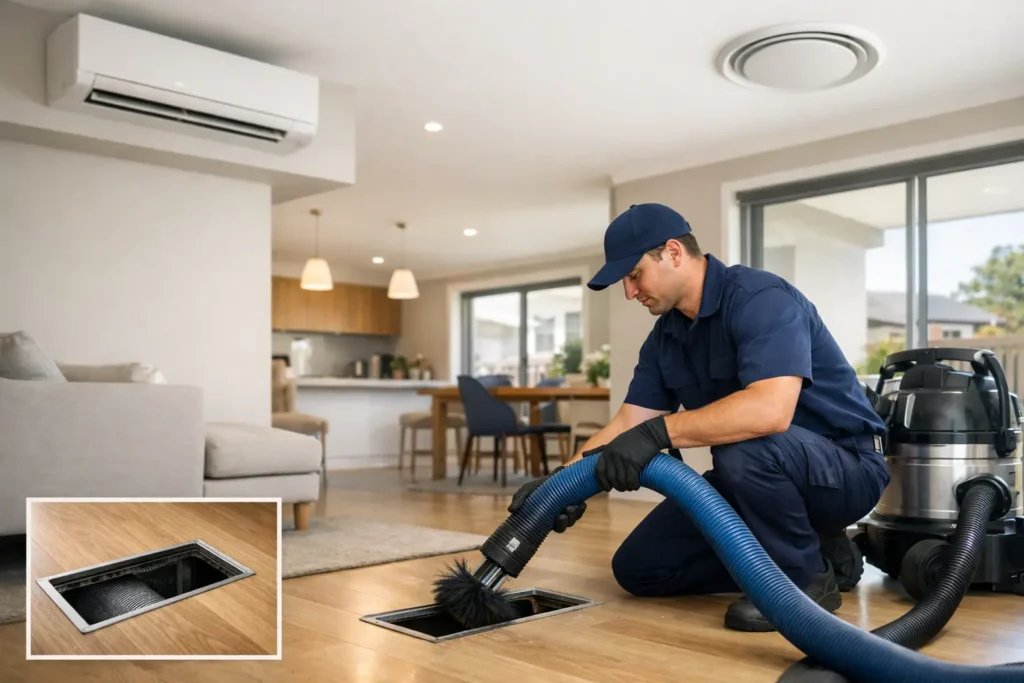
The dust on your furniture may not be coming from open windows alone. If it returns quickly after cleaning, your heating and cooling system could be circulating particles collected inside the ductwork. A professional residential duct cleaning service targets the hidden sections of your HVAC system where dust, pet hair, pollen and other debris can build up over time.
For Melbourne households, this is more than a cosmetic concern. Ducted heating and cooling are used through hot summers, cold mornings and unpredictable seasonal changes. When the system is carrying accumulated debris, it can affect airflow, household comfort and the quality of the air your family breathes indoors.
What a residential duct cleaning service actually does
Duct cleaning is not simply vacuuming the visible floor vents. A proper service addresses the ductwork connected to your heating and cooling system, including supply vents, return-air grilles and accessible internal components where debris collects.
Professional technicians use specialised agitation tools and high-powered HEPA filtration equipment to loosen and safely capture contaminants from the system. HEPA filtration matters because it helps contain fine dust during the cleaning process rather than releasing it back into the home.
The exact scope depends on the system and its condition. A newer, lightly used ducted system may require straightforward maintenance cleaning. An older property, a home with shedding pets, or a household that has recently completed renovations may have heavier contamination and need more detailed attention. A reliable contractor should inspect the system, explain what is included and provide transparent pricing before work starts.
Signs your ducted system may need cleaning
You do not need to wait for a complete airflow problem before arranging duct cleaning. In many homes, the signs are gradual and easy to dismiss until comfort declines.
Persistent dust around vents or on nearby furniture is one common signal. So are visible dust deposits on return-air grilles, a stale smell when the system starts, weak airflow in particular rooms, or family members noticing more irritation from allergies while indoors. Pet hair, building dust and moisture can also make the system harder to keep clean.
There are a few situations where booking makes particular sense:
- You have moved into a previously occupied home and do not know the maintenance history.
- Building, plastering, sanding or renovation work has created fine dust.
- You have pets, smokers, young children or household members sensitive to dust and allergens.
- Your ducts have not been professionally cleaned for several years.
- Airflow feels uneven despite clean filters and normal system settings.
These signs do not automatically mean there is mould or a serious HVAC fault. Damp odours, persistent condensation, noisy operation and poor performance can have several causes, including filter issues, mechanical faults or insulation problems. Duct cleaning is valuable maintenance, but it should not be sold as a cure-all. A reputable technician will identify when further HVAC assessment is required.
Why clean ducts can make a practical difference
Every time a ducted system runs, it draws air through return grilles and pushes conditioned air through the home. Filters catch some airborne material, but they do not stop every particle from settling within the ductwork. Over long periods, that accumulation can be redistributed when the unit operates.
Cleaning the ducts removes a source of built-up dust from the system. For households that deal with allergies, pets or frequent dust indoors, that can support a cleaner and more comfortable living environment. It is one sensible part of an indoor air quality plan alongside regular filter changes, proper ventilation and prompt attention to moisture problems.
Airflow is another key benefit. Large accumulations of dust and debris around vents and return-air areas can restrict circulation. Once those areas are professionally cleaned, many homeowners notice that rooms feel more evenly conditioned. Results vary because airflow also depends on duct design, system capacity, zoning, filters and the condition of the unit itself, but clean pathways give the system a better starting point.
A well-maintained system may also operate more efficiently than one working against unnecessary debris. That does not mean duct cleaning will transform every energy bill or repair ageing equipment. It does mean your heating and cooling system is less likely to be carrying avoidable dust through the spaces it serves.
What separates professional duct cleaning from a quick vent clean
Removing a vent cover and vacuuming what is visible can improve appearances, but it rarely reaches the full duct run. Household vacuums generally lack the suction, containment and specialised equipment needed for a comprehensive clean.
Professional work should begin with a clear explanation of the process. Technicians should protect nearby areas, access the relevant vents and ductwork safely, use appropriate cleaning tools, and collect loosened contaminants with HEPA-filtered equipment. They should also be able to explain whether your system needs additional work, such as split system cleaning, exhaust fan cleaning or attention to return-air components.
Be cautious of unusually cheap offers that promise to clean an entire home without asking about the number of vents, system type or access requirements. Pricing can vary for legitimate reasons, including the size of the property, duct layout, contamination level and whether the system has one or multiple return points. The best value is a service that clearly states what will be cleaned and performs the work thoroughly.
How often should Melbourne homes arrange duct cleaning?
There is no single interval that suits every household. As a general guide, many homes benefit from professional duct cleaning every three to five years. Homes with pets, high occupancy, allergy concerns, frequent outdoor dust exposure or recent renovation work may need it more often.
Property managers can also treat duct cleaning as a practical maintenance item between tenants, particularly when the history of the system is unclear. It helps present a cleaner property, supports ventilation hygiene and gives incoming residents confidence that the heating and cooling system has been properly considered.
The condition of your filters should guide maintenance as well. Filters are your first line of defence against airborne dust entering the system, so check and replace or clean them according to the manufacturer’s instructions. A clean filter does not remove existing build-up from ductwork, but it helps slow down future accumulation.
Preparing for your appointment
A little preparation helps technicians work efficiently. Clear access around floor vents, wall grilles, the return-air vent and the indoor unit where possible. Let the team know about difficult access, recent renovations, pets, allergies or any rooms where airflow has been poor.
It is also helpful to ask what equipment will be used, whether the quoted price covers all nominated vents, and how long the job is expected to take. Clear answers protect you from surprises and make it easier to compare services on more than price alone.
For professional results, Top Air Duct Cleaning provides residential duct cleaning across Melbourne and surrounding suburbs, using advanced HEPA filtration equipment and fully insured technicians. We offer transparent quotes and same-day service when available, with a focus on cleaner air, better airflow and dependable workmanship.
If dust, odours or uneven comfort are making your home less pleasant, arrange a free quote with Top Air Duct Cleaning on 0457 666 469 or visit www.topairductcleaning.com.au. Clean ductwork is a practical step towards a fresher home and a heating and cooling system that can do its job properly.
