
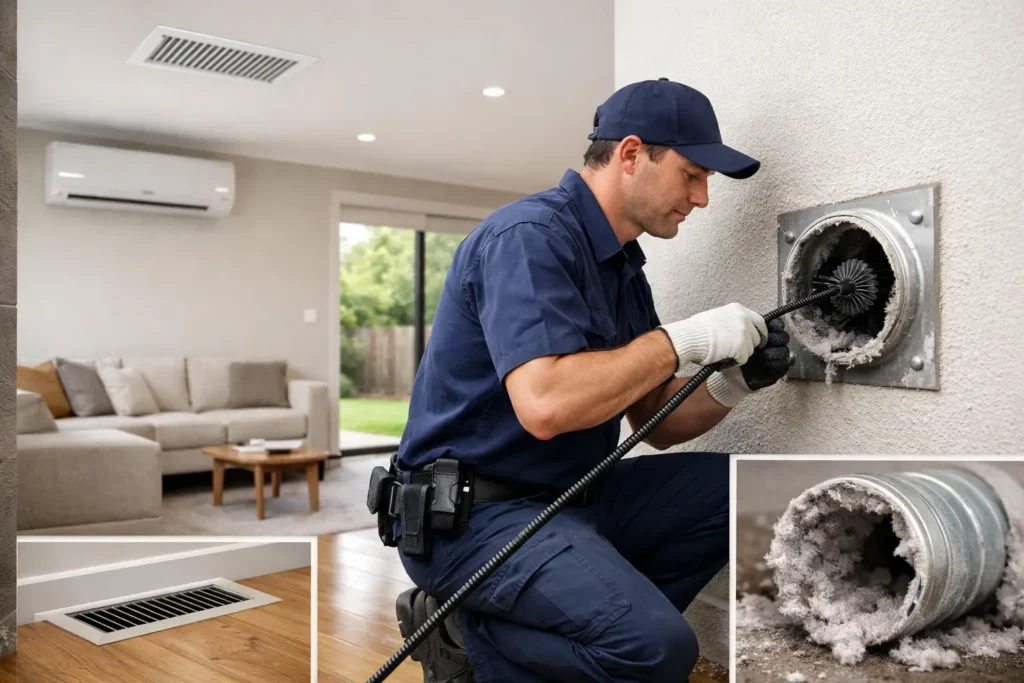
A dryer that takes two or three cycles to dry a normal load is not merely inconvenient. It can be a warning that heat, moisture and lint are no longer leaving the appliance as they should. So, is dryer vent cleaning necessary? For homes and businesses with a vented clothes dryer, the answer is generally yes – particularly when lint accumulation, restricted airflow or moisture problems are present.
Cleaning the lint filter after every load is essential, but it does not clean the ducting or external vent beyond the dryer. Fine lint can pass through or build up around the filter housing, then collect in bends, joins and the outlet grille. Over time, that restriction can affect drying performance, increase energy use and create a preventable fire risk.
Why dryer vent cleaning is necessary
A vented dryer works by pulling in air, heating it and pushing warm, damp air outside through ductwork. The system relies on a clear path from the dryer to the external outlet. When that path becomes restricted by lint, dust, insect nests or a damaged vent cover, the dryer has to work harder to move air.
Lint is highly combustible. While a blocked vent does not guarantee a fire, it allows heat to build up and puts flammable material closer to the dryer’s heat source. This is why a poorly maintained dryer exhaust should be treated as a home safety issue, not simply an appliance maintenance task.
Restricted ventilation also leaves more moisture inside the laundry. In a closed or poorly ventilated room, that can contribute to condensation, musty odours and conditions that support mould growth. For property managers, schools and commercial premises, recurring moisture around laundry facilities should be investigated promptly rather than managed with air fresheners or repeated repainting.
There is also a cost factor. A dryer running longer than necessary uses more electricity and adds wear to clothing, seals and internal components. A clear vent will not solve every drying problem, but it removes one of the most common and avoidable causes of poor performance.
Signs your dryer vent needs attention
You do not need to wait for a complete blockage before arranging a professional inspection. Changes in day-to-day performance are usually the first clue. If a load that once dried in one cycle now needs two, airflow may be restricted.
Pay attention if the dryer or laundry becomes unusually hot during use, if there is a burning or dusty smell, or if the outside vent flap barely opens while the dryer is operating. Visible lint around the dryer, behind the appliance or at the external outlet is another clear sign that cleaning is overdue.
Moisture on laundry walls, windows or ceilings deserves attention too. It may be linked to a disconnected duct, a crushed flexible hose, or a vent that terminates in an unsuitable location. In these cases, cleaning alone may not be enough. The duct run may need repair, re-routing or a safer termination point.
For commercial laundries and multi-residential buildings, warning signs can include longer turnaround times, complaints about humidity, excessive heat in service rooms and repeated dryer faults. The higher the use, the faster lint can build up, so reactive maintenance is rarely the best approach.
How often should a dryer vent be cleaned?
There is no single timetable for every property. The right interval depends on how often the dryer is used, the length and design of the ducting, the type of fabrics being dried and whether occupants clean the lint filter consistently.
As a practical guide, a household that uses a vented dryer several times a week should consider a professional vent inspection and clean about once a year. A large family, pet-owning household or property with long ductwork may need attention sooner. Commercial settings, shared laundries, salons, accommodation providers and facilities with frequent dryer use should schedule cleaning more regularly as part of planned building maintenance.
A short, straight metal duct that vents directly outside is easier to maintain than a long run with multiple bends. Each bend slows airflow and creates a point where lint can settle. Flexible plastic or foil-style ducts can be especially troublesome because they may sag, tear or trap lint in their ridges. A technician can assess whether the duct material and installation are suitable as well as remove the built-up debris.
The best rule is simple: if drying times have changed, the appliance feels hotter than usual, or you cannot remember the last time the full vent path was checked, arrange an inspection.
What proper dryer vent cleaning involves
Effective cleaning is more than removing a handful of lint from the rear connection. The work should address the complete airflow path, including the dryer outlet, accessible ducting, bends, joints and the external vent cover.
A professional clean generally begins with an assessment of the duct route and its condition. The technician checks for crushed sections, loose connections, excessive bends and obstructions at the exterior outlet. Purpose-built agitation tools and high-efficiency vacuum equipment are then used to dislodge and capture lint without spreading dust through the laundry or ceiling space.
After cleaning, the vent should be checked for airflow and secure connections. If the outlet flap is stuck, the duct is damaged or the run is unsuitable, those findings should be clearly explained. Transparent advice matters because replacing unsafe or ineffective ducting can be more valuable than repeatedly cleaning a system that will continue collecting lint in the same problem areas.
Be cautious with DIY cleaning kits if the duct run is long, concealed or has several turns. They can be useful for basic maintenance in a short, accessible run, but brushes may detach, push lint deeper into the duct or damage flimsy flexible material. Pulling a dryer away from the wall also carries a risk of crushing the hose or straining electrical connections. When there is doubt, professional equipment and assessment are the safer option.
Cleaning the lint filter is still non-negotiable
Professional vent cleaning does not replace the simple habit of cleaning the lint filter after every load. This is the first line of defence and takes less than a minute. Remove visible lint, then periodically wash the filter with warm water and mild detergent if it has a residue from fabric softeners or dryer sheets. Allow it to dry completely before reinstalling it.
It is also worth vacuuming the filter cavity carefully, where loose lint can collect out of sight. Do not operate the dryer without its filter in place. The filter protects the appliance and reduces the amount of lint travelling into the exhaust system.
However, even households that clean the filter diligently can develop vent restrictions. Fine particles, moisture and everyday dust still accumulate in ductwork over time. That is why both tasks matter: regular filter cleaning by the user, and periodic cleaning of the full vent system.
Is every dryer connected to a vent?
Not all dryers work the same way. Vented dryers exhaust warm, moist air through ducting to the outside and are the main focus of dryer vent cleaning. Condenser and heat pump dryers collect or condense moisture internally instead, so they do not usually have an external dryer vent duct to clean.
That said, condenser and heat pump models still need maintenance. Their lint filters, condensers, water containers and air pathways should be cleaned according to the manufacturer’s instructions. A heat pump dryer with a clogged filter can also suffer reduced efficiency and longer drying times, even though it does not create the same external vent issue.
If you are unsure which system you have, look behind the dryer. A vented model will normally have an exhaust hose or rigid duct leading to an external wall, roof or underfloor outlet. Never vent a dryer into a roof space, garage, wall cavity or enclosed room. The moisture and lint need to be discharged safely outside.
A practical safety check for Melbourne properties
Melbourne homes often deal with cool, damp periods when laundry is already slow to dry indoors. A restricted dryer vent can make that problem worse by adding more moisture to the home. It can also be overlooked in apartments, renovated homes and rental properties where ducting is concealed behind cabinetry, above ceilings or within tight laundry spaces.
For owners and managers, adding dryer exhaust checks to routine HVAC and ventilation maintenance is a practical decision. It helps identify lint build-up before performance drops sharply, and it can reveal ducting faults that are otherwise hard to see. Clean airflow systems support a safer, cleaner and more efficient property.
If your dryer is running hot, taking too long or leaving the laundry humid, do not ignore the warning signs. Top Air Duct Cleaning provides dependable dryer vent and ventilation cleaning across Melbourne, using professional methods and clear, transparent advice. For a free quote, call 0457 666 469 or visit www.topairductcleaning.com.au. A clear vent is a small maintenance step that can protect your property, improve drying results and give you greater peace of mind.
