
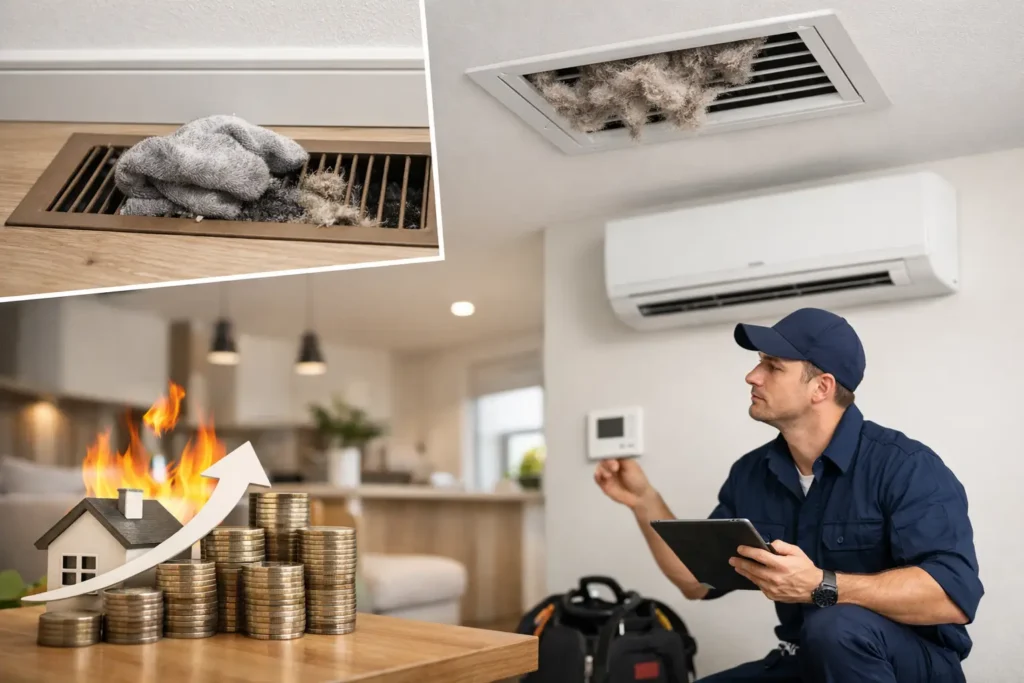
A lounge room that never quite cools down, a heater that seems to run all morning, and energy bills that keep climbing are often connected. Can blocked vents raise energy bills? Yes. When supply or return vents cannot move air freely, your heating and cooling system must work longer and harder to reach the temperature set on the thermostat.
For Melbourne homes, offices, schools and commercial properties, restricted airflow can be caused by dust, pet hair, renovation debris, furniture placement, damaged grilles, or buildup inside ductwork. The result is not just uneven comfort. It can mean wasted energy, more wear on HVAC equipment and poorer indoor air quality.
How blocked vents make heating and cooling cost more
A ducted heating or cooling system is designed around airflow. It pulls air through return vents, heats or cools it, then sends it back through supply vents to each room. This process needs a clear path at both ends.
When vents or ducts are blocked, the system cannot circulate the required volume of air. The thermostat may detect that the home has not reached the selected temperature and keep the unit running. In summer, the air conditioner may run longer to overcome hot rooms. In winter, the heater can keep cycling because warmed air is not reaching the areas where it is needed.
Longer run times use more electricity or gas. They can also place unnecessary strain on fans, motors, filters and other components. A blockage may seem minor, but a consistently restricted system has to compensate every day it operates.
The size of the bill increase depends on the severity and location of the blockage, the condition of the system, insulation levels and how often the property is heated or cooled. One partially covered vent will not always cause a dramatic spike. Several obstructed outlets, a heavily clogged return grille or dirty ductwork can have a much more noticeable effect.
The return vent is often the bigger issue
Many property owners focus on the vents blowing air into a room. These supply vents matter, but return vents are just as critical. Return vents draw indoor air back to the system so it can be conditioned again.
If a return vent is covered by a couch, cabinet, boxes or a thick layer of dust, the system may struggle to draw enough air. Airflow drops, rooms become uncomfortable and the equipment can run under pressure. In some systems, restricted return airflow may also contribute to coil freezing during cooling or overheating during heating.
Keep return vents clear of furniture and stored items. As a practical rule, leave generous open space around the grille rather than pushing furniture directly against it. If the grille appears dirty, clean the visible surface carefully and arrange professional assessment if dust is heavy or keeps returning.
Closed vents are not always a saving
It is common to close vents in unused bedrooms in the hope of reducing energy use. In a properly designed zoned system, turning off an unused zone may help. However, manually closing multiple individual vents on a standard ducted system can disrupt the airflow balance it was designed to maintain.
Too many closed outlets can increase static pressure inside the ducts. That means the fan has to work against greater resistance, while rooms that remain open may receive too much air. The system may become noisier, less efficient and less comfortable overall.
If certain rooms are routinely unused, ask a qualified HVAC professional whether your system has effective zoning or whether airflow adjustments are appropriate. Do not assume that shutting every spare-room vent is the cheapest option.
Signs your vents or ducts may be affecting energy use
Energy costs can rise for many reasons, including electricity price changes, extreme weather and an ageing air conditioner. Still, airflow problems often leave clear clues around the property.
Look for weak airflow from some vents, rooms that are much hotter or colder than others, excessive dust around grilles, musty odours when the system starts, rattling or whistling noises, and a unit that runs for unusually long periods. You may also notice dust settling quickly after cleaning, particularly near vents and return air grilles.
For commercial sites, the signs can include staff complaints about stuffy rooms, inconsistent temperatures across work areas, greasy exhaust grilles in kitchens, or ventilation systems that seem to run continuously without delivering comfort. These problems affect more than utility costs. They can influence staff comfort, customer experience and building maintenance budgets.
Blocked vent versus dirty ductwork
A visible blocked vent is usually easy to identify. Furniture, rugs, curtains and boxes can reduce airflow immediately. Move obstructions away first, then check whether airflow improves.
Dirty ductwork is less obvious. Over time, ducts can collect dust, lint, hair, building debris and other particles. In some properties, pest activity, moisture issues or poorly maintained filters can make the problem worse. Buildup does not always fully block a duct, but it can narrow airflow paths and distribute dust through the property whenever the system operates.
Professional duct cleaning is particularly worthwhile when there is visible dust around vents, post-renovation debris, persistent odours, excessive household dust, evidence of mould or pest contamination, or a long period without system maintenance. A proper service should address the ductwork, vents and accessible system components using suitable containment and HEPA filtration practices – not simply vacuum the visible grille.
Other reasons bills may be rising
Blocked vents are one possible cause, not the only explanation. A clean, open vent cannot correct a poorly sized system, damaged ducting, refrigerant faults, old filters, inadequate insulation or air leaks around doors and windows.
Filters deserve particular attention. A dirty filter restricts airflow before it reaches the ducts, creating many of the same efficiency problems as a blocked return vent. Check the manufacturer’s recommendations for your system and replace or clean filters at the required intervals. Homes with pets, frequent heating and cooling use, or nearby construction may need more frequent checks.
Duct damage can also be costly. Crushed, disconnected or leaking ducts may send conditioned air into roof spaces or wall cavities instead of living areas. If airflow remains weak after vents are cleared and filters are serviced, an inspection can identify whether the issue lies deeper in the system.
Simple checks you can do safely
Start by walking through the property while the system is running. Make sure supply and return vents are uncovered, open where required and free of surface dust. Move furniture, curtains, rugs and storage away from grilles. Never place items over vents to hide them or stop a draught.
Next, inspect the filter if it is safely accessible and you know the correct procedure for your unit. If it looks grey, clogged or damaged, it may be time for replacement or cleaning. Check that outdoor air-conditioning units are not crowded by leaves, garden waste or stored items, as they also need airflow to work efficiently.
Avoid inserting tools, sprays or household vacuum attachments deep into ducts. Flexible ducting can be damaged, and surface cleaning does not remove contamination further inside the system. If you see mould, rodent droppings, heavy debris or signs of damaged ductwork, arrange a professional assessment rather than disturbing the material.
When to book professional vent and duct cleaning
If your system is running longer, rooms are uneven in temperature and vents appear dusty despite regular cleaning, a professional service can help restore clear airflow pathways. For property managers and commercial decision-makers, scheduled cleaning can also support cleaner shared spaces and reduce the chance of avoidable ventilation issues becoming larger maintenance problems.
Top Air Duct Cleaning provides professional ducted heating and cooling cleaning across Melbourne, using advanced HEPA filtration equipment and proven cleaning methods. Our fully insured technicians assess accessible vents and ductwork carefully, remove accumulated dust and debris, and provide clear advice on the condition of your system.
Do not keep paying to run a system that is struggling to move air. For a free, transparent quote or same-day availability where possible, call Top Air Duct Cleaning on 0457 666 469 or visit www.topairductcleaning.com.au. Clear vents and cleaner ducting can help your property feel more comfortable while giving your heating and cooling system a fair chance to operate efficiently.
