
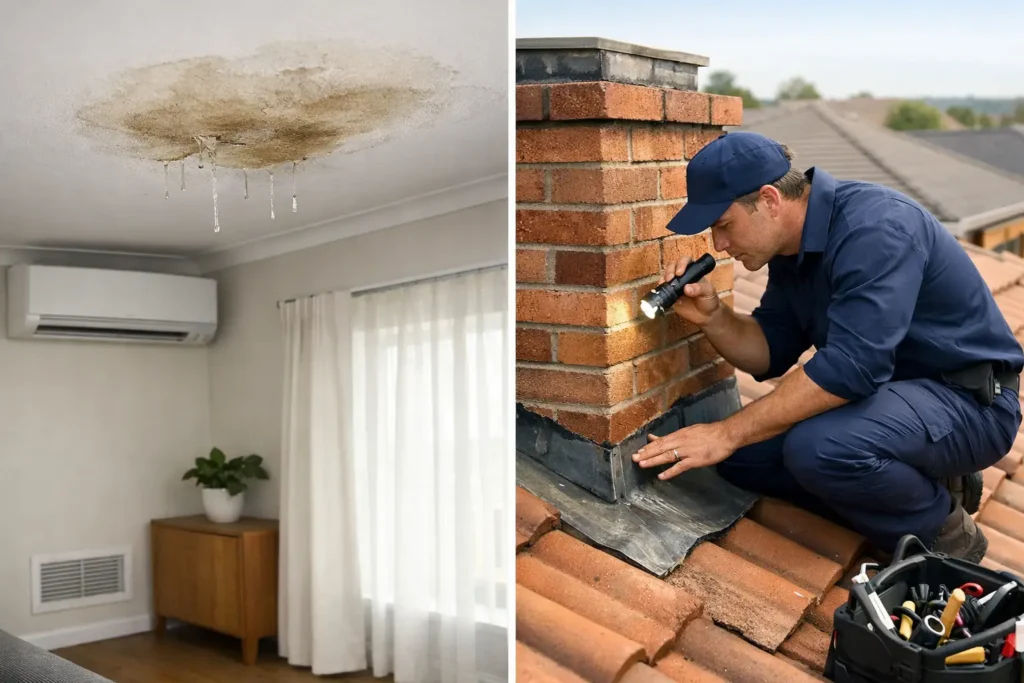
A chimney leaking often becomes obvious after a heavy Melbourne downpour: a brown mark appears on the ceiling, paint starts bubbling near the fireplace, or there is a musty smell in a room that was previously dry. What looks like a small water stain can quickly become damaged plaster, mould growth, timber decay and a far more expensive repair.
The key is to identify where water is getting in before treating the visible damage inside. A chimney is exposed on all sides, passes through the roof, and contains joints, flashings and caps that must all shed water correctly. Cleaning can remove soot, debris and blockages, but a leak may also need roof, masonry or flashing repairs from the right qualified trade.
Why Is Your Chimney Leaking?
Water does not always enter at the point where it appears indoors. It can track along roof timbers, run down inside the chimney breast, or soak into damaged mortar before showing up on a nearby wall or ceiling. That is why a proper inspection matters more than simply sealing a crack that is easy to see.
Damaged or poorly fitted flashing
Flashing is the metal barrier installed where the chimney meets the roof. It directs rainwater away from the opening in the roofline. When flashing has corroded, lifted, cracked or been installed poorly, rain can enter around the chimney base and travel into the ceiling cavity.
This is one of the most common reasons for chimney water leaks, especially on older homes or after strong winds. A roof plumber or appropriately qualified roofing professional should assess flashing condition and surrounding roof tiles, sheets and fixings.
Cracked chimney crown, cap or mortar
The crown is the sloped top surface of a masonry chimney. Its job is to throw rainwater away from the brickwork. Cracks in the crown allow water to seep into the chimney structure, while a missing or damaged chimney cap leaves the flue directly exposed to rain.
Mortar joints can also erode over time. Once water gets into these openings, repeated wet weather can worsen the damage. In colder areas, moisture expansion can accelerate cracking, but even Melbourne’s variable weather can take a toll on unprotected masonry.
Blocked flue or chimney pot
Leaves, bird nests, loose mortar and built-up soot can obstruct the flue. A blockage may prevent water that has entered from draining or drying as it should, and it can restrict ventilation through the chimney. Moisture then lingers inside, creating a damp smell and increasing the chance of mould.
A blocked flue is not just a moisture issue. If the fireplace is used, it can affect draft and create serious safety concerns. Never light a fireplace when you suspect a blockage, bird nest or significant water ingress.
Condensation mistaken for a roof leak
Not every damp chimney is caused by rain getting through the roof. Condensation can form when warm, moisture-laden indoor air meets a cold flue surface. This is more likely in homes with poor ventilation, unused fireplaces, gas appliances, or flues that are incorrectly sized or lined.
Condensation is often more gradual than a rain leak. You may notice persistent dampness, a stale odour or staining that worsens in winter rather than immediately after rain. The solution depends on the cause and may involve improving ventilation, addressing appliance operation or having the flue professionally assessed.
Porous brickwork and failed sealants
Old brickwork is not automatically a problem. However, cracked bricks, deteriorated pointing and failed sealants can allow water to absorb into the chimney stack. Darkened patches on exterior masonry, crumbling mortar or white powdery deposits can indicate ongoing moisture exposure.
Applying a sealant without fixing cracks, flashing or structural faults first can trap moisture where it does not belong. Any masonry treatment should be selected and applied by a professional who understands how the chimney needs to breathe and shed water.
Signs of a Chimney Leak You Should Not Ignore
A leak does not always present as dripping water. In many properties, the early clues are subtle and appear well before serious interior damage. Watch for ceiling stains around the chimney breast, peeling paint, damp plaster, swollen skirting boards, or a persistent musty odour near the fireplace.
Outside, check from ground level for missing chimney caps, damaged pots, obvious cracks, loose bricks, rust stains around metal components, or vegetation growing near the top of the stack. Do not climb onto the roof or lean ladders against unstable chimney masonry. Wet tiles and elevated work are hazardous, and a visual inspection from below is enough to tell you when professional help is needed.
If water appears only during or shortly after rain, flashing, roofing and chimney cap issues are more likely. If the issue continues during dry weather, condensation, plumbing leaks or retained moisture within the chimney may need to be considered. The timing gives useful clues, but it is not a substitute for inspection.
What to Do When You Discover a Chimney Leak
First, protect the interior. Move furniture, rugs and electrical items away from the affected area. If a ceiling is sagging, actively dripping or close to electrical fittings, keep clear and arrange urgent professional assistance. Do not puncture a bulging ceiling unless advised by an appropriate emergency professional, as water release can be unpredictable.
Take clear photos of the stains, the fireplace area and any visible external damage. Note when the leak happens, how much rain has fallen and whether the fireplace has recently been used. These details help identify the source and can be useful for maintenance records, landlords, property managers or insurance discussions.
Avoid temporary fixes such as stuffing towels into the flue, painting over stains, or applying silicone from inside the fireplace. These measures rarely address the actual entry point and can conceal an issue that continues to damage the structure. If a temporary external cover is needed during severe weather, it should be installed safely by a qualified professional.
Cleaning Matters, But It Is Not Always the Repair
A professional chimney clean is valuable when soot, creosote, nests or debris are contributing to poor draft, odours or moisture retention. Cleaning also gives a technician a clearer view of the flue condition and may reveal cracks, loose material or obstructions that were hidden by buildup.
However, chimney cleaning does not replace roof flashing repairs, masonry repointing, crown repairs or cap replacement. A dependable service provider will explain that distinction clearly. The right approach may involve more than one trade: chimney cleaning to remove internal hazards and roofing or masonry specialists to correct the external water entry point.
For property managers and commercial sites, this distinction is particularly useful. Keeping a record of cleaning, inspection findings and repair recommendations helps prevent small defects from becoming unplanned maintenance costs. It also supports safer operation where fireplaces, solid-fuel heaters or commercial exhaust systems are in use.
Preventing Future Water Damage
The best prevention is regular visual checks and timely maintenance rather than waiting for a ceiling stain. After storms, inspect the area around the chimney from the ground. Keep roof gutters and valleys clear, as overflowing water can overwhelm vulnerable roof junctions. Arrange inspection if you see deteriorating mortar, a missing cap, rusted flashing or signs of birds entering the flue.
If you use a wood heater or fireplace, schedule chimney cleaning and inspection at sensible intervals based on how often it is used and the fuel being burned. Dry, seasoned wood produces less residue than damp wood, but every active flue still needs proper care. For an unused chimney, a cap and periodic checks can help keep rain, leaves and pests out.
A dry chimney is not just about protecting paintwork. It helps preserve the roof structure, reduce mould risk and keep the fireplace area safer and more comfortable. If you have noticed dampness, soot odours or possible flue blockages, act before the next period of wet weather turns a minor issue into internal damage.
For professional chimney cleaning and practical advice on maintaining safer, cleaner ventilation in Melbourne, contact Top Air Duct Cleaning for a free quote on 0457 666 469 or visit www.topairductcleaning.com.au. A prompt inspection can give you clarity on what needs cleaning, what needs repairing, and the most sensible next step for your property.
