A fireplace should make a Melbourne home feel warm, not leave you wondering whether that smoky smell, falling soot or weak draw means trouble overhead. A professional chimney inspection Melbourne homeowners arrange before the colder months can identify blockages, flue damage and fire hazards before the first proper fire of the season.
Chimneys work in harsh conditions. They carry heat, smoke, moisture and combustion by-products through the roofline, while their external components face wind, rain and temperature changes. Even a fireplace that appears to be working can have a restricted flue, deteriorating mortar or soot build-up that affects safe operation. An inspection gives you a clear picture of the chimney’s condition and whether cleaning or repairs are required.
Why chimney inspections matter
When wood burns, it produces smoke, fine particles and gases. If the chimney is not drawing properly, those by-products can spill back into the room rather than travelling safely outside. Poor draft can make lighting a fire difficult, cause smoke staining around the fireplace and reduce the comfort of the space you are trying to heat.
The larger concern is creosote. This dark, tar-like residue develops when wood smoke cools and condenses inside a flue. Over time, it can build up on the flue walls. Creosote is combustible, so a heavy deposit increases the risk of a chimney fire. It can also narrow the passage available for smoke to escape.
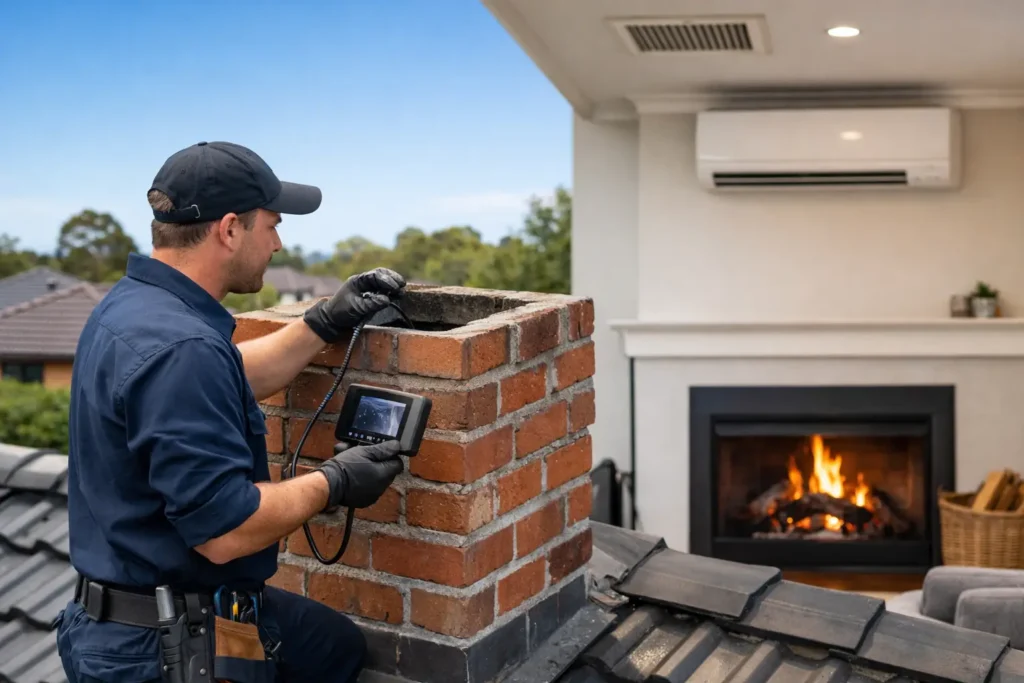
A proper inspection is not simply a quick look at the hearth. It considers the pathway from the fireplace opening through the flue and chimney structure, along with the visible condition of the cowl, flashing and masonry. The aim is to find defects early, when the solution may be straightforward, rather than after smoke damage, water ingress or a dangerous fire event.
For rental properties, regular assessment also helps property managers document maintenance and respond promptly when tenants report smoke, odours or fireplace performance issues. In commercial settings, especially venues with solid-fuel appliances, a planned maintenance approach supports safer day-to-day operation and reduces disruptive downtime.
What a chimney inspection in Melbourne should check
The level of inspection depends on the type of fireplace, access, age of the chimney and symptoms reported. A specialist will generally assess the fireplace and flue for soot and creosote deposits, obstructions, visible cracking, loose material and signs of moisture damage.
Birds and pests are a common cause of blockage, particularly after a chimney has sat unused through warmer weather. Leaves, twigs and nesting material can restrict airflow surprisingly quickly. A damaged or missing chimney cowl may make this more likely, while also allowing rain to enter the flue.
The inspection should also look for issues around the external chimney. Cracked render, worn mortar joints, damaged flashing and loose chimney pots can allow water into areas where it does not belong. Moisture can deteriorate masonry and may combine with soot deposits to create persistent odours inside the home.
Inside, the technician will consider whether the damper, firebox and smoke chamber are functioning and in sound condition where applicable. They may identify evidence of previous smoke leakage, poor draft or inadequate maintenance. If cleaning is needed, that should be explained clearly, with the work required and pricing set out before proceeding.
A useful inspection delivers practical answers. Is the chimney safe to use now? Does it need cleaning? Is there an obstruction or a structural issue requiring a qualified repair professional? That clarity is more valuable than guessing based on what you can see from the lounge room.
Inspection and cleaning are not the same service
A chimney inspection assesses condition and identifies risks. Chimney cleaning removes soot, creosote and loose debris from the flue and fireplace. Many homes benefit from both, but they serve different purposes.
For example, a relatively clean chimney may still have a cracked flue liner or external water damage that needs attention. Conversely, a structurally sound chimney can have enough creosote to warrant cleaning before it is used. A trustworthy technician will not treat one service as an automatic substitute for the other.
Signs you should book sooner
Do not wait for a yearly reminder if the fireplace is showing clear changes. Smoke entering the room is the most obvious warning sign, but it is not the only one. A persistent burnt, damp or acrid smell when the fireplace is not in use can suggest old deposits or moisture within the flue.
Book an inspection promptly if you notice:
- Smoke backing into the room when lighting or using the fire
- Soot falling into the firebox or staining around the fireplace opening
- A weak draft, difficulty keeping a fire burning or unusual fumes indoors
- Bird sounds, debris or signs of nesting in the chimney
- Cracks, crumbling mortar, water marks or rust around the fireplace and chimney
- A chimney that has not been checked or cleaned for several heating seasons
These symptoms do not all point to the same fault. Wet firewood can contribute to excessive smoke, for instance, while a blocked flue may be the issue in another property. That is why an inspection matters: it separates a simple usage problem from a maintenance or safety concern.
If anyone experiences headache, dizziness, nausea or unusual tiredness while a combustion appliance is operating, stop using it, move to fresh air and seek appropriate urgent advice. Carbon monoxide cannot be seen or smelt. Working carbon monoxide alarms provide an additional layer of protection, but they do not replace correct chimney maintenance and ventilation.
How often should your chimney be assessed?
There is no one timetable that suits every Melbourne household. A fireplace used most nights through winter will need more attention than one used only a few times each year. The type of fuel matters too. Burning unseasoned wood creates more smoke and moisture, which can accelerate creosote build-up.
As a sensible rule, arrange an inspection at least annually if you use a wood fireplace regularly. Ideally, book before winter so any cleaning or repairs can be completed before you rely on the heater. If the fireplace has been unused for a long period, check it before restarting it. Pests, weather and deterioration do not pause simply because the fire is off.
Older homes may need a more cautious approach, particularly where the chimney has original masonry, an ageing liner or a history of water ingress. On the other hand, a modern, lightly used appliance with a well-maintained flue may not need extensive cleaning every year. The inspection findings and your actual use should guide the maintenance plan.
Preparing for the appointment
Make access to the fireplace clear by moving rugs, furniture, firewood baskets and decorative items away from the immediate work area. Let the technician know about any smoke issues, recent water leaks, animal activity or changes in fireplace performance. These details help direct the assessment.
The fireplace should be completely cold. Avoid using it immediately before the appointment, and keep children and pets away from the work area while the inspection or cleaning is underway. Professional equipment with HEPA filtration helps contain fine dust and soot, but protecting nearby furnishings and allowing clear access still makes the job safer and more efficient.
For multi-storey homes, townhouses and commercial properties, access conditions can affect the scope of work. Roof height, restricted access, shared flues and the type of appliance all need to be considered. A transparent quote should account for these practical factors rather than promising a one-size-fits-all solution.
Choose a professional who explains the findings
A chimney is part of your home’s safety system, not a place for vague advice or rushed workmanship. Look for an insured provider that can explain what they found in plain language, identify whether cleaning is necessary and advise when specialist repair work may be needed. Photos or a clear description of the issue can be especially helpful when you are making a maintenance decision for a rental or commercial property.
Top Air Duct Cleaning provides dependable chimney cleaning and inspection support across Melbourne, with transparent quoting and same-day availability where possible. The focus is straightforward: cleaner flues, safer operation and practical advice you can act on.
Before you light the first fire this season, give the chimney the same attention you would give any other heating system. For a free quote, call 0457 666 469 or visit www.topairductcleaning.com.au. A timely inspection can help you enjoy the warmth of your fireplace with greater confidence.
