A dusty return grille, a bathroom fan that takes ages to clear steam, or rooms that feel stale despite open windows are not small annoyances. They can signal that your ventilation system is moving less air than it should. This home ventilation cleaning guide explains what you can safely clean yourself, what requires a professional, and how to protect cleaner air throughout your property.
For Melbourne homes, ventilation can work hard through pollen-heavy springs, dry summer dust, winter heating use and the moisture created by daily showers and cooking. Leaving vents, filters and exhaust pathways unattended allows dust, lint and moisture to build up where you cannot always see it. The result may be poorer airflow, more airborne particles indoors, odours, mould risk and a heating or cooling system that has to work harder.
Start With the Ventilation You Can See
Begin with a walk-through of the home. Look at supply vents, return-air grilles, bathroom exhaust fans, kitchen rangehood filters, laundry vents and any wall or ceiling grilles. Dark marks around a vent, visible dust inside the grille, rattling noises, weak air movement or persistent odours all deserve attention.
Turn the relevant system off before removing any covers. For heating and cooling systems, use the thermostat and isolate power if you need to work near electrical components. Never spray water or cleaning products into duct openings, fan housings or electrical fittings.
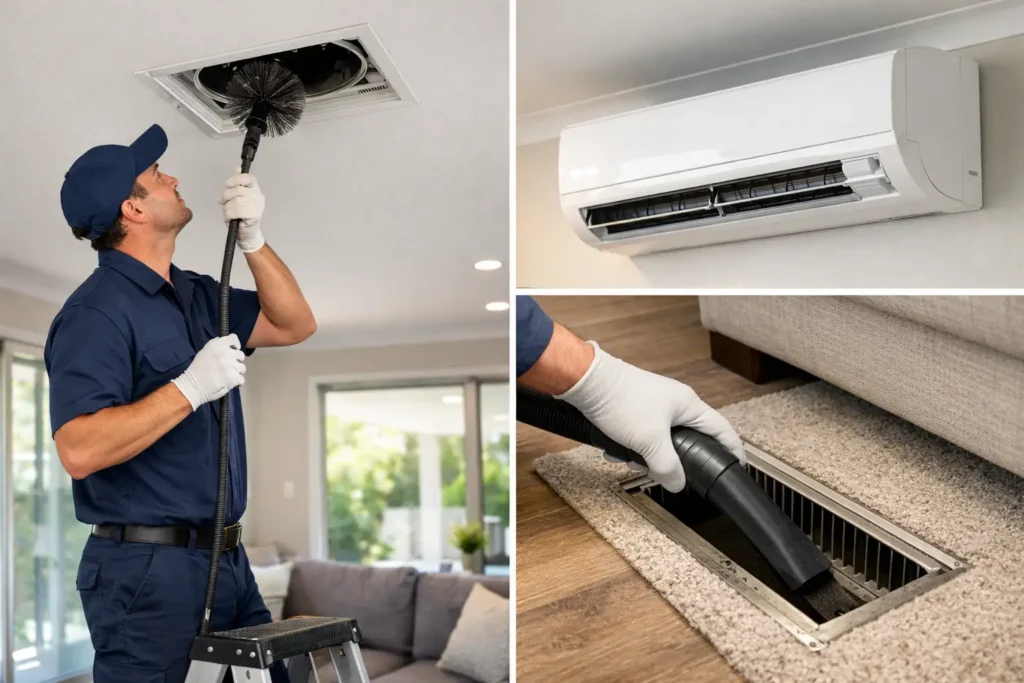
Remove accessible vent covers carefully and vacuum both sides using a soft brush attachment. A microfibre cloth dampened with warm water and mild detergent is usually enough for painted metal or plastic grilles. Dry them completely before refitting. This simple step improves appearance and stops loose dust from being blown back into the room.
Avoid pushing a household vacuum hose, broom handle or improvised brush deep into ductwork. It can damage flexible ducting, dislodge connections or push contamination further along the system. Surface cleaning is useful, but it is not the same as a full duct clean.
Check and Replace HVAC Filters
Your return-air filter is one of the most practical places to start. Its job is to capture a portion of the dust and particles circulating through a ducted heating or cooling system. When it becomes loaded with debris, airflow can drop and the system may run longer to reach the selected temperature.
Check the filter every one to three months, particularly if you have pets, live near busy roads, are renovating, or have family members with allergies. Some filters are disposable and must be replaced with the correct size and type. Others are washable, but only if the manufacturer specifically permits washing. Reinstall a washable filter only when it is completely dry.
A clean filter will not fix dirty ducts, blocked exhausts or mould problems on its own. It is, however, an essential part of routine maintenance and one of the easiest ways to prevent unnecessary dust from entering the system.
Do not ignore the return-air grille
Return-air grilles often collect more visible dust than supply vents because they draw air back to the system. Clean the grille regularly, then look beyond it with a torch. If you see heavy debris, loose insulation, staining, signs of pests or moisture, stop there and arrange a professional inspection. These conditions need the right equipment and a careful assessment rather than a quick DIY clean.
Bathroom, Laundry and Kitchen Exhaust Cleaning
Exhaust ventilation removes moisture, heat, grease and odours at their source. When it is dirty or underperforming, condensation can linger on windows and walls, creating conditions where mould is more likely to develop.
For bathroom exhaust fans, clean the external cover and gently vacuum accessible dust from the grille. If the fan is isolated at the switchboard and you are confident with the task, the cover can often be removed for a more thorough clean. Do not touch wiring or attempt to dismantle the motor. If the fan is noisy, weak, slow to start or still cannot clear steam, a technician should inspect the fan, duct run and external outlet.
Kitchen rangehood filters need more frequent attention because grease builds up quickly. Most removable mesh filters can be soaked in hot water with a suitable degreaser, then rinsed and dried. Follow the manufacturer’s directions, especially for charcoal filters in recirculating rangehoods, which are generally replaced rather than washed.
Laundry exhausts also deserve attention, particularly where clothes dryers vent outdoors. Lint buildup restricts airflow and increases fire risk. Empty the dryer’s lint filter after every load, check the vent outlet for fluff, and have concealed ducting professionally cleaned when airflow is poor or lint keeps reappearing.
A Home Ventilation Cleaning Guide for Safe DIY Work
DIY maintenance is valuable when it stays within safe, accessible limits. Use a vacuum with good filtration, clean microfibre cloths and mild cleaning products suited to the surface. Wear a mask if you are sensitive to dust, and open windows where practical while cleaning.
Do not use fragranced sprays to mask musty smells. A persistent odour may point to accumulated dust, damp ducting, mould growth, a drainage issue or an animal or pest problem. Covering it up does not restore healthy airflow.
You should also avoid bleach or harsh chemicals inside vents and ducts. These products can leave residues, damage materials and create fumes that circulate through the home. Where mould is visible around a grille or ceiling, the underlying moisture source must be identified. Cleaning the surface without addressing ventilation, leaks or condensation usually leads to the problem returning.
When Professional Ventilation Cleaning Is the Better Choice
Professional cleaning is recommended when contamination is beyond the grille, airflow remains poor after basic maintenance, or the system has not been serviced for several years. It is particularly worthwhile after renovations, water damage, pest activity, smoke exposure, a long vacancy, or when occupants experience ongoing dust and allergy concerns.
A proper service is more than vacuuming a few openings. Experienced technicians inspect accessible system components, use specialised tools to loosen buildup and apply high-powered HEPA filtration equipment to capture debris during removal. This helps reduce the risk of dust being released back into rooms while the system is being cleaned.
For ducted heating and cooling, a professional can also identify damaged ducts, loose connections, dirty return sections and other airflow issues that routine wiping cannot address. In commercial properties, schools and strata-managed buildings, scheduled ventilation maintenance can support cleaner shared spaces and reduce disruption caused by equipment problems.
The right frequency depends on the property and how the system is used. A household with pets, young children, allergies or frequent heating and cooling use may benefit from more regular attention than a lightly used property. Rather than relying on a fixed rule, base the decision on visible dust, airflow performance, filter condition, indoor odours and the history of the system.
Keep Airflow Cleaner Between Services
Small habits make a meaningful difference. Keep furniture and curtains clear of supply and return vents so air can circulate properly. Vacuum around grilles instead of allowing dust to gather at their edges. Use bathroom exhaust fans during showers and leave them running for a short period afterwards, where safe and appropriate. Run the kitchen rangehood whenever cooking produces steam or grease.
If you notice condensation, mould spots, repeated dust buildup or uneven temperatures, treat them as early warning signs. Waiting until a system is struggling can turn a manageable maintenance issue into a larger repair or indoor air quality concern.
Cleaner ventilation is not about making every part of a system look spotless. It is about helping air move as intended, reducing the dust and moisture that build up over time, and knowing when hidden areas need professional attention. For dependable duct, vent and exhaust cleaning across Melbourne, contact Top Air Duct Cleaning for a free quote on 0457 666 469 or visit www.topairductcleaning.com.au. A prompt inspection can give you a clearer picture of what your home needs and help keep the air your family breathes feeling fresher.
