
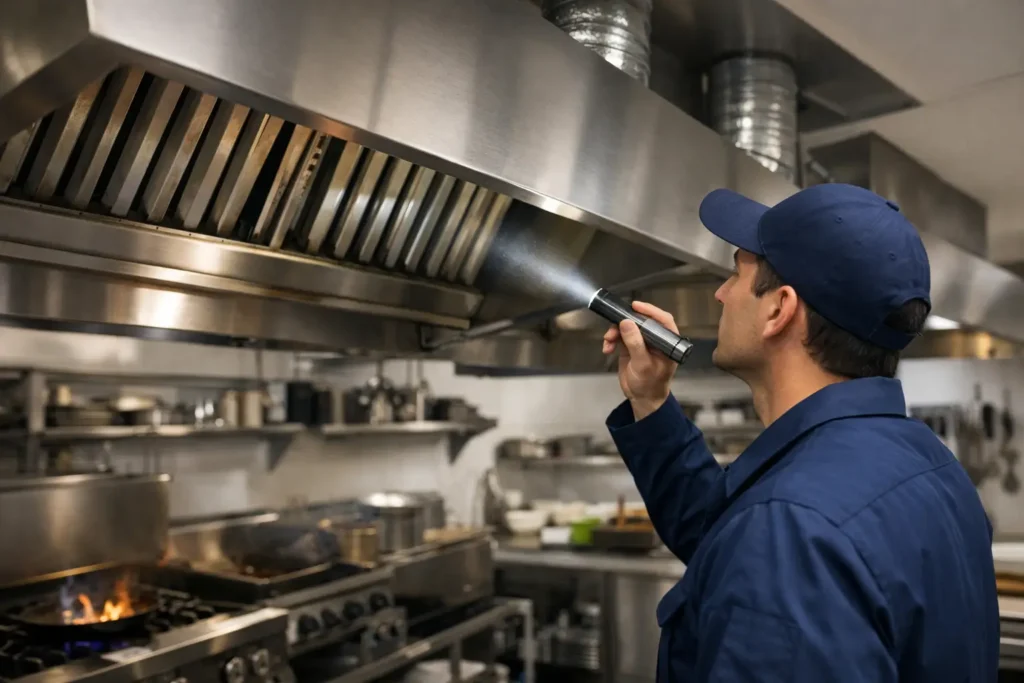
A busy kitchen can produce a surprising amount of grease, smoke, steam and airborne food residue in a single service. This commercial kitchen exhaust guide explains what that build-up means for your venue, your staff and your fire risk – and why cleaning the visible canopy alone is not enough.
For cafés, restaurants, pubs, school kitchens and shared commercial facilities, the exhaust system is a safety-critical asset. It removes contaminated air at the cooking line, captures grease-laden vapours and helps maintain a more comfortable working environment. When it is neglected, grease can accumulate through filters, fans and concealed ductwork, creating an issue that is difficult to see but costly to ignore.
What a Commercial Kitchen Exhaust System Does
A commercial kitchen exhaust system generally includes the canopy or bonnet, grease filters, ductwork, exhaust fan and discharge point. Together, these components draw heat, fumes and grease vapour away from cooking equipment and release the air safely outside.
The system must work as one. Clean filters cannot compensate for a grease-coated fan, and a clean-looking canopy does not prove that the ductwork above it is safe. Airflow can be restricted at any point in the run, particularly around bends, access panels and fan blades where grease naturally collects.
Effective extraction supports more than comfort. It helps reduce smoke migration into dining areas, limits greasy residue on ceilings and walls, and assists staff working long shifts near hot equipment. Most importantly, it reduces the fuel load inside the exhaust path if a cooking flare-up occurs.
Why Grease Build-Up Is a Serious Fire Risk
Grease is highly combustible. During normal cooking, tiny droplets travel with the hot exhaust air and settle on internal surfaces as the air cools. Over time, that film can become thick and sticky, especially in venues using fryers, chargrills, woks or high-volume cooktops.
If a fire starts at the cooking surface, flames can enter the canopy and reach accumulated grease in the duct. From there, fire may travel beyond the kitchen into areas that are not easily accessible. This is why commercial kitchen exhaust cleaning is not a cosmetic task or a job to delay until the quiet season.
The right cleaning interval depends on your cooking style, hours of operation, equipment and grease output. A high-volume restaurant with heavy frying may require much more frequent attention than a small office kitchenette used occasionally. Your insurer, local authority, equipment manufacturer and applicable Australian standards may also set expectations for inspection, servicing and record keeping. A professional assessment is the safest way to establish a schedule that suits the actual risk in your kitchen.
Signs Your Exhaust System Needs Attention
Kitchen managers often notice problems at the canopy first, but the warning signs can appear across the venue. Lingering cooking odours, smoke that hangs in the kitchen, hotter work areas and greasy marks around ceiling vents can all point to poor extraction.
Other signs include filters that remain oily shortly after washing, grease dripping from the canopy, unusual fan noise, reduced capture of steam, or visible residue around the roof discharge. Staff may also report that the kitchen feels stuffy or that smoke reaches the front-of-house area during peak service.
These symptoms do not always mean the whole system is blocked. A fan fault, poorly fitted filters, damaged ducting or an airflow design issue may be involved. However, each warning sign deserves prompt investigation. Waiting until airflow fails completely can disrupt trading and make cleaning more difficult.
The hidden areas matter most
The most concerning deposits are often out of sight. Grease can build inside vertical risers, long horizontal duct runs and exhaust fan housings, where routine kitchen cleaning cannot reach. Trying to manage these areas without proper access, equipment and containment can spread grease through the premises or leave hazardous sections untreated.
Professional cleaners inspect the full accessible system, not just the parts customers and staff can see. This approach provides a clearer picture of the condition of your canopy, filters, ductwork and fan.
A Practical Commercial Kitchen Exhaust Cleaning Process
A proper service begins with an inspection. Technicians assess the canopy, filters, accessible duct sections, fan and surrounding areas, then identify the level and location of grease build-up. This helps determine the appropriate cleaning method and whether there are concerns requiring maintenance or further investigation.
The work area should be protected before cleaning starts. Floors, cooking equipment and nearby surfaces need suitable coverings to contain loosened grease and cleaning residue. Depending on the system, technicians may remove filters, access duct panels and isolate equipment where required for safe work.
Grease is then removed from internal and external surfaces using professional tools and suitable degreasers. The aim is not simply to make surfaces shine. It is to remove combustible deposits from the airflow path, including the fan blades and housing where accessible. HEPA-filtered equipment can also assist with controlled cleaning in appropriate areas, helping to minimise the spread of fine debris.
After cleaning, the system should be checked for remaining residue, damaged components, blocked access points and obvious airflow concerns. Filters should be cleaned or replaced where necessary, then refitted correctly. Good documentation gives venue operators a useful maintenance record for internal compliance checks, property managers and insurers.
Daily and Weekly Habits That Protect Your System
Regular professional cleaning works best when supported by sensible kitchen routines. Staff should clean accessible canopy surfaces and grease filters at intervals that suit the cooking load. Filters must be fully dry and correctly seated before use, as gaps can allow grease to bypass the intended capture area.
Do not let cardboard, packaging or other combustible materials accumulate near cooking equipment. Train staff to report dripping grease, excessive smoke or changes in fan operation early. Small observations can prevent larger disruptions.
It is also worth keeping a simple maintenance log. Record filter cleaning, professional exhaust services, fan repairs and any extraction concerns. For multi-site operators, schools and property managers, this creates consistency across locations and helps demonstrate that kitchen safety is being managed proactively.
Choosing the Right Cleaning Frequency
There is no single cleaning interval that fits every commercial kitchen. The volume and type of cooking should lead the decision. Frying, grilling, wok cooking and solid-fuel cooking usually generate heavier deposits than light reheating or baking. Long operating hours, undersized extraction and duct runs with multiple bends can also increase the need for cleaning.
Rather than booking services only when the canopy looks dirty, schedule inspections around your trading pattern. A specialist can identify whether grease is collecting faster than expected and recommend a realistic maintenance plan. This balances safety with cost control and avoids paying for emergency work caused by preventable neglect.
Do not overlook the exhaust fan
The fan is the engine of the system. When fan blades and housings become coated in grease, performance can drop and the motor may work harder than necessary. Cleaning the fan as part of the wider exhaust system can improve extraction, reduce odours and support more efficient operation.
If the fan is noisy, vibrating or failing to start, cleaning alone may not resolve the issue. Electrical or mechanical repairs should be assessed by appropriately qualified professionals. Cleaning and maintenance should work together, not be treated as interchangeable services.
Keep Your Kitchen Safer, Cleaner and Ready for Service
A clean exhaust system protects the parts of your operation that matter every day: staff comfort, kitchen cleanliness, customer experience and fire safety. It also gives managers greater confidence that a hidden grease problem is not building above the cooking line while the venue is busy below.
For dependable commercial kitchen exhaust cleaning across Melbourne and surrounding suburbs, contact Top Air Duct Cleaning for a free quote. Call 0457 666 469 or visit www.topairductcleaning.com.au to arrange professional service and keep your kitchen airflow working as it should.
