You have wiped dust from the coffee table, replaced the return-air filter and still notice stale air whenever the ducted system starts. In that situation, choosing an air purifier or duct cleaning is not simply a matter of buying the quickest solution. One treats particles in the room you are using; the other addresses contamination and restricted airflow within the heating and cooling system.
The right choice depends on where the problem begins, how widespread it is and whether your HVAC system is contributing to the issue. For many Melbourne homes and workplaces, the best result comes from cleaning the system first, then using an air purifier only where it adds genuine value.
Air purifier or duct cleaning: know the difference
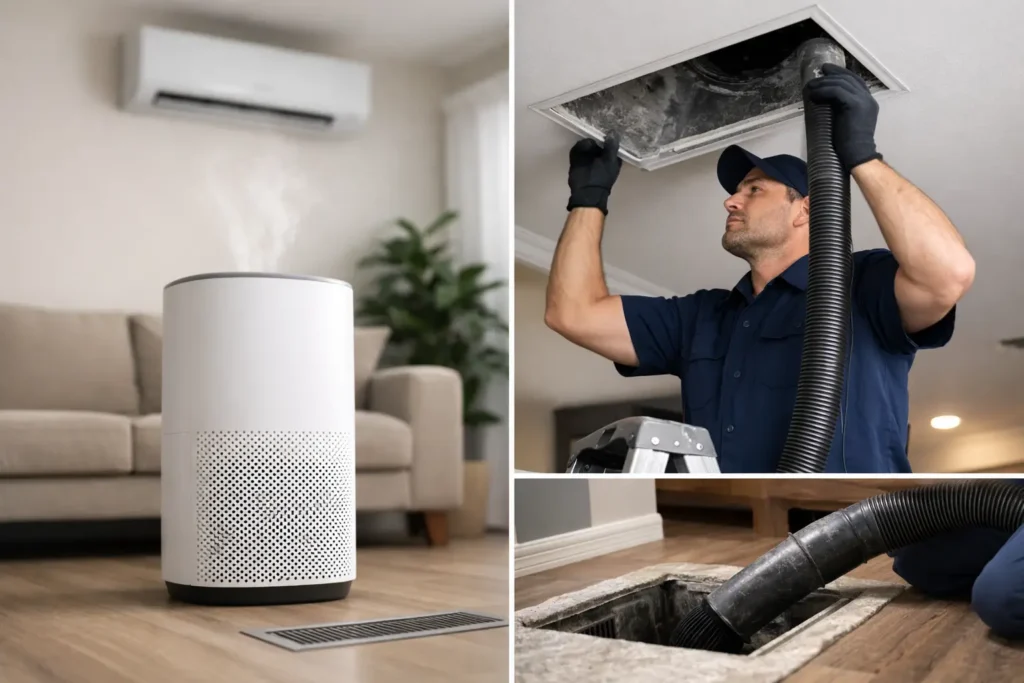
An air purifier is a portable appliance that draws room air through filters. A quality unit with a true HEPA filter can capture fine airborne particles such as pollen, dust, pet dander and some smoke particles. It can be useful in a bedroom during hay fever season, a nursery, a small office or a room occupied by someone with allergies.
Duct cleaning is a professional service for the concealed pathway that delivers heated or cooled air through a property. Over time, return-air ducts, supply ducts, grilles and vents can collect dust, hair, building debris, insect material and other contaminants. If the system is dirty, every operating cycle can move some of that material back through the property.
The distinction matters. An air purifier does not clean the ducts, return-air cavity, vents, fan components or dirty split-system coils. Duct cleaning does not replace the role of a portable purifier in a specific high-use room where additional particle filtration is wanted. They solve different problems, and neither should be treated as a cure-all.
When duct cleaning should come first
If dust returns quickly after cleaning, airflow has become weak, or a musty smell appears when heating or cooling is running, inspect the HVAC system before purchasing multiple purifiers. A purifier may improve the air near it, but it cannot remove the source from the ductwork.
Professional duct cleaning is particularly worthwhile after renovations. Plaster dust, sawdust and construction debris can find their way into return-air systems even when trades have taken precautions. New occupants may also inherit years of accumulated debris in a home, especially where filter changes and HVAC servicing have been irregular.
Consider booking an inspection if you notice several of these signs:
- Visible dust or debris around supply vents and return-air grilles
- Uneven airflow between rooms or vents that seem noticeably weaker
- Persistent odours when the ducted heating or cooling starts
- Excess dust on furniture soon after vacuuming
- Evidence of pests, moisture damage or mould-like growth near vents
For commercial sites, the decision is often clearer. Offices, schools, retail premises and multi-use buildings move larger volumes of air for longer periods. Dirty ducting can affect presentation, staff comfort and equipment performance across many rooms. Building managers should treat cleaning as part of planned HVAC maintenance rather than waiting for complaints to build up.
A reputable technician will assess accessible components, explain what is present and recommend work based on the system’s condition. Be cautious of vague, very cheap offers that promise to clean an entire ducted system without inspecting its size, access points or contamination level. Proper work takes suitable equipment, time and a clear scope.
What a professional clean can achieve
A thorough service removes accumulated debris from the ducting and ventilation points using specialist agitation tools and high-powered vacuum equipment with HEPA filtration. The objective is to capture loosened material safely rather than push it deeper into the system or release it into the home.
Cleaning can improve airflow where dust buildup is affecting vents or return pathways. It can also reduce the amount of settled material available to circulate through the property. For households managing allergies, pets or frequent dust, this can make day-to-day cleaning more manageable and improve comfort when the system runs.
There are limits, however. Duct cleaning cannot fix a failed fan motor, undersized ductwork, damaged insulation, leaking ducts or a thermostat fault. It also cannot resolve an ongoing moisture issue. If mould is suspected, the underlying water source must be identified and corrected, otherwise the problem may return. A dependable contractor should be direct about these limits instead of promising instant health outcomes.
For split systems, cleaning the indoor unit, filters, coils and drainage areas may be more relevant than duct cleaning. A dirty split system can develop unpleasant odours, poor airflow and reduced cooling performance, but it needs a service designed for that equipment.
When an air purifier is the better buy
An air purifier is a practical first step when the issue is isolated to one room and the HVAC system is clean and operating properly. A high-quality unit can be especially helpful for a bedroom affected by pollen, a home office beside a busy road or a room where pet dander is concentrated.
Choose the purifier according to the room size, not the marketing claim on the box. It needs enough clean-air delivery capacity for the area, and it should run consistently for the filter to do its job. A small unit placed in a large open-plan living area may offer little noticeable benefit.
Filter replacement is also part of the ongoing cost. HEPA filters and activated carbon filters do not last forever, particularly in homes with pets, smoke or heavy dust. If replacement filters are difficult to source or too expensive, the purifier may become an unused appliance in the corner.
Purifiers with activated carbon can help reduce certain odours, but they will not remove the cause of a damp smell, cooking exhaust issue or contaminated duct. If odours are strongest when the HVAC starts, cleaning and assessing the system is generally the more logical first move.
The strongest approach for allergy-prone homes
For some properties, this is not an either-or decision. Start by reducing sources that affect the whole house: clean dirty ducts where needed, replace HVAC filters on schedule, vacuum with effective filtration, manage moisture and keep vents unobstructed. Then use an air purifier in the bedroom or living area where a family member needs additional support.
This layered approach is more useful than relying on a single device. It also prevents a common mistake: running a purifier constantly while the ducted system continues to circulate dust from neglected vents or return-air spaces.
Homes with pets, carpeted rooms and ducted heating can benefit from a maintenance routine matched to how they are used. A family that runs heating every morning through winter will have different needs from a lightly occupied apartment with a split system. The same applies to commercial properties, where occupancy, operating hours and the type of work performed all influence cleaning frequency.
How to make the decision without wasting money
Start with the pattern. If symptoms, dust or odours occur throughout the property and become more obvious when ducted heating or cooling operates, arrange a professional duct assessment. If the concern is limited to one room and there are no signs of HVAC contamination, a correctly sized air purifier may be the more economical choice.
Next, check the basics. Replace or clean the system filter according to the manufacturer’s instructions, inspect visible grilles and make sure furniture is not blocking return-air vents. These simple steps support better airflow, but they do not replace cleaning when debris has accumulated deeper in the system.
Finally, avoid treating poor indoor air quality as a single problem with a single answer. Dust, allergens, humidity, ventilation, pets, outdoor smoke and HVAC maintenance can all play a role. The best remedy is the one that targets the actual cause and delivers a result you can maintain.
If your ducted heating or cooling is leaving rooms dusty, stale or poorly ventilated, Top Air Duct Cleaning can provide a clear assessment and professional cleaning across Melbourne suburbs. Call 0457 666 469 for a free quote or visit www.topairductcleaning.com.au. Cleaner air starts with knowing what is moving through your system, not simply what is sitting beside it.
