A wood heater should make a Melbourne winter more comfortable, not leave you wondering why smoke is entering the room or whether soot is building up where you cannot see it. Regular chimney maintenance protects the safe operation of your fireplace, supports better airflow and helps prevent small defects becoming expensive roof or masonry repairs.
For homes, rentals and properties with working fireplaces, the chimney is not simply a pipe above the roofline. It is a working part of the heating system. Every fire sends heat, moisture, fine ash and combustion by-products through the flue. Over time, those deposits can narrow the passage, reduce draft and increase the chance of a chimney fire.
Why chimney maintenance should not be delayed
The most serious risk is combustible soot and creosote buildup. Creosote is a dark, tar-like residue that can collect inside a flue, particularly when wood is damp, fires are allowed to smoulder, or the chimney is not drawing properly. It may be flaky and dry, sticky and tarry, or hard and glazed. The harder deposits can be especially difficult to remove and require professional assessment.
A restricted flue can also push smoke, odours and potentially harmful gases back into the living area. You may notice this when lighting the fire, but poor draft is not always obvious. A chimney that appears fine from ground level can still have internal buildup, a bird nest, damaged flue liner or loose debris obstructing the path.
There is a property-protection reason to stay ahead of maintenance as well. Cracked mortar, damaged flashing, loose chimney pots and failed capping allow water into areas where it does not belong. Moisture can damage brickwork, ceilings, insulation and timber over time. Addressing the source early is generally far more cost-effective than repairing the resulting water damage.
How often does a chimney need cleaning?
There is no one timetable that suits every property. The right cleaning and inspection interval depends on how often the fireplace or wood heater is used, the type and condition of the fuel, the age of the flue and whether the appliance has shown any warning signs.
As a practical rule, a chimney used regularly through winter should be checked and cleaned at least annually, ideally before the main heating season begins. A fireplace used only a few times each year may still need periodic inspection because birds, leaves, pests and weather damage can create problems when the system is idle.
Properties that burn unseasoned wood, use the heater most days, or have an older fireplace may need more frequent attention. Wet or poorly seasoned firewood produces more smoke and deposits, while low-temperature, slow-burning fires encourage creosote to form. The goal is not simply to keep the fire going for longer. It is to keep combustion clean and the flue clear.
Warning signs your chimney needs attention
Do not wait for a scheduled service if the fireplace starts behaving differently. Smoke spilling into the room, a strong smoky smell when the heater is off, black staining around the fireplace, falling soot, or a fire that is difficult to start can all point to a draft or blockage issue.
Other warning signs include visible cracks in the chimney stack, crumbling mortar, damp patches near the fireplace, rusting components, animal noises from the flue or debris around the hearth. If you hear a loud roaring sound from inside the chimney while a fire is burning, treat it as a potential chimney fire and follow emergency advice immediately.
Carbon monoxide alarms are also a sensible safety measure in homes using fuel-burning appliances. They do not replace maintenance, but they provide an additional warning if combustion gases enter occupied areas.
What professional chimney cleaning involves
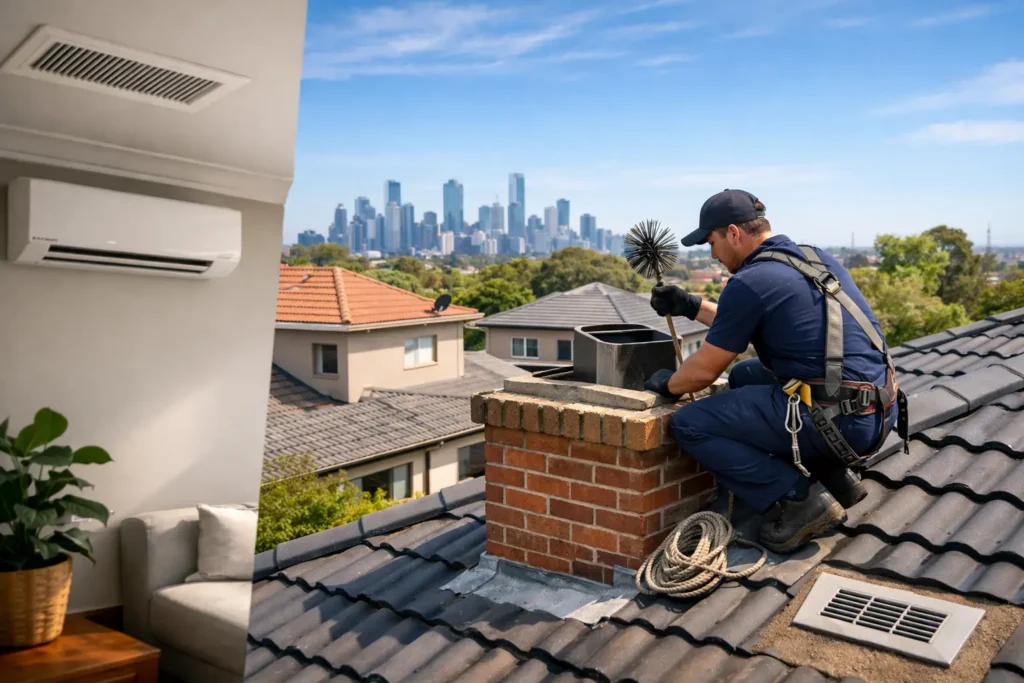
A professional clean is more than sweeping away visible ash. The technician assesses the accessible chimney system for soot, creosote, obstructions and signs of damage. Purpose-built brushes and vacuum equipment are used to remove deposits from the flue while containing dust and fine particles as much as possible inside the work area.
At Top Air Duct Cleaning, our approach is focused on practical results: a cleaner flue path, less mess in your home and clear advice if we identify issues that need further repair or attention. HEPA filtration equipment is particularly valuable during cleaning because fine soot can travel easily if it is not properly controlled.
A thorough service may also include checking the fireplace opening, damper where fitted, flue access points and visible sections of the chimney. If a blockage, cracked liner or structural problem is suspected, cleaning alone may not be the answer. The correct next step could be a specialised inspection or repair by a suitably qualified tradesperson.
This is an important trade-off for property owners to understand. Cleaning improves safety and performance where deposits are the problem. It does not repair damaged masonry, replace a failed flue liner or solve an appliance installation issue. A dependable contractor will explain the difference rather than promising that one service fixes everything.
Simple steps between professional services
Homeowners can reduce buildup and spot problems earlier with a few sensible habits. Use dry, seasoned hardwood rather than freshly cut or damp timber. Store firewood under cover with airflow around it, and avoid burning painted, treated or rubbish timber, which can release harmful fumes and leave problematic residues.
Build fires with enough airflow to establish a clean burn, particularly at startup. Constantly choking the air supply to make a fire last longer may seem economical, but it can create more smoke and creosote. Empty cooled ash carefully when it begins to restrict the firebox, following your appliance manufacturer’s recommendations.
From outside, look occasionally for loose capping, damaged flashing, vegetation close to the chimney or obvious deterioration in the brickwork. From inside, pay attention to odours, smoke behaviour and staining. These visual checks are useful, but they are not a substitute for inspecting the hidden length of the flue.
Avoid climbing onto the roof or attempting to clean deep inside the chimney without the right equipment, experience and safety controls. Roof work carries a real fall risk, and incorrect brushing can dislodge material without removing it properly. It can also create a dusty mess indoors or miss defects that need professional attention.
Chimney maintenance for rentals and managed properties
For property managers and landlords, fireplace upkeep should be part of the wider maintenance plan rather than an afterthought when a tenant reports smoke. Keep a record of cleaning dates, reported concerns and any recommendations made after inspection. This creates a clearer maintenance history and helps plan work before winter demand increases.
Ask tenants to report smoke entering the room, unusual smells, water marks or signs of birds and pests promptly. They should also be reminded not to burn unsuitable materials in a fireplace or wood heater. Clear communication protects the property and helps occupants use the appliance safely.
For commercial premises, distinguish between a solid-fuel chimney and a commercial kitchen exhaust system. Both require planned cleaning and inspection, but they are different systems with different contamination risks and maintenance requirements. A professional assessment ensures the correct service is booked.
Make chimney care part of your winter preparation
The best time to organise a chimney inspection is before the first cold stretch arrives, not after smoke has already filled the lounge room. Early maintenance gives you time to address buildup, locate blockages and deal with visible defects without rushing a decision during peak winter use.
A clean chimney supports a better fire, but the real value is peace of mind. You know the flue has been checked, soot has been professionally managed and any concerns have been brought to your attention before they become a safety or property issue.
For reliable chimney cleaning and maintenance across Melbourne and surrounding suburbs, contact Top Air Duct Cleaning for a free quote on 0457 666 469 or visit www.topairductcleaning.com.au. A properly maintained chimney lets you enjoy the warmth of your fireplace with greater confidence.
