A heating or cooling system can still switch on while quietly losing airflow, circulating dust or working harder than it should. That is why choosing the right HVAC maintenance options matters. For Melbourne homes, rentals, schools and commercial properties, the best approach is rarely a single annual visit. It is a practical maintenance plan based on the system type, how heavily it is used and the condition of the air moving through it.
Clean filters, clear vents and professionally maintained ductwork support more than comfort. They can help reduce airborne dust and allergens, improve system efficiency and identify issues before they become costly breakdowns during a heatwave or cold snap.
Start with the maintenance your system actually needs
HVAC maintenance is often treated as one job, but ducted heating, evaporative cooling, reverse-cycle air conditioning and split systems each need different attention. A good service provider should explain what is being checked, what needs cleaning and why, rather than offering a vague one-size-fits-all package.
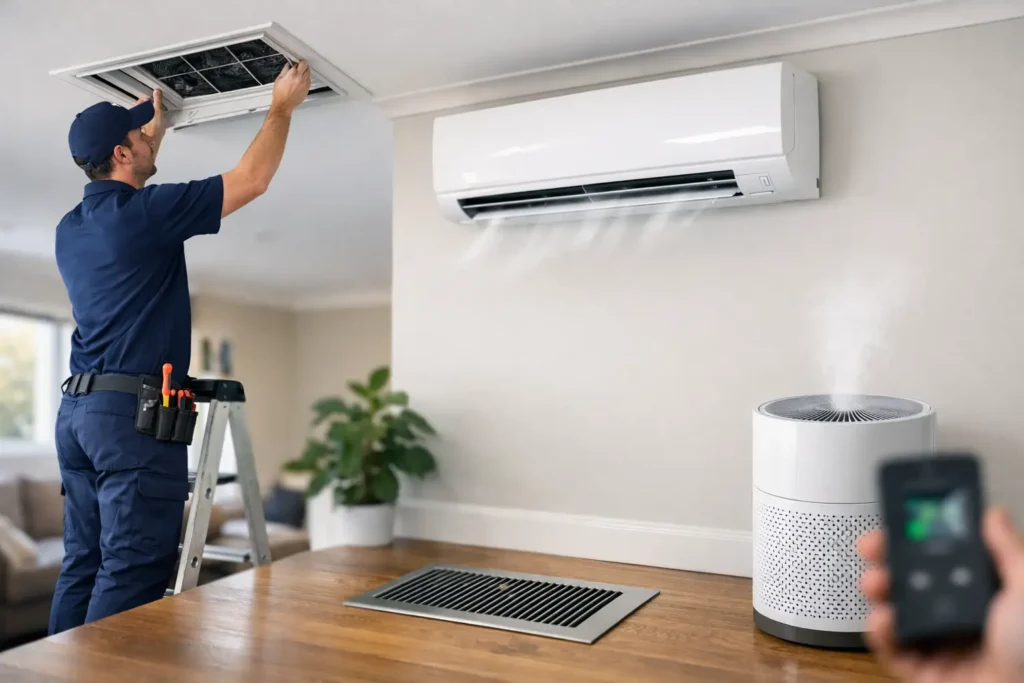
For a typical home, maintenance may include filter care, checking return-air grilles and supply vents, inspecting accessible ductwork, cleaning the indoor unit where required, and confirming that airflow is not being restricted. Commercial systems may also need more frequent checks because longer operating hours, higher occupancy and more dust exposure place greater demand on the equipment.
The right option depends on the problem you are trying to prevent. If rooms are unevenly heated or cooled, airflow and duct condition deserve attention. If there is a musty smell when the system runs, the indoor unit, drain components and ductwork may need closer inspection. If power bills have climbed without a clear reason, a blocked filter, dirty coils or leaking ducts could be contributing.
Filter replacement and routine cleaning
Filter maintenance is the simplest and most valuable part of many HVAC maintenance schedules. Filters capture dust, lint, pet hair and other particles before they enter sensitive system components or return to occupied rooms. Once clogged, they restrict airflow and force the system to work harder to deliver the same result.
Washable filters should be cleaned according to the manufacturer’s instructions and allowed to dry fully before being refitted. Disposable filters should be replaced with the correct size and rating. Using an unsuitable filter, or fitting it the wrong way around, can create airflow issues rather than solve them.
How often this is needed depends on the property. A household with pets, young children, allergies, nearby construction work or open windows may need more frequent filter checks. In offices, classrooms and retail spaces, filters can load up quickly because systems run for longer periods and serve more people.
Regular filter care is affordable, but it is not a substitute for professional cleaning where contamination has built up inside the system. A clean filter cannot remove dust already sitting in ducts, on indoor coils or inside a split-system head.
Professional duct cleaning for airflow and indoor air quality
Duct cleaning is one of the most practical HVAC maintenance options for properties with ducted heating or cooling. Over time, ducts can collect fine dust, hair, building debris and allergens. If moisture is present, mould risk may also increase. Every system is different, so duct cleaning should follow an inspection of the accessible components and a clear explanation of the work required.
Professional cleaning uses specialist equipment to remove accumulated debris from ducts, vents and return-air pathways. HEPA filtration is particularly valuable because it helps contain fine particles during the cleaning process rather than releasing them back into the property.
Homeowners often choose duct cleaning after renovations, before moving into a property, when dust returns soon after cleaning, or when family members are affected by allergies. Property managers may schedule it between tenancies, while commercial operators may include it in planned maintenance to support cleaner shared spaces and reliable airflow.
Duct cleaning is not required on a fixed calendar date for every building. A lightly used system in a clean home may need attention less often than a busy childcare centre, warehouse office or property near a major road. The better question is whether the ducts show dust build-up, whether airflow has changed and whether the occupants are experiencing comfort or air-quality concerns.
Split-system cleaning is more than wiping the cover
Split systems need their own maintenance plan. The visible cover may look clean while the filters, evaporator coil, fan barrel and drain area hold dust and moisture. This build-up can reduce airflow, cause unpleasant odours and create conditions where mould can develop.
A proper split-system clean reaches the components that affect performance, not just the plastic casing. The technician should clean the filters, treat the internal areas safely and check that the condensate drain is flowing correctly. Water dripping indoors, a sour smell or reduced cooling output are clear signs that a professional clean should not be delayed.
For bedrooms, living rooms and small offices, regular split-system cleaning can make a noticeable difference to comfort. It is especially worthwhile before summer, after extended winter heating use, or when the unit has been operating with a dusty filter for too long.
Mechanical servicing and safety checks
Cleaning improves air movement and hygiene, but mechanical servicing protects the equipment itself. Depending on the system, a qualified technician may check electrical connections, fan operation, thermostat response, refrigerant performance, belts, motors, drainage and safety controls. Gas ducted heating also requires appropriate safety checks by suitably licensed professionals.
This option is essential when a system is noisy, short-cycling, failing to maintain temperature or showing warning lights. It is also the right choice where there is no obvious dirt issue but performance has dropped. Mechanical faults are not always visible from the vents, and delaying repairs can turn a minor component issue into a larger failure.
For commercial buildings, planned servicing is usually more cost-effective than reacting to breakdowns. Lost heating or cooling can affect staff, customers, stock and business operations. A documented maintenance schedule also gives building managers a clearer record of what has been inspected, cleaned and repaired.
Vent, exhaust and chimney maintenance
Air quality is not limited to heating and cooling ducts. Exhaust fans, bathroom vents, kitchen extraction points and chimneys also remove moisture, smoke, grease and combustion by-products from a building. When these pathways are blocked or neglected, the result may be lingering odours, excess humidity, mould growth or increased fire risk.
Bathroom and laundry exhaust systems need clear airflow to remove moisture before it settles on walls and ceilings. Commercial kitchen exhaust systems need regular professional attention because grease accumulation is a serious fire and hygiene concern. Chimneys should be inspected and cleaned based on their use, fuel type and visible soot build-up.
These services are often best coordinated with broader HVAC maintenance. It gives property owners a more complete view of the ventilation systems that influence comfort, cleanliness and safety.
Choosing between a one-off clean and a maintenance plan
A one-off service is suitable when there is a specific concern: dusty vents after renovation work, mouldy odours from a split system, a blocked exhaust fan or a property about to be occupied. It can restore cleanliness and address an immediate problem without committing to a recurring arrangement.
A scheduled maintenance plan is generally better for larger homes, rental portfolios, schools, offices, medical settings and commercial premises. It allows filters, airflow, cleanliness and system performance to be checked at sensible intervals. The schedule should reflect actual use rather than a generic promise of frequent visits.
When comparing providers, ask what equipment they use, whether they can explain the condition of the system, what is included in the quote and whether they are fully insured. Clear pricing and practical recommendations are signs of a contractor focused on results, not unnecessary add-ons.
Top Air Duct Cleaning provides professional duct, split-system, exhaust and ventilation cleaning across Melbourne and surrounding suburbs, with same-day service available where scheduling permits. Our fully insured technicians use professional cleaning methods and HEPA filtration equipment to help improve airflow and reduce dust and allergens in your property.
A well-maintained HVAC system should be easy to forget about because it delivers cleaner air and dependable comfort without demanding attention. If your vents are dusty, airflow is weak or your system is overdue for professional cleaning, call 0457 666 469 for a free quote or visit www.topairductcleaning.com.au.
