
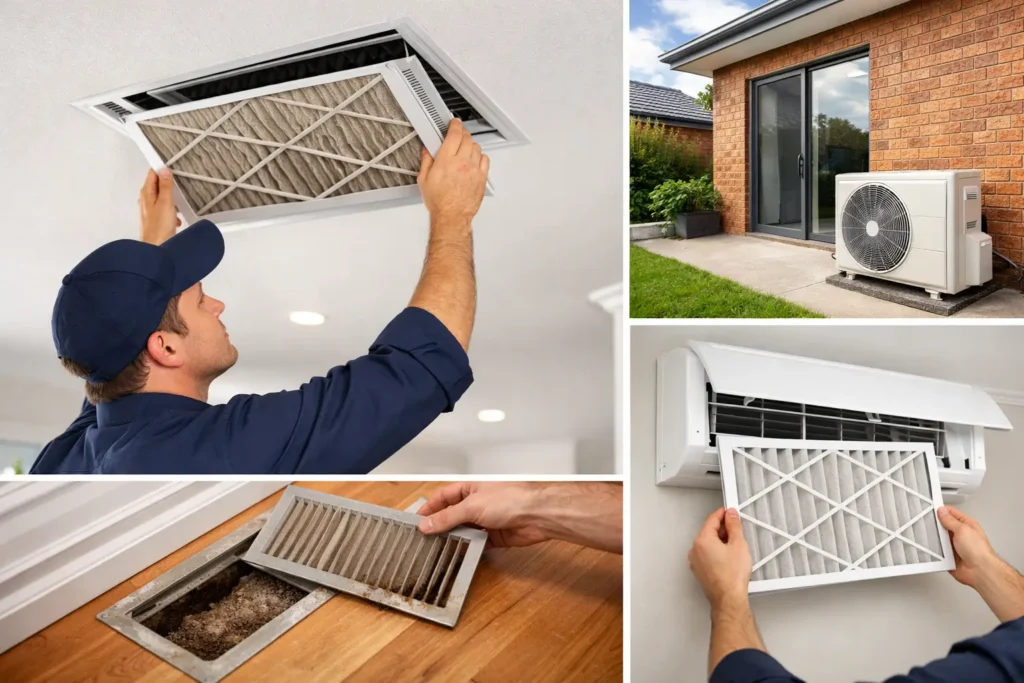
A neglected air filter can turn a clean, comfortable property into a dusty one faster than most people expect. Filter replacement is one of the simplest ways to protect indoor air quality, support better heating and cooling performance, and reduce the strain placed on your HVAC system. Yet it is often missed until airflow drops, rooms feel stuffy, or dust starts collecting around vents.
For Melbourne homeowners, property managers and commercial operators, replacing filters at the right time is practical preventative maintenance. It can help reduce airborne dust, pollen, pet dander and other particles before they circulate through occupied rooms. The right schedule, however, depends on the system, the filter type and how the property is used.
Why filter replacement matters
Your HVAC filter is designed to capture particles from return air before that air moves through the system. As the filter collects dust and debris, it gradually becomes more restrictive. A clogged filter makes the fan work harder to move air, which may reduce airflow at supply vents and put unnecessary pressure on equipment.
The result can be uneven temperatures, longer heating or cooling cycles, rising running costs and a less comfortable indoor environment. In homes with allergies, pets, young children or occupants with respiratory sensitivities, a dirty filter can also contribute to more noticeable dust and irritation.
For commercial properties, the consequences can be more disruptive. Busy offices, schools, retail spaces and facilities with high foot traffic usually introduce more dust and contaminants into the air. If filters are not checked regularly, poor airflow can affect occupant comfort and make HVAC maintenance issues harder to spot early.
A clean filter is not a substitute for professional duct cleaning when ductwork has accumulated significant dust, mould risk or debris. It is, however, an essential first line of defence that helps keep the whole system operating as intended.
Signs your filter needs replacement
There is no single replacement date that suits every system. Still, several warning signs usually indicate that the filter should be inspected straight away.
The most obvious sign is visible dirt. If the filter surface is grey, heavily coated in dust, bowed or damaged, it has done its job and should be changed. Reduced airflow from vents is another common signal, especially if your heating or cooling previously performed well.
You may also notice that rooms take longer to warm up or cool down, or that some areas feel noticeably different from others. A dusty smell when the system starts, increased dust on furniture, and an unexplained rise in energy use can all point to a restricted filter. These signs do not always mean the filter is the only problem, but they are a good reason to check it.
In ducted systems, do not assume the filter is accessible behind every vent. Filter locations vary between systems and may be located at a return-air grille, in an indoor unit, or within a dedicated filter compartment. Forcing open panels or fitting the wrong size can create damage or allow unfiltered air to bypass the frame.
Typical replacement intervals
A standard disposable filter in a regularly used home system often needs attention every one to three months. A washable filter may require cleaning more frequently, but it must be completely dry before being reinstalled. A damp filter can encourage mould growth and create odours.
Properties with pets, smokers, open windows near busy roads, renovation activity or high occupant numbers may need more frequent checks. The same applies during periods when heating or cooling runs for long hours. In a commercial setting, monthly inspections are often sensible, with the actual replacement interval determined by filter condition and manufacturer guidance.
Higher-efficiency filters can capture finer particles, but they may also create more airflow resistance if they are not compatible with the system. Choosing the most restrictive filter available is not always the best outcome. The filter must suit the unit’s design, fan capacity and the property’s air quality needs.
Choosing the right HVAC filter
Start by checking the existing filter’s dimensions, type and manufacturer recommendation. The size should be printed on the filter frame or listed in the system manual. A filter that is even slightly too small can leave gaps around the edges, allowing dusty air to pass around it rather than through it.
Filter ratings also matter. In general, a higher-rated filter captures smaller particles, which can be useful for homes with allergies or properties that experience heavy dust. However, higher filtration is only beneficial when the HVAC system is designed to handle it. If you are unsure, seek advice from a qualified HVAC professional rather than guessing.
Reusable filters may appear more economical, but they require consistent cleaning and careful drying. Disposable filters offer convenience and reliable replacement, provided the correct product is used. Neither option is automatically better. The right choice depends on your system, maintenance habits and the level of filtration required.
For split systems, the filters are usually washable mesh screens behind the front cover. These should be cleaned regularly, particularly before periods of heavy seasonal use. It is also worth remembering that a clean split-system filter does not mean the internal coil, fan barrel and drain components are clean. Those areas can retain built-up dust and moisture and may need professional cleaning.
How to handle filter replacement safely
Before removing a filter, switch the HVAC system off. This prevents the unit from drawing in loose dust while the filter is out and gives you a safer opportunity to inspect the compartment. Take note of the airflow arrow printed on disposable filters. It should point in the direction air travels through the system, usually towards the equipment.
Vacuum loose dust around the return grille or filter housing using suitable equipment, then fit the new filter securely without bending it. Do not run a ducted system without a filter, even for a short period. Unfiltered air can carry dust directly onto internal components and into ductwork.
After installation, turn the system back on and listen for unusual noises. Check that airflow feels normal at the vents. If there is still weak airflow, rattling, unpleasant odours or uneven temperatures, there may be a separate issue such as dirty ducts, blocked vents, a contaminated coil or a mechanical fault.
When a new filter is not enough
Filter replacement improves what happens next, but it cannot remove dust and contaminants already sitting inside ductwork, return-air pathways or internal HVAC components. If you have recently renovated, moved into a property with an unknown maintenance history, noticed visible dust blowing from vents or experienced persistent musty odours, a deeper inspection is worthwhile.
Mould concerns should always be treated seriously. Filters may capture some airborne particles, but they do not solve moisture problems, drainage faults or contamination already present in the system. Likewise, if exhaust fans are not clearing steam effectively or chimney ventilation is compromised, those issues require targeted cleaning and maintenance rather than a filter change alone.
Professional cleaning can help remove accumulated debris from ducts, vents and accessible system components using appropriate equipment and HEPA filtration. At Top Air Duct Cleaning, our fully insured technicians assess the condition of the system and provide clear advice on the service that will make a practical difference, without unnecessary work.
Build filter checks into your maintenance routine
The most reliable approach is to set a recurring reminder rather than waiting for a problem. Check filters at the beginning of high-use heating and cooling seasons, after nearby building works, and whenever indoor dust or airflow changes become noticeable. Property managers can include filter inspections in routine maintenance records, particularly for tenancies with ducted air conditioning.
Keep a note of the filter size, type and replacement date near the system or in your maintenance file. This small step prevents last-minute guesswork and makes it easier to identify patterns, such as filters becoming dirty unusually quickly. If that happens, the underlying cause may be excess dust entering the property, leaking ductwork or a system that needs cleaning.
Clean air starts with simple habits, but it should not stop at a filter when your HVAC system is showing larger signs of contamination or poor performance. For dependable advice, professional duct and HVAC cleaning, and a free quote across Melbourne, call Top Air Duct Cleaning on 0457 666 469 or visit www.topairductcleaning.com.au. A properly maintained system gives your property cleaner air, stronger airflow and greater day-to-day comfort.
