
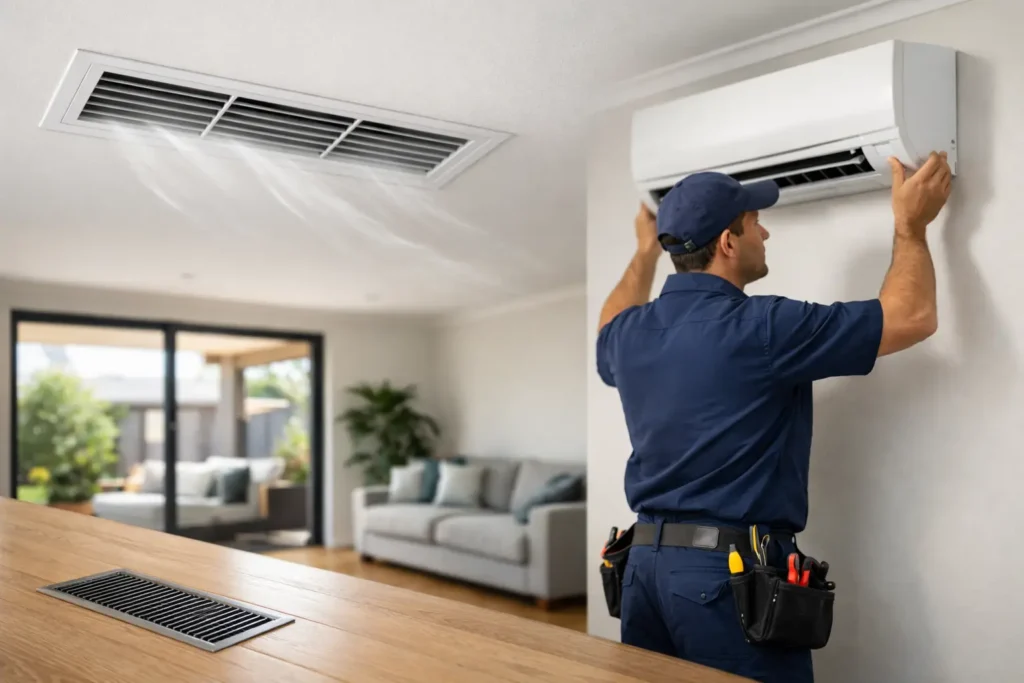
A room that feels stuffy by mid-afternoon, a bathroom mirror that stays fogged long after a shower, or heating and cooling that seems to run without delivering comfort are not minor annoyances. They are common signs that air is not moving through the property as it should. Knowing how to improve ventilation efficiency helps reduce moisture, dust and lingering odours while taking unnecessary strain off your heating and cooling system.
Ventilation efficiency is not simply about moving more air. It is about moving the right amount of clean air through the right areas, then removing stale, humid or contaminated air safely. For Melbourne homes, schools, offices and commercial spaces, the best approach depends on the building layout, occupancy, existing system and the specific issue causing poor airflow.
Start by finding where airflow is being lost
Before changing equipment or opening every window, identify the areas where ventilation is failing. Walk through the property while the heating, cooling or mechanical ventilation is operating. Check whether air is flowing consistently from supply vents, whether some rooms stay noticeably warmer or colder, and whether exhaust fans are actually drawing air out.
Poor airflow often comes down to an obstruction or imbalance. Dirty return-air grilles, clogged filters, dust-filled ductwork, crushed flexible ducts and closed vents can all restrict the system. Furniture pushed against return vents is another simple but frequent problem. A return grille needs clear space around it to pull air back to the system.
Pay close attention to bathrooms, laundries, kitchens and internal rooms without opening windows. These spaces produce moisture, steam, fumes or odours and rely more heavily on mechanical extraction. If condensation remains on glass, paint is peeling, or musty smells return soon after cleaning, the ventilation rate may be inadequate or the fan may be underperforming.
How to improve ventilation efficiency through cleaning
Clean components allow air to travel with less resistance. When dust builds up in filters, grilles, fans and ductwork, the system has to work harder to move the same volume of air. That can affect comfort, increase running costs and circulate more settled dust through occupied rooms.
Replace or clean HVAC filters on schedule
A blocked filter is one of the fastest ways to reduce airflow. Check the filter type recommended by the manufacturer and inspect it regularly, particularly during periods of heavy heating or cooling use. Homes with pets, nearby construction work, busy roads or allergy-sensitive occupants may need more frequent checks.
Do not fit a high-density filter simply because it sounds more effective. Some systems cannot handle the added resistance without reducing airflow. The right filter balances particle capture with the airflow capacity of the unit. If you are unsure, have a qualified HVAC professional assess the system rather than guessing.
Keep vents, grilles and diffusers clear
Supply and return vents collect a surprising amount of fine dust. Vacuum visible build-up carefully and wipe removable grilles where appropriate. Ensure curtains, beds, cupboards and furniture are not blocking them. Closing multiple supply vents to force more air into one room can also create pressure problems and may reduce overall system performance.
In commercial properties, ceiling diffusers can be overlooked because they are out of reach. Yet visible dust streaks around them, uneven room temperatures or complaints from staff can indicate a cleaning or balancing issue worth investigating.
Arrange professional duct and fan cleaning when needed
Surface cleaning has limits. Dust, debris and allergens can accumulate inside ducted heating and cooling systems, while bathroom, kitchen and exhaust fans can become coated with lint and grease. This build-up restricts airflow and may allow odours and particles to recirculate.
Professional cleaning using suitable HEPA filtration equipment removes loosened contaminants without simply spreading them back into the room. It is particularly worthwhile after renovations, pest activity, water damage, long periods of neglect, or when dust returns quickly after routine cleaning. For commercial kitchens, exhaust systems require a more rigorous maintenance program because grease accumulation affects both airflow and fire safety.
Balance fresh air and extraction
Effective ventilation needs a clear air path. Fresh air should enter cleaner areas such as living spaces, bedrooms or offices, then travel towards areas where moisture and pollutants are generated, including bathrooms, laundries and kitchens. Extraction fans then remove that stale air outside.
A bathroom fan cannot perform properly if the room is sealed too tightly and there is no replacement air entering under the door or through another designed opening. Similarly, an extractor that vents into a roof cavity rather than outdoors can shift moisture into the building structure instead of removing it. Check that exhaust ducts are connected, intact and discharged externally.
Natural ventilation can help when outdoor conditions are suitable. Opening windows on opposite sides of a home creates cross-ventilation, which is generally more effective than opening one window alone. However, it depends on outdoor air quality. During high-pollen days, bushfire smoke events, heavy traffic pollution or very humid weather, open windows may not be the best option. Use mechanical ventilation and appropriate filtration where outdoor conditions make natural airflow unsuitable.
Use exhaust fans correctly in moisture-heavy rooms
Run bathroom exhaust fans during showers and leave them on for at least 15 to 20 minutes afterwards, provided the fan is functioning correctly. This gives humid air time to leave before it condenses on cooler surfaces. In a laundry, use extraction when a dryer is operating, especially if it is not externally vented.
Kitchen rangehoods should be used whenever cooking produces steam, smoke or grease. A recirculating rangehood can reduce some airborne grease and odour, but it does not remove moisture outdoors in the same way as a ducted model. Clean the filters regularly and ensure any external duct is not blocked or disconnected.
If an exhaust fan is noisy but weak, replacing the grille alone will not solve the issue. The motor, duct length, duct diameter, bends and external vent cover can all affect extraction performance. A professional assessment can determine whether cleaning, repair or replacement is the sensible option.
Maintain your heating and cooling system for better airflow
Ducted heating and cooling systems are designed around airflow volume and pressure. Leaks, damaged insulation, loose joins and poorly adjusted zone dampers can mean conditioned air is lost before it reaches the rooms that need it. This wastes energy and leaves occupants tempted to turn the thermostat lower or higher, further increasing costs.
Have the system inspected if some rooms never receive adequate airflow, if vents whistle, or if the unit cycles continuously. In some cases, the solution is as simple as a filter change and duct clean. In others, the system may need duct repairs, fan servicing or air balancing. The correct fix depends on the condition and design of the installation.
Do not overlook the outdoor unit of a split system. Leaves, dust and vegetation around the condenser restrict heat transfer and can reduce efficiency. Keep the area clear and arrange regular servicing so coils, drainage and internal components can be checked properly.
Improve everyday habits that support ventilation
Small operating habits make a measurable difference over time. Keep internal doors open where practical to allow air to circulate, but close doors to contain steam or cooking fumes while an exhaust fan is running. Avoid drying wet clothes indoors unless the space has adequate extraction or dehumidification.
Monitor humidity in rooms that are prone to condensation. Persistent moisture is not always a ventilation problem alone – leaks, inadequate insulation and cold surfaces can also contribute. Addressing the underlying cause protects the property better than relying on air fresheners or temporary fixes.
For property managers and commercial decision-makers, ventilation should be part of a planned maintenance schedule rather than a response to complaints. Regular filter changes, duct inspections, fan cleaning and documented servicing help prevent disruption, protect indoor air quality and support more reliable HVAC performance.
Clean, well-maintained airflow is one of the most practical ways to make a property healthier and more comfortable. For professional duct, vent, exhaust fan or split-system cleaning across Melbourne, contact Top Air Duct Cleaning for a free quote on 0457 666 469 or visit www.topairductcleaning.com.au.
