
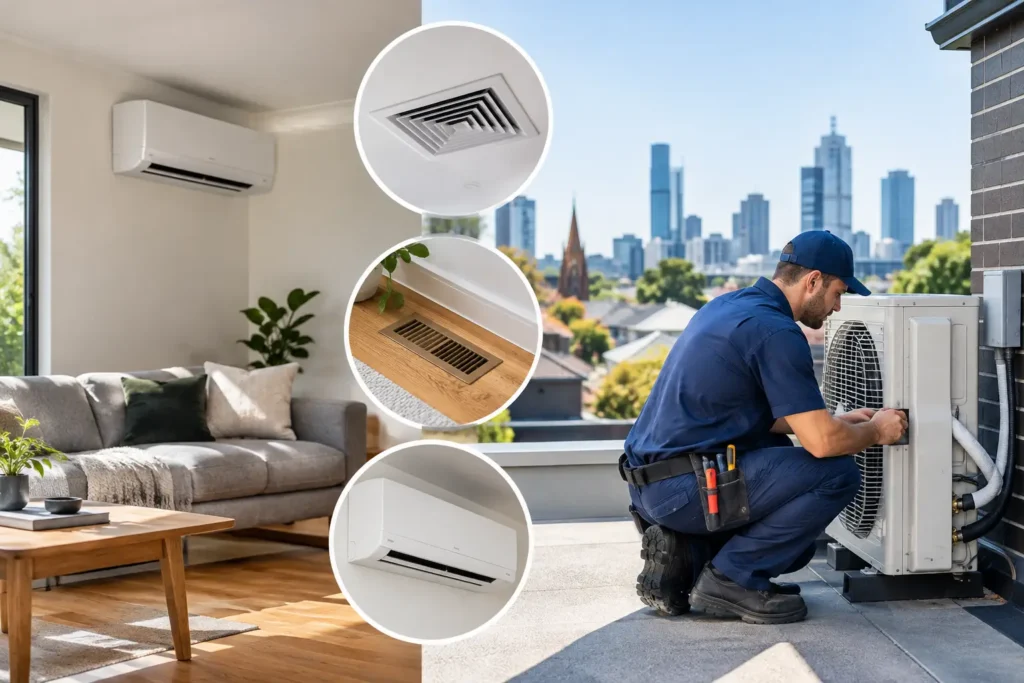
A heating and cooling system can look perfectly functional while quietly wasting energy through dirty ductwork, air leaks or poor control settings. The best HVAC efficiency upgrades are not always the most expensive ones. For many Melbourne homes and commercial properties, restoring clean airflow and correcting obvious losses delivers a faster, more noticeable result than replacing the whole system.
The right priority depends on the age of your equipment, the condition of the ducting, how the building is used and whether comfort problems are isolated or widespread. Start with the changes that reduce unnecessary strain on the system, then consider larger upgrades where they will genuinely pay off.
Start with a professional duct and vent clean
Ducted heating and cooling relies on clear, balanced airflow. Over time, dust, pet hair, building debris and allergens can collect inside ducts, return-air grilles and vents. This buildup can restrict circulation, force fans to work harder and send contaminants back through occupied rooms.
Professional duct cleaning removes accumulated debris from the areas that ordinary vacuuming cannot reach. At Top Air Duct Cleaning, technicians use professional equipment with HEPA filtration to capture fine particles during the cleaning process rather than redistributing them indoors. The practical benefit is improved airflow, less visible dust around vents and a cleaner starting point for maintaining system performance.
Cleaning is especially worthwhile after renovations, before running heating for winter, when occupants have allergies, or when airflow from particular outlets has become noticeably weak. It will not repair damaged ductwork or turn an undersized unit into a suitable one, but it can remove a common source of resistance and poor indoor air quality.
Seal leaking ductwork before upgrading equipment
Leaky ducts are one of the most overlooked causes of energy waste in ducted systems. If conditioned air escapes into a roof cavity, underfloor area or wall void, the unit has to run longer to reach the thermostat setting. Rooms at the far end of the duct run may stay uncomfortable, while rooms near the unit receive too much air.
A qualified technician can inspect accessible duct connections, joins, flexible ducting and outlet boots for tears, crushed sections and loose fittings. Duct sealing should use materials designed for HVAC applications. Standard cloth tape often dries out and fails under heat, dust and movement.
This upgrade is particularly valuable in older properties or homes where ducting has been disturbed by trades, pests or roof work. In commercial spaces, duct leakage can also undermine air balance between offices, meeting rooms and shared areas. Fixing leaks may cost far less than installing a larger system to compensate for lost airflow.
Improve insulation around the building and duct runs
An efficient HVAC system cannot overcome a building that gains heat rapidly in summer and loses it in winter. Ceiling insulation, wall insulation where practical, door seals and well-fitted window coverings reduce the load placed on heating and cooling equipment.
For ducted systems, the condition and placement of duct insulation also matters. Ducts running through hot roof spaces can absorb heat before cooled air reaches the rooms below. In winter, poorly insulated ducts can lose warmth before it gets to the outlet. Damaged insulation jackets and compressed flexible ducts should be assessed as part of an overall efficiency check.
Insulation upgrades often deliver their best value when paired with realistic temperature settings. Cooling a home to an excessively low temperature on a 40-degree day, for example, will still demand significant energy. Better insulation gives the system a fairer chance to maintain comfort without constantly running at full capacity.
Add zoning where different areas need different comfort levels
Zoning divides a ducted system into separately controlled areas, such as bedrooms, living areas, upstairs spaces or office sections. Instead of heating or cooling every room at once, you can direct conditioned air only where people are present.
For a large family home, zoning can prevent empty bedrooms from being conditioned all day. For a commercial property, it can account for different occupancy patterns, sun exposure and operating hours. This reduces wasted runtime and can improve comfort in areas that previously received too much or too little airflow.
Zoning is not automatically right for every system. A poorly designed zoning layout can create excess static pressure when too many outlets are closed, which may increase noise and strain the fan. The system needs suitable controls, adequate return air and a design that maintains safe airflow. Have an experienced HVAC professional assess whether your existing unit can support it.
Use a smart thermostat or upgraded controls
Basic thermostats can keep a system running long after a room is comfortable, especially when they are poorly located or programmed. Smart controls give property owners more precise scheduling, temperature management and, in some cases, remote access from a mobile.
The strongest savings usually come from simple habits: setting different temperatures for occupied and unoccupied periods, avoiding all-day operation in empty buildings, and using sensible setbacks overnight. A programmable control is useful only when the schedule reflects how the property is actually used.
Thermostat placement matters as much as the device itself. A controller near direct sunlight, a kitchen, an exterior door or a heat-producing appliance may misread the room temperature. Before blaming the HVAC unit, check whether the control is telling it to run based on inaccurate conditions.
Upgrade filters and maintain return-air pathways
Filters protect the internal components of your system and help manage airborne particles. A clogged filter restricts return airflow, which can increase energy use and reduce heating or cooling output. In some systems, severe restriction can contribute to coil problems or overheating.
Use the filter type recommended for your equipment and replace or clean it on schedule. Higher-filtration options can be helpful for households managing dust, pets and allergies, but they must be compatible with the system. Choosing a filter that is too restrictive can create the same airflow issue you are trying to solve.
Return-air grilles should also remain clear. Do not block them with furniture, boxes, curtains or stock in a commercial setting. Supply vents need similar attention. Closing multiple vents in an attempt to save energy can disrupt airflow and pressure balance, so it is better to use purpose-designed zoning controls where required.
Consider high-efficiency replacement when repairs keep mounting
Replacing an ageing heater, air conditioner or split system is a major investment, but it can be the correct decision when equipment is unreliable, inefficient or no longer suited to the building. Modern systems can offer improved energy ratings, variable-speed operation and more precise temperature control.
Replacement makes the most sense after the fundamentals have been reviewed. There is little value in installing a high-efficiency unit while leaving dirty ducts, major leakage, inadequate insulation or poor control settings untouched. The new equipment will still be working against the same underlying problems.
Correct sizing is critical. An oversized system may cycle on and off too frequently, while an undersized unit can run continuously without reaching set temperatures. A proper assessment should account for room size, insulation, glazing, ceiling height, orientation, occupancy and local Melbourne conditions, not just the floor area on a plan.
The best HVAC efficiency upgrades work together
For most properties, the most effective sequence is straightforward: clean and maintain the system, restore unrestricted airflow, repair duct defects, improve controls and then assess whether zoning or replacement is justified. This approach avoids spending heavily before the real cause of poor performance is understood.
Property managers and commercial operators should also treat HVAC efficiency as a maintenance issue, not a once-off project. Scheduled cleaning, filter checks and visual inspections help identify problems before tenant complaints, rising power bills or poor airflow become urgent.
If your ducts are dusty, vents have weak airflow or your heating and cooling seems to run longer than it should, a professional inspection is a practical place to start. For reliable ducted heating and cooling cleaning across Melbourne, contact Top Air Duct Cleaning for a free quote on 0457 666 469 or visit www.topairductcleaning.com.au. Cleaner airflow is one of the simplest ways to help your system work as intended.
