A chimney fire rarely begins with dramatic flames shooting from the roof. More often, it starts quietly: soot and creosote build up inside the flue, airflow becomes restricted, and one hot fire is enough to ignite the deposits. Knowing how to prevent chimney fires means treating the chimney as a working safety system, not simply part of the fireplace.
For Melbourne homeowners, landlords and facility managers, regular chimney care protects people, property and heating equipment. It also helps your fireplace or wood heater burn more efficiently, with less smoke entering the room and less waste escaping up the flue.
Why chimney fires happen
When timber burns, it releases smoke, moisture, gases and fine particles. As these travel through a cooler chimney or flue, they can condense and form creosote – a dark, sticky or crust-like residue. Creosote is highly flammable. If enough builds up, the heat from a fire can set it alight inside the flue.
Poor burning habits make the problem worse. Burning wet wood, closing down the air supply too early, running a slow smouldering fire, or using a fireplace with inadequate draft all produce heavier smoke and faster creosote accumulation. A blocked flue, bird nest, fallen debris or damaged chimney liner can further restrict airflow and increase risk.
A chimney fire may be loud, with a roaring sound, popping noises or dense smoke. But some are slow-burning and difficult to notice. Even a brief fire inside the flue can crack liners, damage mortar, warp metal components and expose nearby building materials to dangerous heat.
How to prevent chimney fires with regular cleaning
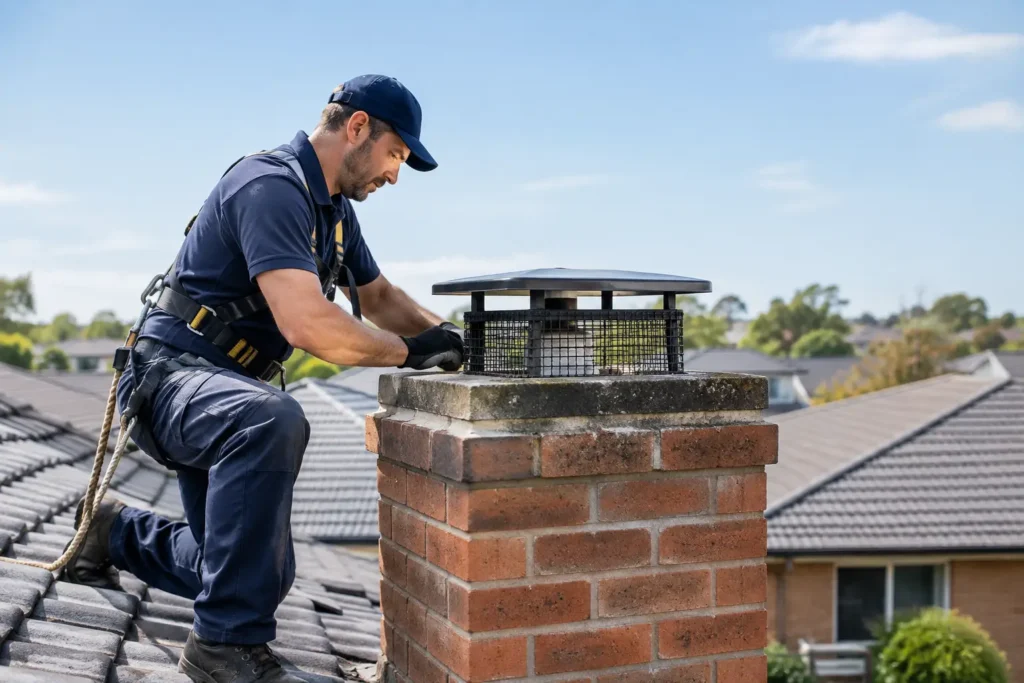
Professional chimney cleaning is the most direct way to reduce fire risk. A trained technician removes soot, creosote and loose debris from the flue, smoke chamber and accessible fireplace components. They can also identify signs of damage, blockages, poor draft or previous heat stress that a property owner may not see from below.
How often a chimney needs cleaning depends on how frequently it is used, what fuel is burned and the condition of the appliance. A fireplace used every night through winter will usually need more attention than one used a handful of times each year. As a practical minimum, arrange a professional inspection before the main heating season, particularly if the chimney has not been checked in the past 12 months.
For rental homes, inspections should form part of a planned maintenance schedule. Property managers should not rely solely on tenants reporting a problem, as creosote can build up long before smoke or odours become obvious. Commercial properties with solid-fuel heating or cooking equipment may require more frequent servicing based on their usage and site requirements.
Burn the right wood, the right way
The wood you burn has a major effect on chimney cleanliness. Use dry, seasoned hardwood from a reliable supplier. Properly seasoned wood burns hotter and more completely, producing less smoke and less creosote than green or damp timber.
Fresh-cut wood contains a high level of moisture. When it burns, much of the fire’s heat is spent evaporating water instead of maintaining clean combustion. The result is a smoky, cooler fire that leaves more residue inside the chimney. If wood hisses, steams or struggles to stay alight, it is likely too wet.
Avoid burning treated timber, painted wood, pallets, particleboard, rubbish or cardboard packaging. These materials can release toxic fumes, create excessive ash and leave harmful deposits in the flue. They are not a safe substitute for quality firewood.
Build fires with sufficient airflow and avoid keeping them low and smouldering for long periods. Once the fire is established, use the appliance controls according to the manufacturer’s instructions. A bright, steady fire is generally cleaner than one producing thick grey smoke. Never overload the firebox in an attempt to make the fire last through the night.
Keep the flue clear and the fireplace maintained
A clear path for smoke and combustion gases is essential. Before lighting a fire, check that the damper or flue control is open and that no visible debris is blocking the fireplace. If smoke spills back into the room, extinguish the fire safely and arrange an inspection rather than assuming it will improve on its own.
Birds, leaves, twigs and nesting material can enter uncapped chimneys. A suitable chimney cowl or cap can reduce this risk while helping to keep rain out. It must be selected and fitted correctly, however, as an unsuitable cap can interfere with draft. A professional can advise on the right option for the chimney and appliance.
Keep the area around the hearth clear of firewood, rugs, furniture, decorations and other combustible items. Use a properly fitted fire screen where appropriate, especially in homes with children or pets. Ash should be removed regularly into a metal container with a lid, then stored outside on a non-combustible surface until completely cold. Ash can retain heat for much longer than expected.
Outside, look for cracked brickwork, deteriorating mortar, loose flashing or signs of water entry around the chimney. Moisture can damage liners and masonry over time, while gaps can allow heat or smoke to reach areas where they do not belong. Do not climb onto the roof to investigate. If you notice a concern, book a qualified inspection.
Warning signs that should not be ignored
A strong smoky smell, black flakes falling into the fireplace, poor draft, visible soot around the opening or unusual stains on walls and ceilings can all point to chimney issues. So can a fire that suddenly burns differently from normal, such as smoke entering the room or flames behaving unpredictably.
Pay attention to noises as well. A loud roaring, rumbling or cracking sound from the chimney may indicate a chimney fire. Other warning signs include exceptionally hot fireplace surrounds, sparks or flames from the top of the chimney, and dense smoke outdoors.
If you suspect a chimney fire, get everyone out of the property, call Triple Zero (000), and do not re-enter until emergency services say it is safe. If it is safe to do so without delaying evacuation, close the appliance air controls to limit oxygen. Do not throw water into a wood heater or fireplace, as rapid cooling can damage hot components and create steam hazards. Do not use the fireplace again until it has been professionally inspected and cleared for use.
Do not overlook smoke alarms and carbon monoxide safety
Chimney maintenance works alongside, not instead of, working smoke alarms. Test smoke alarms regularly, replace batteries as required and ensure alarms are installed in suitable locations throughout the home. For properties with combustion appliances, consider carbon monoxide alarms that meet relevant Australian requirements, particularly near sleeping areas and according to manufacturer guidance.
Carbon monoxide has no colour or smell. A blocked or poorly drafting flue can allow combustion gases to enter living spaces, creating a serious health risk. Headaches, dizziness, nausea and unusual tiredness while the fire is operating should be treated seriously. Turn the appliance off if safe, ventilate the area, leave the building and seek appropriate assistance.
Make chimney care part of winter preparation
The best time to deal with chimney maintenance is before the first cold spell makes the fireplace a daily habit. Book cleaning and inspection early, stock dry timber, test alarms and look over the hearth area before lighting the season’s first fire. This approach prevents rushed decisions when a problem appears on a chilly night.
Top Air Duct Cleaning provides dependable chimney cleaning for Melbourne homes and commercial properties, with transparent quoting and responsive service. To arrange a chimney clean or request a free quote, call 0457 666 469 or visit www.topairductcleaning.com.au.
A clean, inspected chimney lets you enjoy the comfort of a real fire with greater confidence. Give it the same routine attention you would give any other heating system, and act early whenever smoke, odours or poor airflow suggest something is not right.
