A ducted system can look perfectly normal from the living room while carrying years of dust, fine debris, pet hair and allergens through the property. That is why choosing the right HVAC contractors matters. The work is not simply about making vents look cleaner. It is about improving airflow, reducing contamination inside the system and helping your heating and cooling equipment perform as it should.
For Melbourne homeowners, property managers and commercial operators, HVAC maintenance is often left until there is a noticeable problem: rooms that will not heat or cool evenly, musty smells when the unit starts, visible dust around vents, or complaints about stale air. By then, the system may already be working harder than necessary. A professional inspection and cleaning plan can address the source rather than masking the symptoms.
What HVAC Contractors Should Actually Do
The term HVAC contractor covers a broad range of heating, ventilation and air conditioning work. Some contractors focus on installation, repairs or mechanical upgrades. Others specialise in cleaning ventilation systems, ducted heating and cooling components, split systems, exhaust fans and related air-quality concerns.
The right service depends on the problem. If a system has an electrical fault, refrigerant issue or failed component, it needs an appropriately qualified repair technician. If the issue is dust buildup, reduced airflow, odours, allergens or contamination in ducts and vents, a specialist cleaning contractor is the better fit. Good contractors explain that difference clearly instead of selling work that does not solve the actual issue.
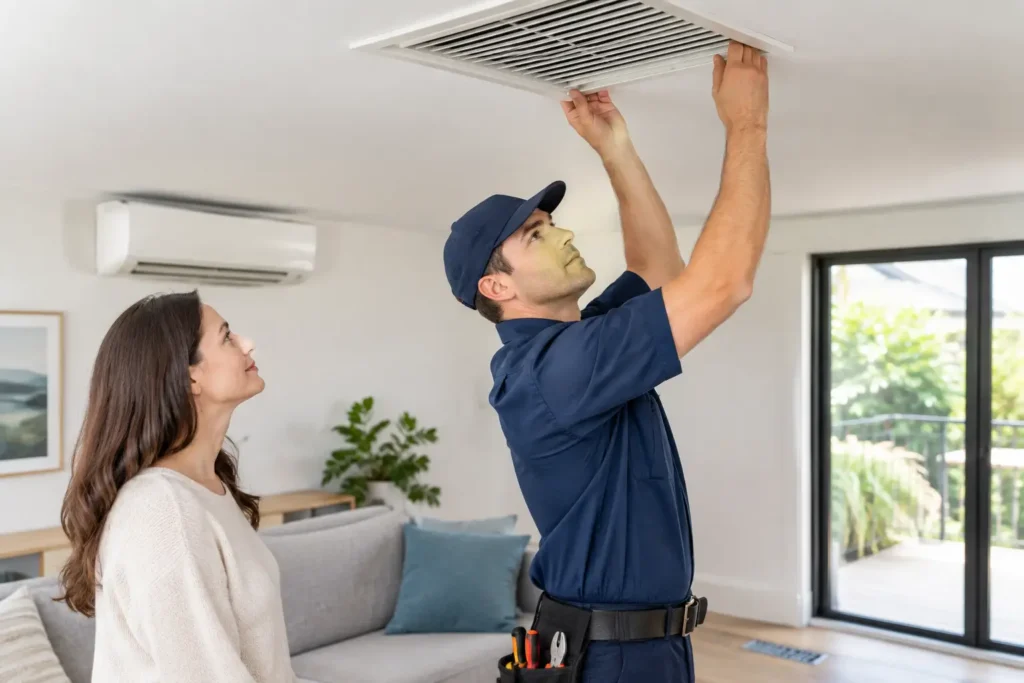
For duct and ventilation cleaning, the process should go beyond a quick vacuum at the vent cover. Professional work involves assessing accessible duct runs, return-air pathways, vents, grilles and relevant system components. HEPA filtration equipment is particularly valuable because it helps capture fine particles during cleaning rather than allowing them to circulate back into the room.
Signs Your Heating and Cooling System Needs Attention
Indoor air problems rarely announce themselves with one obvious warning. More often, they build gradually. You may dust frequently but still notice a film returning quickly near supply vents. A bedroom may receive weaker airflow than the rest of the house. In a commercial setting, staff or tenants may describe the building as stuffy, dusty or unpleasant when the air conditioning starts.
Musty or burnt smells should never be ignored. A musty odour can point to moisture, microbial growth or accumulated debris around parts of the system, although the exact cause needs to be assessed. A burning smell can have several causes and may require prompt attention, particularly if it persists. Turn the system off and arrange a professional assessment rather than hoping the smell will disappear.
Other common signs include unusually noisy airflow, visibly dirty grilles, recurring allergy irritation indoors, higher energy bills without a clear reason, and uneven heating or cooling. None of these signs automatically proves that dirty ducts are the sole cause. Filters, return-air restrictions, system sizing and mechanical faults can also affect performance. This is why a contractor who investigates before recommending work provides better value.
Why Cleaning Is About More Than Dust
Dust is the issue most people can see, but it is not the only concern. Ducted heating and cooling systems move air repeatedly through the same network of ducts, vents and returns. When contaminants settle in those areas, they can affect the cleanliness of air delivered throughout the property.
For households, this can be especially relevant where there are pets, young children, smokers, renovation dust, allergy sufferers or high foot traffic. For businesses, schools and multi-use buildings, there are more occupants, longer operating hours and more opportunities for dust and debris to accumulate. Commercial kitchens also need regular attention to exhaust systems because grease buildup can affect ventilation performance and create a serious fire risk.
Cleaning can also support better system efficiency. When airflow pathways are obstructed by dust and debris, equipment may need to work harder to move conditioned air. Cleaning alone cannot fix a poorly designed or undersized system, but it can remove avoidable buildup that restricts normal airflow. The practical outcome is a cleaner system, more consistent air movement and a more comfortable indoor environment.
How to Choose HVAC Contractors With Confidence
Price matters, but the cheapest quote can become expensive if the job is rushed, incomplete or performed with unsuitable equipment. A useful quote should explain what areas are included, how the contractor will contain dust, whether vents and return-air points are covered, and what happens if they identify an issue that needs another trade.
Look for a contractor that is fully insured, communicates clearly and can describe their cleaning method in plain language. You should know whether they use professional extraction equipment, how they protect floors and furnishings, and whether they can work around the needs of occupied homes or businesses. For commercial sites, ask how they manage access, scheduling, tenant disruption and documentation.
Experience in your type of property also counts. A small single-storey home, a large family house, a strata complex, a school and a commercial kitchen do not have the same ventilation demands. The contractor should adapt the scope of work to the building rather than applying a one-size-fits-all approach.
Be cautious of vague promises such as a complete clean in an implausibly short time or a very low advertised rate that excludes essential parts of the system. Transparent pricing is a stronger sign than a headline bargain. Before work begins, confirm the total scope, expected duration and any conditions that could affect the final cost.
Questions Worth Asking Before You Book
Ask whether the contractor cleans the ducting as well as the vents, and whether they use HEPA-filtered extraction equipment. Confirm that they are insured and ask what their process is for homes with pets, children or people sensitive to dust. If you manage a commercial property, ask about after-hours availability and whether they can coordinate with your maintenance schedule.
It is also reasonable to ask what results you can expect. A professional contractor should be confident without overpromising. Cleaning can reduce dust and debris, improve airflow where buildup is a factor and refresh a neglected system. It cannot guarantee a cure for every respiratory condition or repair a mechanical fault. Honest expectations protect you and lead to a better outcome.
Maintenance Timing Depends on the Property
There is no single cleaning interval that suits every building. A lightly used home with no pets may need less frequent attention than a busy household near a main road or an office with high daily occupancy. Renovations, new carpet installation, water damage, pest activity and visible dust release are all reasons to consider an earlier inspection.
For commercial facilities, ventilation maintenance should be part of a planned building-care schedule. Schools, childcare settings, offices, retail sites and hospitality venues benefit from documenting cleaning work and reviewing ventilation needs before high-use periods. Commercial kitchens should treat exhaust cleaning as a safety requirement, not a cosmetic job.
Between professional services, replace or clean filters according to the system manufacturer’s guidance, keep return-air vents clear of furniture and avoid blocking supply vents. These simple habits support airflow, but they do not replace professional cleaning when contamination has built up inside the ductwork.
A Cleaner System Starts With a Clear Assessment
Reliable HVAC contractors make the next step straightforward. They listen to the symptoms, inspect the relevant areas and recommend practical work based on the condition of your system. That approach is especially valuable when you are responsible for tenants, staff, customers or family members who rely on clean, comfortable indoor air every day.
Top Air Duct Cleaning provides professional ducted heating and cooling cleaning, air duct cleaning, split system cleaning, exhaust fan cleaning and indoor air quality services across Melbourne. Our fully insured technicians use professional cleaning methods and advanced HEPA filtration equipment, with transparent quotes and same-day service available where scheduling permits.
If your vents are dusty, your airflow is uneven or your property needs a dependable ventilation cleaning plan, call 0457 666 469 or visit www.topairductcleaning.com.au for a free quote. A well-maintained system gives your property a cleaner, safer starting point every time the heating or cooling comes on.
