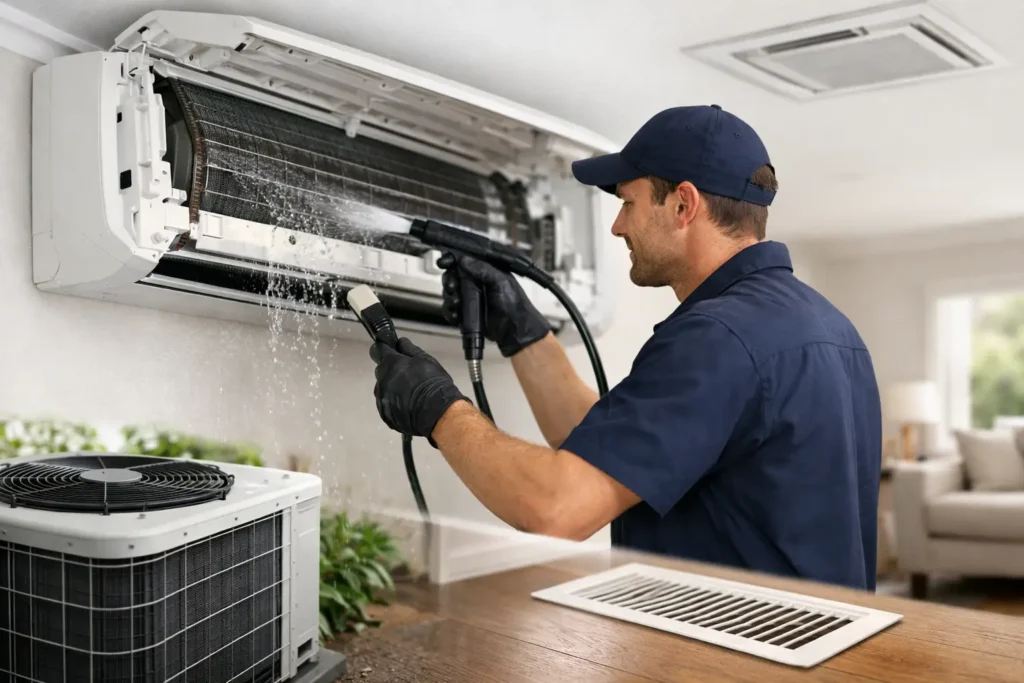
Your air con can still turn on, still blow air, and still be costing you more than it should. Dirty coils are one of the most common reasons a system starts losing performance, and air conditioner coil cleaning is often the difference between a unit that cools properly and one that runs longer, works harder, and leaves rooms feeling average.
For homeowners, that usually shows up as higher power bills, weaker airflow, or a stale smell when the system starts. For property managers and commercial sites, it can mean tenant complaints, inconsistent temperatures, and avoidable wear on expensive equipment. Coil cleaning is not a cosmetic extra. It is a practical maintenance job that protects efficiency, indoor air quality, and system reliability.
What air conditioner coils actually do
Your air conditioning system relies on two main coils. The evaporator coil sits inside the indoor unit and absorbs heat from the air inside the property. The condenser coil is in the outdoor unit and releases that heat outside. When both coils are clean, heat transfer happens efficiently and the system can cool the space with less effort.
When dirt, dust, grease, pollen, mould, and other contaminants build up on those coil surfaces, the system has to work harder to move heat. That means longer run times, more strain on components, and reduced performance. In some cases, dirty evaporator coils can contribute to moisture issues and microbial growth, especially if drainage is already compromised.
This is why coil condition matters so much. A system does not need to be completely blocked to underperform. Even a light film across the coil can reduce efficiency.
Why air conditioner coil cleaning matters
Clean coils support better airflow, better cooling output, and better energy efficiency. They also help the system maintain the temperature you have actually set, rather than endlessly chasing it.
There is also a health and cleanliness side to it. If your indoor coil is holding dust, moisture, and biological growth, those contaminants can affect what circulates through the room. While coil cleaning is not the only factor in indoor air quality, it is an important one, especially in homes with asthma sufferers, allergy concerns, pets, or visible dust problems.
For commercial properties, the stakes are often higher. Offices, schools, retail sites, and multi-room buildings depend on consistent HVAC performance. Dirty coils can reduce comfort for occupants and increase operating costs across the site. In heavily used spaces, build-up can happen faster than many facility managers expect.
Signs your coils may need cleaning
Some systems give clear warning signs, while others simply fade in performance over time. If your unit is blowing but not cooling properly, taking too long to reach temperature, or icing up, the coils may be part of the problem.
You might also notice musty odours, more dust around vents, unusual condensation, or a jump in electricity usage without any obvious change in weather or usage patterns. In split systems, a dirty indoor coil often goes hand in hand with a dirty fan barrel and clogged filters, so the issue is rarely isolated.
That said, symptoms can overlap. Low refrigerant, blocked filters, fan issues, and drainage faults can produce similar results. That is why inspection matters. A proper assessment tells you whether cleaning will solve the problem or whether another repair is needed as well.
Evaporator coil vs condenser coil cleaning
Not all coil cleaning is the same. The indoor evaporator coil is more sensitive and often harder to access. It deals directly with the air moving through your property, which means dust and moisture can create the right conditions for mould and grime to cling to the fins and internal surfaces.
The outdoor condenser coil is exposed to weather, dirt, leaves, and general outdoor debris. It may also collect grease or fine particles depending on the site. Cleaning it helps release heat properly and can reduce stress on the compressor.
Some people assume the outdoor unit is the main concern because it is visibly exposed. In practice, the indoor coil is often the more important cleaning job from both an air quality and hygiene perspective. It depends on the system, the environment, and how long it has been since proper maintenance was carried out.
Can you clean air conditioner coils yourself?
Basic filter cleaning is something many property owners can handle. Coil cleaning is different. Light surface dust on an accessible outdoor coil may be manageable with care, but thorough air conditioner coil cleaning usually requires more than a quick rinse.
Indoor coils are delicate. The fins bend easily, access can be limited, and using the wrong chemical or too much moisture can create more problems than it solves. If drainage is poor, washing contaminants deeper into the unit can worsen odours or contribute to mould growth. In commercial settings, there are also safety and compliance considerations.
DIY cleaning can make sense for very minor external dust, but it has limits. If the unit has visible grime, odour, reduced performance, or signs of biological contamination, professional cleaning is the safer and more effective option.
What professional air conditioner coil cleaning involves
A proper service starts with inspection, not guesswork. The technician checks the coil condition, surrounding components, drainage, filters, and airflow. If the system has broader contamination issues, those need to be addressed together rather than treating the coil in isolation.
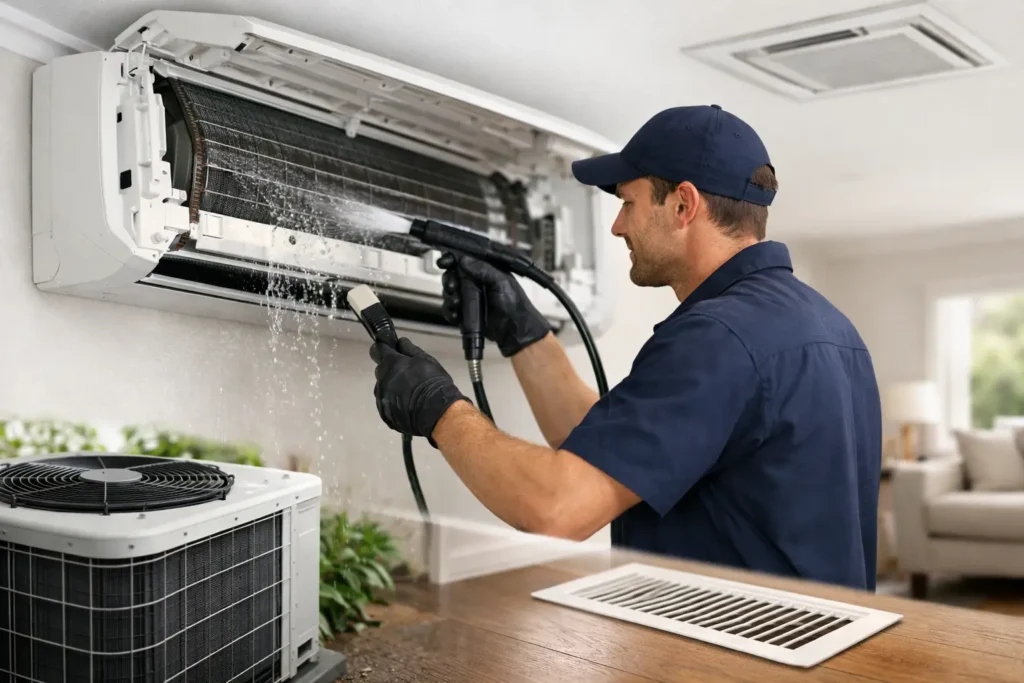
Professional cleaning typically involves safe access to the coil, controlled removal of built-up debris, application of suitable coil cleaning products, and careful rinsing or extraction where appropriate. On indoor systems, protecting nearby components and managing moisture correctly is essential. On some jobs, HEPA-filtered equipment is important to capture loosened contaminants rather than letting them recirculate through the space.
Good cleaning should do more than make the coil look better. It should improve system hygiene, restore airflow where possible, and support stronger cooling performance. In many cases, coil cleaning is most effective when combined with cleaning filters, fan components, drain trays, and connected air pathways.
How often should coils be cleaned?
There is no one-size-fits-all timetable. A lightly used home system in a clean environment may need less frequent attention than a heavily used split system in a dusty household, a school, or a commercial property with constant occupancy.
As a general rule, annual inspection is sensible. Some systems benefit from annual cleaning, while others may need it more often if there are pets, renovations, smoke exposure, cooking residue, high dust levels, or ongoing air quality complaints. Commercial operators often need a more structured maintenance schedule because the load on the system is more consistent and the consequences of underperformance are greater.
The best approach is condition-based rather than guess-based. If performance has dropped or contamination is visible, waiting longer rarely saves money.
The cost of leaving coils dirty
Dirty coils increase running costs gradually, which is why the issue is easy to ignore. The system compensates by running longer and harder, and that extra strain can affect fan motors, compressors, and overall unit life.
There is also the comfort factor. Rooms may cool unevenly, the system may cycle poorly, and occupants often respond by lowering the thermostat, which pushes energy use even further. In rental properties or managed buildings, those complaints can become a recurring maintenance issue.
Then there is hygiene. If dirt and moisture remain inside the unit, odours and microbial growth can become harder to resolve later. Early cleaning is usually simpler, more effective, and less costly than waiting until the contamination is severe.
When to book a professional service
If your air con smells musty, struggles to cool, shows signs of mould, or has not had proper maintenance in a long time, it is worth having it inspected. The same applies if you are preparing a property for sale or lease, managing complaints from tenants, or trying to improve indoor air quality in a busy household or workplace.
For Melbourne properties, seasonal demand can make timing important. Booking before peak summer use gives you a better chance to address efficiency problems before the system is under full load. For commercial sites, planned maintenance is usually far more convenient than waiting for comfort issues to disrupt operations.
At Top Air Duct Cleaning, we provide professional HVAC cleaning services for homes and businesses, using advanced equipment and proven methods to remove built-up dust and contaminants properly. If you need reliable air conditioner coil cleaning, split system cleaning, or a broader indoor air quality service, contact our team for a free quote on 0457 666 469 or visit www.topairductcleaning.com.au.
A clean coil will not fix every air conditioning fault, but it often fixes more than people expect – and it gives your system a fair chance to do its job properly.