
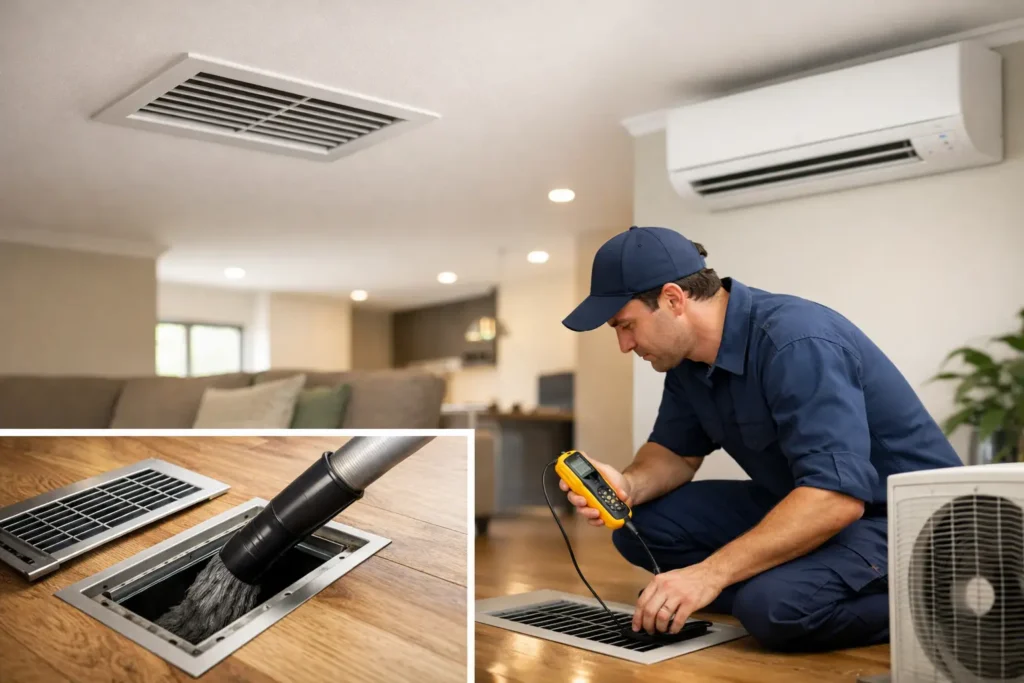
A ducted heating system can look perfectly fine from the living room while dust, restricted airflow and worn components build up out of sight. The best maintenance tips for ducted heating focus on the parts that affect comfort, air quality and running costs most: filters, return-air grilles, vents, ducts and the unit itself. A little attention before Melbourne’s colder weather arrives can help your system heat rooms more evenly and reduce avoidable strain.
Start with clean filters and return-air grilles
Your return-air grille draws household air back into the heating system, and its filter catches a large share of dust, lint, pet hair and airborne particles before they circulate through the unit. When that filter is clogged, the system must work harder to pull in air. You may notice weaker airflow, rooms that take longer to warm up, or a heater that seems to run almost continuously.
Check the filter every one to three months during regular use. Homes with shedding pets, renovation dust, smokers or allergy sufferers may need more frequent checks. Follow the manufacturer’s instructions carefully: some filters can be gently vacuumed or washed and fully dried, while others must be replaced. Never reinstall a damp filter, as moisture can encourage mould growth and create an unpleasant odour when heating starts.
While the filter is out, vacuum the visible face of the return-air grille with a soft brush attachment. Do not push a vacuum nozzle deep into the duct or remove fixed panels unless you are confident they can be safely refitted. Surface cleaning is useful, but it is not a replacement for professional duct cleaning where heavy internal build-up is present.
Keep supply vents clear and clean
Every floor, wall or ceiling vent needs open space to deliver warm air properly. Furniture placed over floor vents, curtains across wall vents and storage boxes near return grilles all reduce circulation. This can make one area uncomfortably warm while another remains cold, leading people to turn up the thermostat unnecessarily.
Walk through the property at the start of the heating season and check that each vent is unobstructed. Vacuum the grille face and wipe it with a lightly damp microfibre cloth. If the vent cover is removable, take a photo before removing it so it goes back in the same position. Avoid spraying cleaners directly into vents, as liquid can travel into the ductwork and leave residue behind.
A small amount of dust around a vent is normal. Thick dust mats, dark streaks, visible debris or material blowing from the vent when the heater starts are different. These signs can point to dirty ducts, a damaged duct section or airflow issues that need professional assessment.
Use your thermostat sensibly
Constantly moving the thermostat up and down does not heat the house faster. It only tells the system to run longer, which can increase energy use and place extra demand on equipment. Choose a comfortable, consistent temperature and allow the system time to do its work.
For many households, a setting around 18 to 20°C is a practical winter starting point, although the right setting depends on insulation, the age of the home, occupants and personal comfort. If certain rooms never warm properly despite a sensible setting, do not simply increase the temperature. Uneven heating is often caused by blocked vents, duct leaks, poor zoning, dirty filters or a system fault.
If your thermostat uses batteries, replace them before winter. Weak batteries can cause inaccurate readings or an unexpected system shutdown. Also keep lamps, televisions and other heat-producing appliances away from the thermostat where possible, as local heat can make it read the room incorrectly.
Listen for changes before they become breakdowns
Ducted heating should produce a steady fan sound and, depending on the system, a brief ignition or start-up noise. New rattling, whistling, banging, scraping or repeated cycling deserves attention. These sounds may be linked to loose ducting, a fan issue, restricted airflow or a component that is wearing out.
Watch for these warning signs as well:
- Burning, musty or gas-like smells that do not disappear quickly after initial seasonal use
- Weak airflow from several vents or one noticeably colder zone
- Dust blowing into rooms when the system starts
- A sudden rise in energy bills without a change in usage
- Frequent shut-offs, error codes or a pilot light that will not stay on
A faint dusty smell can occur when a heater is first switched on after months of inactivity, particularly if dust has settled on internal components. It should clear soon after. Persistent odours, electrical smells or any suspected gas smell require prompt action. Turn the system off, ventilate the area if it is safe to do so, and arrange qualified assistance. Do not attempt gas appliance repairs yourself.
Arrange professional servicing at the right time
Cleaning filters is a homeowner task. Servicing the heater and cleaning internal ductwork are specialist jobs. A qualified technician can inspect burners, heat exchangers, fan operation, electrical connections, safety controls and accessible duct sections. For gas ducted heating, this work is particularly important because safe combustion and proper ventilation are not areas for guesswork.
Annual servicing is a sensible schedule for most ducted heating systems, ideally before the colder months. Commercial premises, schools, properties with high occupancy or homes with pets and allergies may benefit from a more tailored maintenance plan. The correct frequency for duct cleaning depends on the amount of dust, the condition of the ducts, recent building work and how the property is used.
Professional duct cleaning is worth considering when there is visible build-up around vents, recurring dust after cleaning, unexplained odours, reduced airflow, pest evidence or a long gap since the ducts were last cleaned. A thorough service should use appropriate containment and HEPA filtration equipment to remove dislodged particles rather than redistribute them through the property.
Protect ducts during renovations and after dusty work
Plaster sanding, floor refinishing, cutting timber and other renovation work can generate fine dust that travels quickly through an HVAC system. If the heating is running during this work, it may draw contaminated air into the return grille and distribute particles through multiple rooms.
Where practical, keep the system off during high-dust work and cover return-air grilles carefully without damaging finishes. Once the work is complete, replace or clean filters and inspect vents before restarting the system. If dust has entered the ducting, arrange a professional clean rather than relying on fragrance products or repeated vacuuming around grilles.
The same principle applies after a smoky cooking incident, a pest problem or water damage. Ducts can retain odours and contaminants that ordinary surface cleaning cannot reach. Addressing the source early helps protect both the system and the air your household or occupants breathe.
Do not overlook the outdoor unit and roof space
Not every ducted heating system has the same layout. Some units are located outside, while others sit in the roof space or under the floor. Outdoor units need clear airflow around them, so keep leaves, garden waste and stored items away. Never hose electrical equipment or remove service covers.
For roof-space systems, be alert for signs of duct damage such as uneven heating, a new roof-space noise or a sudden increase in dust. Rodents, trades work and ageing duct joins can all affect performance. Crushed, torn or disconnected flexible ducting wastes heated air before it reaches the room, and it should be repaired by a professional rather than taped as a temporary DIY fix.
Make maintenance part of your winter routine
The most effective maintenance is consistent, not complicated. Check filters, keep vents open, pay attention to changes in noise or airflow, and book qualified servicing before a minor issue becomes a no-heat callout. Clean ducted heating supports better airflow, a tidier indoor environment and more dependable comfort when Melbourne temperatures drop.
For professional ducted heating cleaning, air duct cleaning and reliable maintenance support across Melbourne, contact Top Air Duct Cleaning for a free quote on 0457 666 469 or visit www.topairductcleaning.com.au. A well-maintained system is easier to run, easier to trust and far more pleasant to live with.
