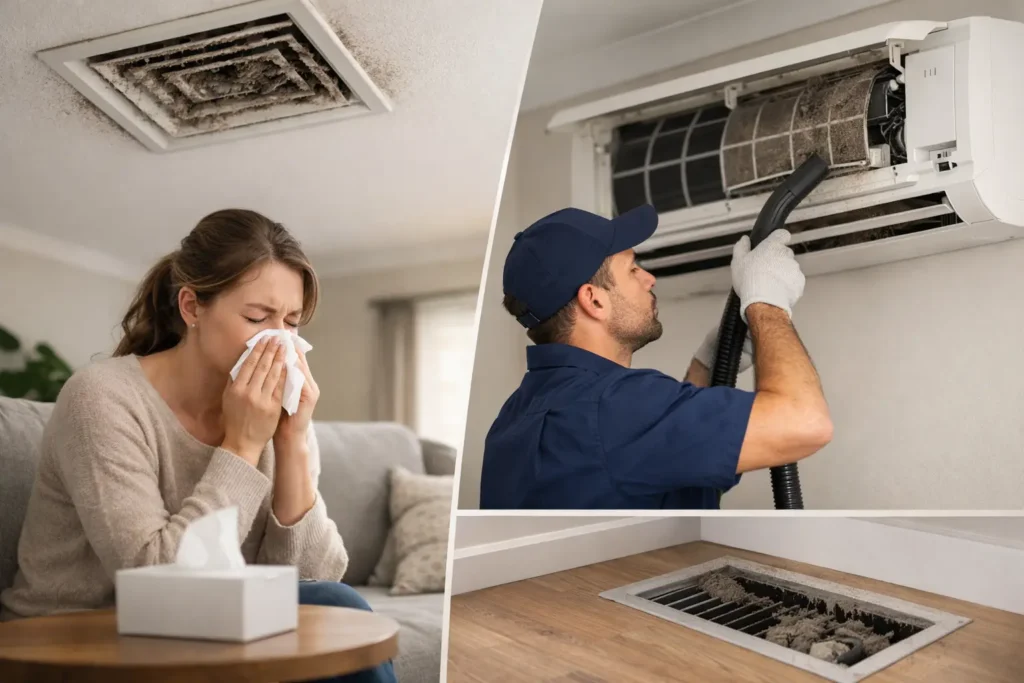
A child starts sneezing whenever the heater comes on. Your eyes feel itchy in the living room but settle when you leave the house. Dust returns to furniture soon after cleaning. These are the situations that lead many property owners to ask: can dirty ducts cause allergies?
Dirty ducts do not create an allergy from nothing. Allergies are an immune response to substances such as dust mites, pollen, pet dander and mould spores. However, contaminated ductwork can collect and redistribute those particles through your home or workplace each time ducted heating or cooling runs. For people who already have allergies, asthma or respiratory sensitivities, that added exposure can make symptoms more noticeable.
Can Dirty Ducts Cause Allergies or Worsen Symptoms?
The more accurate answer is that dirty ducts can worsen allergy symptoms when they contain allergens and the HVAC system circulates them indoors. A ducted system moves a large volume of air through return vents, filters, ducts and supply registers. If dust, dander, pollen or microbial growth has built up in these areas, some particles may be disturbed and carried back into occupied rooms.
This does not mean every dusty duct system is causing a household’s health concerns. Air quality is affected by many sources, including outdoor pollen, pets, carpeting, bedding, open windows, poor ventilation and moisture problems. But ducts are often overlooked because most of the system is out of sight.
Melbourne’s changing weather can make the issue more apparent. Heating may sit unused for months, allowing dust to settle in parts of the system, then suddenly operate on a cold morning. During pollen season, open windows and foot traffic can also introduce outdoor allergens that are drawn into return-air vents.
What can build up inside ductwork?
In a typical home, ducts can accumulate fine dust, lint, skin flakes, pet hair and pet dander. Pollen can enter from outside, particularly where doors and windows are frequently opened. Dust mites thrive mainly in soft furnishings rather than metal ductwork, but mite allergens can travel within household dust.
Moisture changes the situation. Condensation around cooling components, blocked drainage, leaks or poor ventilation can create conditions that support mould growth. If mould is present inside the HVAC system, it requires prompt professional assessment and cleaning, along with fixing the underlying moisture source. Cleaning alone will not prevent it from returning.
Signs Your Ducts May Be Affecting Indoor Air Quality
A layer of dust around a vent is not proof that the entire duct system is heavily contaminated. Still, it is a useful prompt to look closer, especially when it appears alongside recurring symptoms or performance issues.
Pay attention if you notice stale or musty odours when the system starts, visible debris at registers, excessive dust settling soon after cleaning, weak airflow in certain rooms, or signs of moisture around vents and indoor units. Family members or staff may report sneezing, blocked noses, watery eyes, coughing or wheezing that seems worse when heating or cooling operates.
These symptoms can have other causes, so they should not be used as a diagnosis. Anyone experiencing persistent, severe or asthma-related symptoms should speak with a qualified health professional. From a property maintenance perspective, however, unexplained dust, odours and poor airflow are good reasons to inspect the HVAC system.
When Duct Cleaning Is Likely to Help
Professional duct cleaning is most worthwhile when there is a clear buildup of debris, evidence of mould or moisture contamination, vermin activity, renovation dust, neglected filters, or visible material blowing from vents. It can also be a practical part of a broader indoor air quality plan for homes with allergy sufferers, pets, smokers or high occupancy.
The benefit is not limited to cleaner air. Removing accumulated debris can help restore airflow and reduce the load on your ducted heating and cooling system. When return vents and filters are clogged, the system may need to work harder to deliver conditioned air, which can affect comfort and efficiency.
There are trade-offs to consider. Duct cleaning is not a substitute for replacing a poor-quality filter, repairing damaged ductwork, managing indoor humidity or cleaning soft furnishings where allergens often settle. A reputable contractor should identify what duct cleaning can address and where another repair or maintenance task is needed.
A proper clean should target the whole system
A quick vacuum around visible vents is not the same as cleaning the duct system. Professional work should address accessible supply and return ducts, registers, grilles and key HVAC components as appropriate to the system. The process should be controlled so loosened debris is captured rather than released into rooms.
Top Air Duct Cleaning uses professional techniques and HEPA filtration equipment to remove built-up dust and contaminants from residential and commercial ducted systems. HEPA-filtered collection is particularly valuable during cleaning because it helps contain fine particles that may otherwise become airborne.
Before work begins, ask what areas are included, whether the technician will inspect for signs of mould, leaks or damaged ducts, and how debris will be contained. Transparent scope and pricing matter. The right service should leave you with a cleaner system, not uncertainty about what was done.
Steps That Reduce Allergens Between Professional Cleans
Duct cleaning works best when paired with routine maintenance. Check and replace HVAC filters according to the manufacturer’s advice, or sooner if the property has pets, renovation activity or heavy system use. A filter that is visibly loaded with dust cannot perform effectively.
Keep return-air vents clear of furniture, curtains and piles of stored items so the system can draw air properly. Vacuum and dust regularly using equipment that captures fine particles, particularly around vents, under furniture and in bedrooms. Washing bedding, managing pet grooming and reducing indoor moisture also help lower the overall allergen load.
If you run refrigerated cooling, have the system checked when you notice water leaks, persistent damp smells or reduced performance. Mould prevention depends on moisture control. Cleaning ductwork without correcting a condensate, drainage or insulation issue may only provide short-term relief.
For properties near busy roads, construction sites or high-pollen areas, it may be sensible to review filters and vents more often. There is no single cleaning interval that suits every building. A quiet household with good filtration may need less frequent attention than a busy family home, childcare centre, office or commercial premises with long operating hours.
Commercial Properties Need a Planned Approach
In offices, schools, strata properties and customer-facing businesses, indoor air quality affects comfort, presentation and daily operations. A dusty or odorous HVAC system can lead to complaints and make meeting rooms, classrooms or shared spaces feel poorly maintained. Commercial kitchens and high-use facilities have additional ventilation demands that should be managed on a regular schedule.
For building managers, the sensible approach is to document filter changes, inspect vents and airflow, respond quickly to water damage, and schedule professional cleaning based on use and condition. Preventive maintenance is generally less disruptive than waiting until occupants complain about odours or poor air movement.
If your heating or cooling system is adding dust, odours or discomfort to your property, do not guess at the cause. A professional assessment can identify whether dirty ducts are contributing and what practical work will make the biggest difference. For reliable duct cleaning across Melbourne and surrounding suburbs, call Top Air Duct Cleaning on 0457 666 469 or visit www.topairductcleaning.com.au for a free quote. Cleaner ductwork is one practical step towards a fresher, more comfortable indoor environment.
