
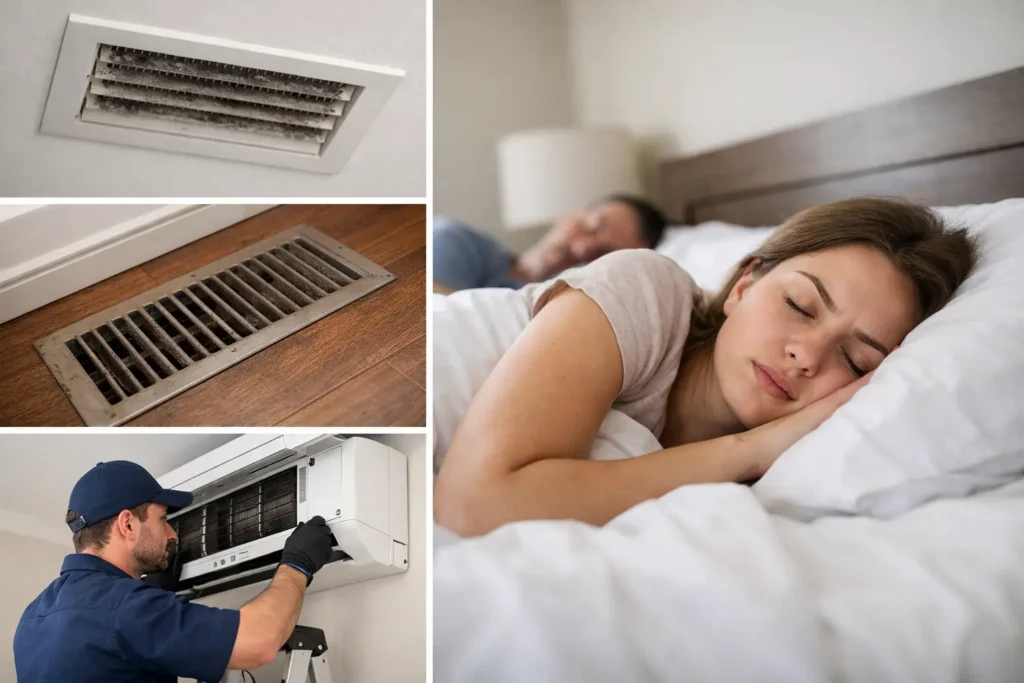
A bedroom that feels stuffy at night, collects dust again a day after cleaning, or leaves you waking with a dry throat can point to more than an uncomfortable room. Can dirty vents affect sleep quality? They can contribute, particularly when dust, allergens, mould spores or poor airflow are being circulated through your heating and cooling system while you sleep.
Dirty vents are rarely the only reason for poor sleep. Stress, noise, temperature, bedding, medical conditions and outdoor allergens all matter. But when the air in your home is dusty, stale or unevenly heated and cooled, it can make a good night’s rest harder to achieve. For Melbourne households, this is especially noticeable during heavy winter heating use and hot periods when air conditioning runs for hours overnight.
How dirty vents can affect sleep quality
Your vents are the visible end of a larger system. Behind each grille are ducts, return-air pathways and HVAC components that may collect dust, lint, pet hair, pollen and other airborne particles over time. Every time ducted heating or cooling operates, airflow can move some of that material through the home.
For many people, this simply means more dust on furniture. For people with allergies, asthma or sensitive airways, it may mean irritated noses, sneezing, coughing, congestion or dry, uncomfortable breathing at night. Those symptoms can interrupt sleep directly or make it more difficult to settle in the first place.
A dirty return-air vent can be particularly significant. Return vents draw air from the house back into the system. If the grille and filter area are heavily loaded with dust, airflow may be reduced, and the system has to work harder to circulate conditioned air. Bedrooms can then feel warmer, colder or stuffier than they should.
Dust and allergens can irritate the airways
Dust is not just dust. It can contain fibres, pollen, pet dander, dust mites and fine particles tracked in from outdoors. When these contaminants build up in vents and ductwork, they may be disturbed during normal HVAC operation.
This does not mean every dusty vent creates a serious health risk. The impact depends on the amount and type of contamination, how often the system runs, the condition of filters and the sensitivities of people in the home. However, if someone regularly wakes congested or has symptoms that improve when they sleep elsewhere, the indoor air system is worth investigating.
Restricted airflow can make bedrooms uncomfortable
Sleep is closely tied to temperature. A room that is too hot, too cold or slow to reach the set temperature can lead to frequent waking and restless nights. Blocked vents, dirty filters, debris in ductwork or poorly maintained equipment can all reduce airflow.
You may notice one bedroom is consistently uncomfortable while the rest of the home feels fine. Before assuming the system needs replacing, check that supply vents are open and unobstructed by furniture, rugs or curtains. If the issue continues, professional cleaning and inspection can help identify whether dirty ducting, a blocked vent, damaged ducts or a system fault is affecting performance.
Mould growth needs prompt attention
Mould is a separate concern from ordinary dust. It needs moisture to grow, so visible mould around a vent, a persistent musty smell when heating or cooling starts, or repeated condensation near grilles should not be ignored.
The source may be high indoor humidity, water ingress, poor insulation, a drainage issue in an air conditioning unit or contamination within parts of the system. Cleaning the vent cover alone will not solve the cause. A proper assessment is needed to clean affected areas safely and address the moisture problem that allowed mould to develop.
Signs your vents or ducts may be affecting your bedroom air
A little dust on a vent grille is normal. The concern is ongoing build-up, noticeable odours, reduced airflow or symptoms that repeatedly occur when the HVAC system is in use. Pay attention if you see dark staining, fluffy debris around vent edges, or dust blowing out when the system starts.
Other useful signs include a musty smell from vents, frequent dust accumulation on bedside tables, inconsistent temperatures between rooms, weak airflow from supply vents, and filters that become dirty very quickly. Families with pets, recent renovations, smokers, open fires or high pollen exposure may also need more frequent attention.
For property managers and commercial building operators, complaints about stale air or uneven comfort in bedrooms, offices, classrooms or accommodation rooms should be documented rather than dismissed as subjective. Ventilation issues can affect comfort, cleanliness and the perceived condition of the property.
What professional vent cleaning can and cannot do
Professional air duct and vent cleaning removes accumulated dust and debris from accessible ductwork, vents, return-air areas and relevant HVAC components. At Top Air Duct Cleaning, technicians use professional cleaning methods and HEPA filtration equipment designed to capture dislodged material rather than spread it through the property.
The practical benefits can include cleaner vents, less dust circulating through the home, improved airflow where build-up is the cause, and a fresher indoor environment. It can also be a sensible part of maintenance after building work, pest activity, water damage assessment, heavy dust exposure or long periods without servicing.
Cleaning is not a cure for every sleep problem. It will not treat sleep apnoea, eliminate outdoor pollen, repair a failed thermostat or correct inadequate insulation. It also cannot resolve active mould growth unless the moisture source is identified and fixed. A dependable contractor should be clear about those limits and recommend the right next step, rather than promising unrealistic results.
A practical way to improve nighttime air at home
Start with the straightforward checks. Replace or clean HVAC filters according to the manufacturer’s recommendations, and inspect visible vent covers for dust or staining. Keep supply vents clear, vacuum around grilles carefully, and avoid shutting multiple vents in an attempt to force more air into one room. This can put unnecessary pressure on some ducted systems.
Then consider the condition of the system as a whole. If it has not been cleaned for years, runs daily during peak seasons, or shows the warning signs above, a professional duct inspection is worthwhile. This is particularly useful before winter heating begins, after renovations, or when a child, older resident or allergy sufferer is experiencing ongoing nighttime irritation.
Your bedroom environment also matters beyond the vents. Wash bedding regularly, manage humidity, keep pets out of the bedroom if dander is a trigger, and maintain a comfortable room temperature. These small measures work best alongside clean, properly functioning heating and cooling rather than as a substitute for it.
When to arrange an inspection
Arrange professional help promptly if you see mould, smell burning or persistent mustiness, notice a major drop in airflow, or suspect pests in the ductwork. If anyone in the property has significant breathing symptoms, seek advice from an appropriate health professional as well as addressing the indoor air issue.
For less urgent concerns, a clear quote and inspection can give you a practical answer. An experienced technician can assess the visible vents, return-air points and accessible ducting, explain what is present, and advise whether cleaning is likely to improve airflow and air cleanliness.
A clean bedroom should feel calm, comfortable and easy to breathe in. If dusty vents, stale odours or uneven airflow are getting in the way, book a professional assessment with Top Air Duct Cleaning. For a free quote across Melbourne, call 0457 666 469 or visit www.topairductcleaning.com.au. A well-maintained HVAC system gives your household one less reason to lose sleep.
