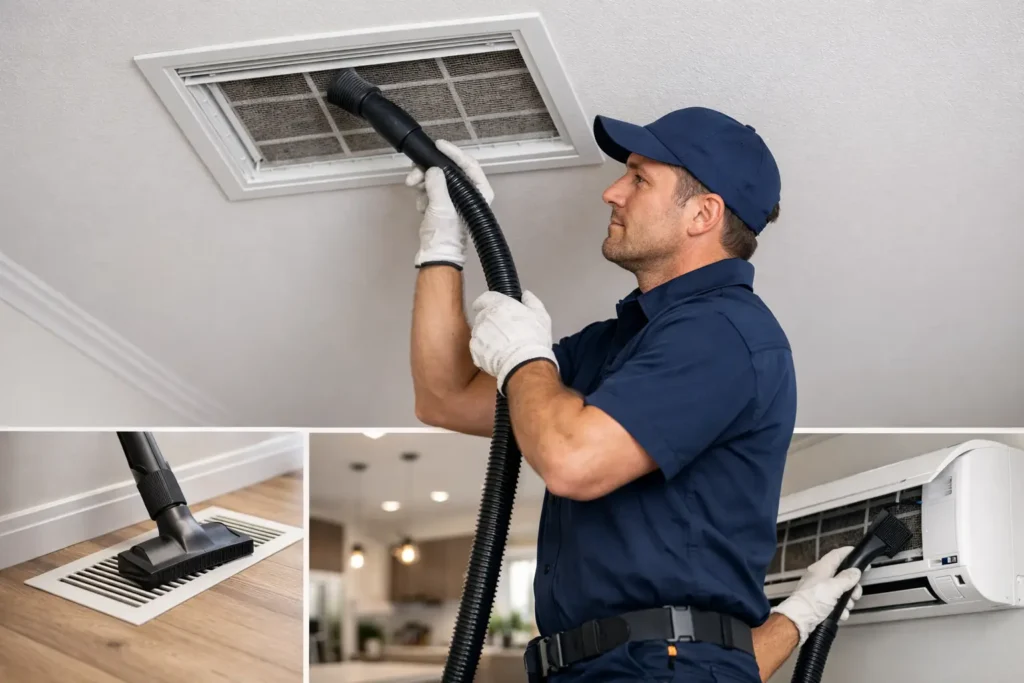
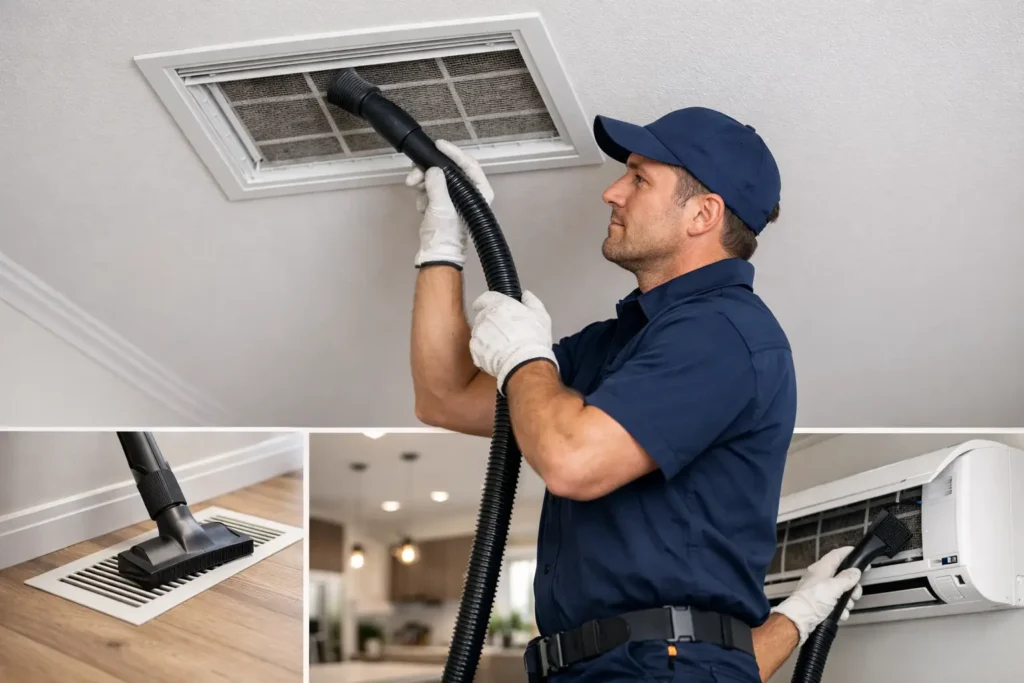
You usually notice the problem when the light hits the ceiling at the right angle – a grey ring around the vent, dust clinging to the grille, and stale air that never quite feels fresh. Ceiling vent cleaning is one of those jobs people put off because it looks minor, but dirty vents often point to a larger airflow and hygiene issue inside the system.
In homes, offices, schools and rental properties, ceiling vents sit at the end of the air pathway. If they are loaded with dust, grease, lint or mould, the air moving through them is carrying that contamination into the room. That affects cleanliness, indoor air quality and, in some cases, the way your heating and cooling system performs day to day.
Why ceiling vent cleaning matters
A dirty vent is not only a cosmetic issue. The visible dust on the cover is often the easiest part to clean. The more important question is what is sitting just behind it in the ductwork, around the diffuser, or inside the return air section.
When dust builds up around ceiling vents, airflow can become less consistent. Some rooms may feel stuffy while others stay too warm or too cold. If moisture is present, particularly in bathrooms, laundries or poorly ventilated spaces, mould can begin to grow around the vent edges and inside the surrounding cavity. For households with asthma, allergies or respiratory sensitivities, that can quickly become more than an annoyance.
For commercial sites, the stakes are often higher. Property managers and facility teams need spaces to look clean, operate efficiently and meet maintenance expectations. Dirty vents can undermine presentation, contribute to occupant complaints and signal that the HVAC system is overdue for proper attention.
What causes ceiling vents to get dirty so quickly?
Most people assume a dusty vent simply means the room needs more cleaning. Sometimes that is true, but often the vent is collecting particles from the system itself. Return air vents pull in airborne dust, pet hair and fine debris every day. Supply vents can show buildup when ducts have not been cleaned for years, filters are overdue for replacement, or the system is pushing contaminants through the network.
There are also property-specific factors. Renovation dust, nearby road traffic, shedding pets, high occupancy, cooking residue and smoking can all accelerate vent contamination. In Melbourne, seasonal heating and cooling use can also make the issue more noticeable, especially when a system sits idle and then suddenly starts pushing stale dust back into circulation.
Ceiling vent cleaning or full duct cleaning?
This is where it depends. If the vent covers are dusty but the system is otherwise clean and well maintained, a targeted ceiling vent clean may be enough to restore appearance and improve hygiene at the outlet points. That can suit properties on a regular maintenance schedule where contamination has been caught early.
But if you remove a vent cover and find heavy dust inside the duct, black spotting, insect debris or signs of mould, cleaning the visible grille alone will not solve the problem. In those cases, a broader HVAC clean is the smarter option. Surface cleaning improves what you can see. Professional duct cleaning addresses what the system is continuing to circulate.
That distinction matters because many property owners waste time repeatedly wiping vent covers while ignoring the source of the buildup. If the dust returns quickly, there is usually a reason.
Signs your ceiling vents need professional cleaning
Some vents look dirty from the floor. Others do not show obvious buildup until airflow drops or odours start appearing. A few common signs tend to come up again and again.
If there is visible dust around the vent face, dark staining on the ceiling near the grille, musty smells when the system starts, or an unusual amount of indoor dust settling on furniture, the vents deserve inspection. The same applies if occupants are sneezing more indoors, if certain rooms are hard to heat or cool, or if the property has recently had building works completed.
For commercial premises, complaints from staff or tenants about stale air should not be ignored. Dirty vents can be one part of a larger indoor air quality problem, and early action is usually cheaper than waiting for the issue to spread.
How professional ceiling vent cleaning works
A proper clean is more than a quick wipe with a cloth. Professional ceiling vent cleaning starts with assessment. The technician checks the vent type, the level of buildup, the condition of surrounding surfaces and whether the contamination appears localised or linked to the wider system.
The vent covers are then carefully removed and cleaned using suitable methods for the material and condition. Dust and debris around the vent opening are extracted without blowing contaminants back into the room. Where needed, the internal section immediately behind the vent is cleaned as well.
For systems that require a deeper service, specialised equipment with HEPA filtration is used to capture fine particles safely. This is particularly important in homes with allergy concerns and in occupied commercial environments where cleanliness standards matter. The goal is not just to make the vent look better, but to remove contaminants without spreading them through the property.
The risks of DIY ceiling vent cleaning
There is nothing wrong with lightly dusting an accessible vent as part of routine housekeeping. The issue comes when people assume that a ladder, a vacuum and a spray bottle will deal with the full problem.
Ceiling vents can be awkward to access, especially in high ceilings, stair voids or commercial fit-outs. Covers are easy to bend or damage if removed incorrectly. More importantly, scrubbing visible dust can disturb mould spores or fine debris and release them into the air. If the contamination extends into the duct or HVAC components, DIY cleaning often stirs up more than it removes.
There is also the safety side. Working overhead carries a fall risk, and forcing the wrong cleaning products onto painted ceilings or vent finishes can leave staining or corrosion behind. In many cases, the cost of fixing damage outweighs the cost of having the job done properly in the first place.
Ceiling vent cleaning in homes, rentals and commercial sites
Different properties need different approaches. In family homes, the priority is usually cleaner air, less dust and better comfort. Parents often book vent or duct cleaning after noticing allergy flare-ups, pet hair buildup or mould around supply vents in bedrooms and living areas.
In rental properties, inspections and end-of-lease maintenance can bring vent issues to light. Property managers want practical solutions that improve presentation and reduce repeat complaints. A professional clean also provides confidence that the visible dust is not hiding a larger maintenance issue.
Commercial buildings, schools and shared-use spaces usually need a more structured approach. High occupancy means more airborne particles, and neglected vents can affect both perception and performance. In these environments, scheduled cleaning makes more sense than waiting for visible grime to become a problem.
How often should ceiling vents be cleaned?
There is no one-size-fits-all schedule, because usage and conditions vary. As a general rule, ceiling vents should be inspected regularly and cleaned when visible buildup appears or when indoor air quality starts to decline. Homes with pets, recent renovations, frequent HVAC use or respiratory sensitivities may need more frequent attention.
Commercial properties often benefit from planned maintenance rather than reactive cleaning. That keeps airflow components in better condition and helps avoid the sudden appearance of dust rings, odours and occupant complaints.
If a vent looks dirty again soon after cleaning, that is usually the signal to investigate the broader system. Fast recurring buildup is rarely just bad luck.
Choosing the right contractor for ceiling vent cleaning
Results come down to method, equipment and judgement. A reliable contractor should be able to explain whether you need vent cleaning only or a more complete duct and HVAC service. Clear quoting matters. So does insurance, experience and a process that protects indoor spaces while the work is carried out.
For Melbourne property owners and managers, responsiveness is just as important. When air quality, cleanliness or tenant comfort is affected, waiting weeks for an inspection is not ideal. A professional team should be able to assess the problem promptly and recommend a practical solution based on the actual condition of the system, not a one-size-fits-all sales pitch.
If your vents are dusty, marked with mould, or pushing stale air into the room, it is worth addressing before the problem spreads further through the system. Top Air Duct Cleaning provides professional ceiling vent and HVAC cleaning for homes and commercial properties across Melbourne, with transparent quotes, fully insured technicians and same-day service when available. For a free quote, call 0457 666 469 or visit www.topairductcleaning.com.au. Clean vents do more than tidy up the ceiling – they help create a property that feels fresher, healthier and easier to maintain.