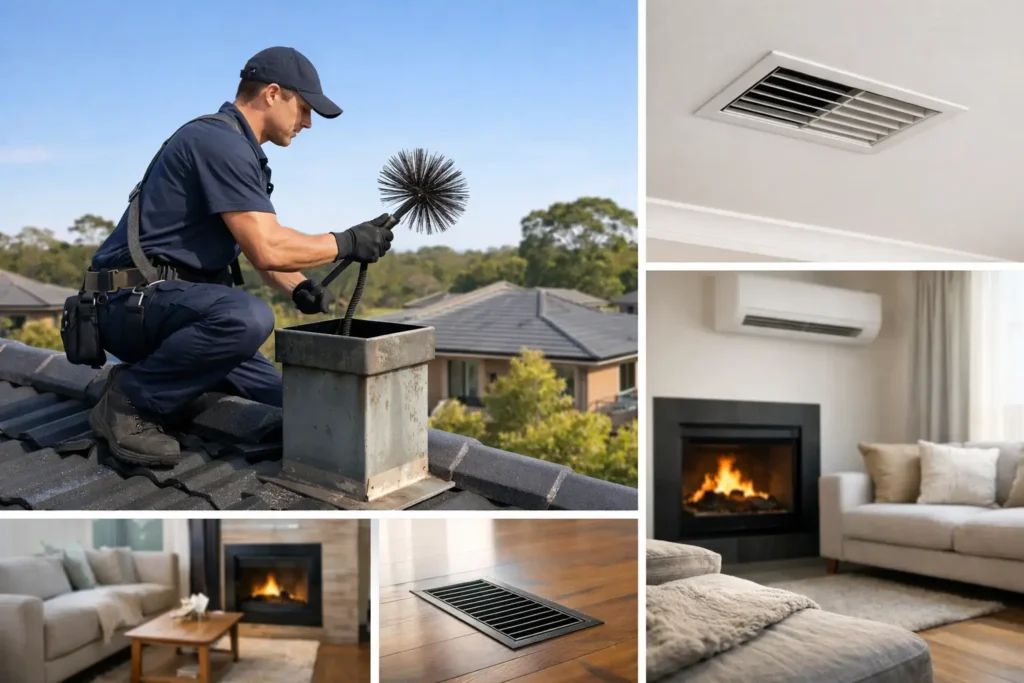
A fireplace can make a Melbourne winter feel properly comfortable, but the chimney above it is doing far more work than most people realise. Every fire sends smoke, fine ash, soot and moisture through the flue. Over time, that residue can restrict airflow and create a combustible lining inside the chimney. A professional chimney sweeping service removes this build-up so your fireplace can vent smoke safely and perform as it should.
For homeowners, landlords and property managers, chimney maintenance is not simply a cosmetic clean. It is practical fire prevention, a way to reduce unpleasant smoke problems, and an opportunity to identify faults before they become costly repairs.
Why chimney sweeping matters
Wood smoke contains particles and vapours that cling to the cooler inner walls of a flue. As this residue builds, it can form creosote – a dark, sticky or crusty deposit that is highly flammable. A hot fire, a spark or sustained high temperatures can ignite it, causing a chimney fire that may go unnoticed until damage has already occurred.
Even when a fire does not occur, a dirty chimney can make the fireplace frustrating to use. Restricted airflow may cause smoke to spill back into the room, leave a sharp smoky odour after the fire is out, or make it difficult to keep a fire burning cleanly. Soot and ash can also find their way into living areas, affecting furnishings and indoor air quality.
A clean flue supports a more reliable draft. That means smoke, gases and fine particles are more likely to travel up and out of the home rather than lingering where your family, tenants or customers breathe.
Signs you need a chimney sweeping service
You do not need to wait for a major problem to arrange cleaning. In fact, booking before the colder months is usually the best approach, particularly if the fireplace has been used regularly through the previous season.
Common warning signs include:
- Smoke entering the room when lighting or using the fireplace
- A strong soot, burnt wood or tar-like smell around the hearth
- Black deposits falling into the firebox or visible around the damper
- A fireplace that seems harder to light or does not draw well
- Bird nests, leaves, cobwebs or other debris visible in the chimney
- A chimney that has not been professionally cleaned for a year or more
The right schedule depends on how often you burn wood, the type and moisture content of the timber, and the condition of the flue. A fireplace used every week during winter will generally need more attention than one used only a few times a year. Burning damp or unseasoned wood also creates heavier residue because the fire burns cooler and produces more smoke.
If you have moved into an older property and do not know the chimney’s service history, it is sensible to have it inspected and cleaned before the first fire. The same applies to rental properties, holiday homes and commercial spaces with open fireplaces. Assumptions are not a maintenance plan.
What professional chimney cleaning involves
A proper chimney clean is more than pushing a brush through the flue and hoping for the best. The work should begin with an assessment of the fireplace, firebox, flue access and visible condition of the chimney. This helps the technician identify likely build-up, obstructions and signs that further repairs or specialist investigation may be needed.
The cleaning process removes soot, ash and residue from the accessible flue and fireplace areas using purpose-built equipment. At Top Air Duct Cleaning, our technicians use professional cleaning techniques and HEPA filtration equipment to help contain fine dust during the job. This matters because soot is messy, and a careless clean can send fine particles through the room rather than removing them from the property.
After cleaning, the fireplace area should be left tidy, with the technician able to explain what was found. If there are signs of a blocked flue, damaged liner, loose brickwork, moisture intrusion or a bird nest, you should know about it clearly. Cleaning and structural repair are different services, but recognising a concern early can prevent a much larger issue later.
Cleaning is not the same as a safety check
A chimney sweep can remove combustible residue and debris, but no cleaning service should promise to fix structural defects that require a qualified repair specialist. Cracked flue liners, failing chimney caps, deteriorated mortar and major water damage may need separate repairs.
This distinction is important for property owners comparing quotes. The cheapest option may only provide a basic sweep, while a more thorough service may include better dust containment, a closer inspection of accessible components and clear advice about what happens next. Ask what is included, how dust is managed and whether any issues identified will be explained before additional work is recommended.
For gas fireplaces, the maintenance needs are different. Gas appliances do not create wood soot and creosote in the same way, but their flues, vents and appliance components still require appropriate servicing. If you are unsure whether your fireplace is wood, gas or a converted appliance, check the manufacturer information or seek advice from a suitably qualified technician.
Safer fireplace habits between services
Professional cleaning is the foundation, but everyday use affects how quickly residue builds. Burn dry, seasoned hardwood from a reputable supplier and avoid using treated timber, painted wood, pallets, household rubbish or cardboard as fuel. These materials can release harmful fumes, create excessive soot and leave aggressive residues in the flue.
Give each fire enough air to burn efficiently. Starving a fire of oxygen can create a slow, smoky burn that deposits more tar in the chimney. Allow ashes to cool completely before removing them, and store them in a metal container away from combustible materials. Keep curtains, furniture, rugs and firewood at a safe distance from the hearth.
It is also worth checking that smoke alarms are working and that household members know what to do if smoke enters the room or a chimney fire is suspected. A loud roaring sound, intense smell, sparks or unusual heat around the chimney are reasons to stop using the fireplace and seek urgent professional advice.
Choosing a reliable chimney cleaner in Melbourne
A chimney cleaner should treat your home or commercial property with the same care as the work itself. Look for a fully insured provider that can explain the process in plain language, offers transparent pricing and uses equipment designed to control dust. Punctuality matters too, especially for property managers coordinating tenant access or businesses arranging maintenance outside operating hours.
Experience across ventilation and indoor air quality services can also be valuable. Chimney performance is connected to airflow, and a property may have other concerns at the same time, such as dusty ducts, blocked exhaust fans or poor ventilation. Addressing the right issue rather than treating only the visible symptom gives you a better result.
Top Air Duct Cleaning provides dependable chimney cleaning and ventilation services across Melbourne and surrounding suburbs, with same-day appointments available when scheduling permits. Our fully insured technicians focus on clean workmanship, practical advice and service that leaves your property safer and more comfortable.
A fireplace should bring warmth to a room, not smoke, uncertainty or a preventable fire risk. Arrange your chimney clean before the next heavy-use season and enjoy your fires with greater confidence. For a free quote, call Top Air Duct Cleaning on 0457 666 469 or visit www.topairductcleaning.com.au.
