
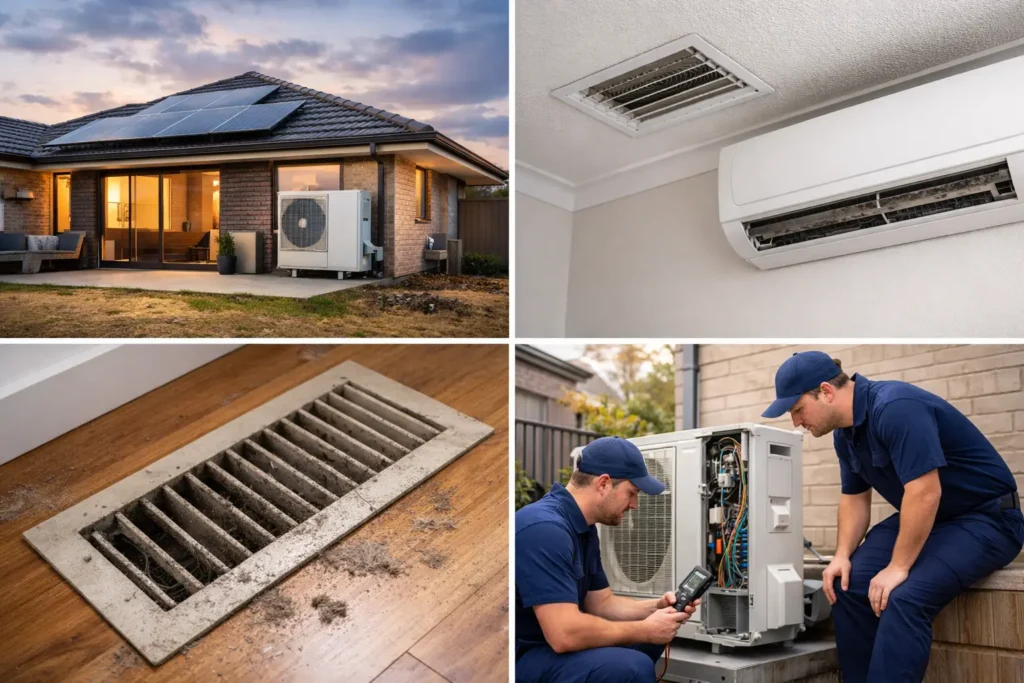
A heating or cooling system can be running for hours without making a Melbourne home or workplace feel properly comfortable. The problem is often not the unit itself. Common HVAC energy wasters such as blocked filters, dirty ductwork and air leaks force equipment to work harder, use more electricity and deliver less reliable comfort.
For homeowners, that can mean higher power bills, more dust around the house and rooms that never seem to reach the right temperature. For property managers and commercial operators, wasted HVAC energy can affect tenant comfort, staff productivity and maintenance budgets. Finding the cause early is usually far more cost-effective than waiting for a breakdown.
Common HVAC Energy Wasters in Homes and Buildings
1. Dirty air filters and return vents
Your HVAC system needs a steady supply of air to heat or cool efficiently. When a filter is packed with dust, pet hair and debris, the fan must pull harder to move air through the system. That added resistance increases energy use and can put unnecessary strain on the motor.
A dirty return-air grille can create the same problem. It is easy to overlook because it may be positioned in a hallway, ceiling or out-of-the-way room, but it is a major entry point for the air circulating through ducted heating and cooling.
Check filters regularly, particularly during high-use seasons. The right replacement schedule depends on the filter type, pets, occupancy and local dust levels. A disposable filter may need changing every few months, while reusable filters need correct cleaning and complete drying before they are reinstalled.
2. Dust and debris inside ductwork
A clean filter does not guarantee clean ducts. Over time, dust, building debris, hair and allergens can settle inside return ducts, supply ducts and vent openings. This build-up can restrict airflow, especially where it combines with moisture or where ducts have not been maintained for years.
Dirty ductwork is not always the sole reason for a high power bill, and no reputable contractor should claim that duct cleaning will fix every HVAC issue. However, when visible dust, poor airflow and dirty vents are present, professional cleaning can remove obstructions that make the system work harder than necessary. It also helps reduce the dust being circulated through occupied rooms.
Professional equipment with HEPA filtration is important. It captures loosened contaminants rather than simply pushing them back into the indoor environment.
3. Leaking, crushed or poorly connected ducts
Ducts hidden in roof spaces and under floors can develop leaks at joints, tears in flexible ducting or disconnected sections. Conditioned air then escapes before it reaches the rooms where it is needed. In summer, your system may be trying to cool a hot roof cavity. In winter, valuable heated air can be lost into unoccupied spaces.
Crushed flexible ducts are another common issue. They reduce the pathway available for airflow, much like a kinked hose. Rooms at the end of the run may feel stuffy or noticeably warmer and colder than the rest of the property.
Duct cleaning and duct repairs solve different problems, but they can be identified during the same maintenance discussion. If a vent has weak airflow even after cleaning, the duct layout, seals, dampers and system capacity should be assessed.
4. Blocked outdoor units and split-system coils
A split-system air conditioner needs to release heat through its outdoor unit. Leaves, dust, grass clippings and stored items around the condenser can stop it from doing that effectively. The compressor then runs longer to achieve the same indoor temperature.
Indoor split-system filters and coils also collect dust. When airflow across the coil is reduced, cooling performance can drop, musty odours may develop and the system may use more power. Regular filter cleaning is a sensible owner task, but deep cleaning of coils, drain components and internal surfaces requires the right process to avoid damage or water leaks.
Keep clear space around outdoor units and never hose electrical components or use harsh chemicals on delicate fins. If the system is noisy, dripping indoors, smelling musty or failing to cool as it once did, arrange professional servicing rather than continuing to run it under strain.
5. Thermostat settings that fight the weather
Setting the thermostat extremely low on a hot day or excessively high on a cold morning does not cool or heat the building faster. It simply asks the unit to run longer. Small temperature adjustments can have a meaningful effect on energy consumption over a full season.
For many households, a moderate setting that suits the occupants is more efficient than chasing a very cold or very warm indoor climate. Ceiling fans, blinds and appropriate clothing can help maintain comfort without constantly adjusting the thermostat.
Zoning can also make a substantial difference in larger homes and commercial premises. There is little value in heating empty meeting rooms, spare bedrooms or areas after business hours. If zones are not responding correctly, a technician can check dampers, controls and airflow balance.
6. Doors, windows and building gaps
Even a well-maintained HVAC system will waste energy if heated or cooled air is escaping through gaps around doors, windows, exhaust points and ceiling penetrations. Draughts make rooms feel uncomfortable, leading people to turn the thermostat further than needed.
Start with simple checks. Look for worn door seals, gaps around window frames and open fireplace dampers when the fireplace is not in use. In commercial settings, frequently opened entry doors and roller doors may require practical operating measures to limit heat gain or heat loss.
This is not an HVAC fault, but it directly affects HVAC running costs. Improving the building envelope reduces the workload placed on heating and cooling equipment.
7. Neglected exhaust fans and ventilation points
Bathroom, laundry and kitchen exhaust fans remove moisture, odours and airborne particles. When grilles and fan components are clogged with lint and grease, they may run inefficiently or fail to clear humid air properly. Excess moisture can contribute to mould growth and make rooms harder to cool and heat.
Commercial kitchens face greater demands. Grease-laden exhaust systems require regular professional attention for hygiene, airflow and fire safety. Cleaning schedules should reflect how heavily the kitchen operates, not just a calendar reminder.
A clean exhaust system is not about comfort alone. It supports healthier indoor air and helps protect the wider property from moisture and contamination issues.
8. Ignoring airflow warning signs
Uneven temperatures, rattling vents, frequent cycling, stale smells and rising energy bills are often treated as minor annoyances. They are useful warning signs. Continuing to operate a system with restricted airflow can increase wear on fans, compressors and other components.
Pay attention to changes rather than waiting until the unit stops altogether. If one room has suddenly become difficult to heat or cool, inspect the visible vent, check the filter and consider whether furniture is blocking airflow. If the issue continues, professional inspection is the sensible next step.
9. Skipping routine maintenance
HVAC efficiency is rarely protected by one big repair. It is maintained through regular, practical care. Filters need attention, vents need cleaning, drainage needs checking and ductwork needs periodic inspection. The correct timetable depends on the type of system, the number of occupants, pets, renovation work and the conditions within the property.
For rental properties, schools and commercial sites, a documented maintenance plan makes it easier to spot recurring issues and budget for work before it becomes urgent. For homeowners, a simple seasonal check before summer and winter can prevent many avoidable problems.
When Professional Cleaning Makes Sense
Professional HVAC cleaning is particularly worthwhile when vents show visible dust build-up, occupants are noticing more airborne dust, airflow has weakened, the property has recently been renovated, or a system has gone years without attention. It is also a practical step after moving into an established home, where the maintenance history may be unclear.
The goal should be a cleaner, better-functioning system, not a vague promise. A reliable technician should explain what they find, recommend only the work that is relevant and provide transparent pricing before the job begins.
Top Air Duct Cleaning provides professional ducted heating, cooling, split-system and ventilation cleaning across Melbourne, using advanced HEPA filtration equipment and careful cleaning methods. For a free quote or same-day availability where possible, call 0457 666 469 or visit www.topairductcleaning.com.au. A cleaner airflow path gives your system a better chance to deliver the comfort you are already paying for.
