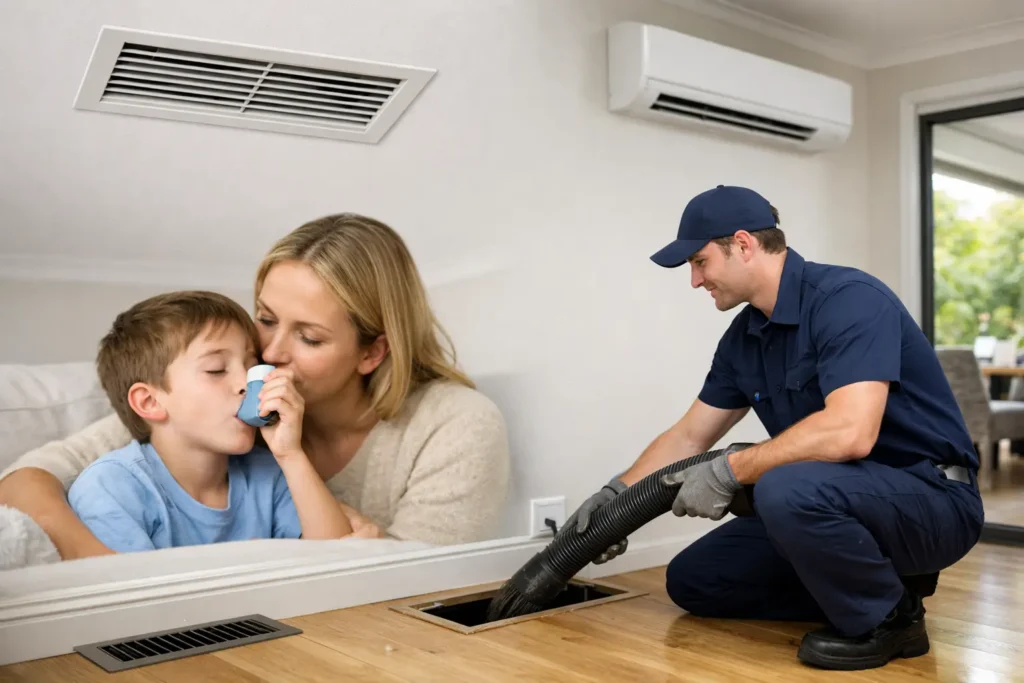
A heating or cooling system can look clean from the room while its return vents and ductwork hold a surprising amount of dust. For households managing asthma, that matters. Duct cleaning for asthma relief is not a cure and should never replace an asthma action plan or advice from your GP, but professionally removing built-up debris can be a practical part of reducing airborne irritants inside the home.
The key is knowing what duct cleaning can reasonably achieve, when it is worth arranging, and which other indoor air quality measures need to sit alongside it. Asthma triggers vary from person to person, so the right approach is rarely one-size-fits-all.
How dirty ducts can affect asthma triggers
Every ducted heating and cooling system circulates air through return grilles, filters, ducts and supply vents. Over time, the system can collect household dust, pet dander, pollen, hair, lint and fine particles brought in from outdoors. If there is moisture or a maintenance issue, mould growth may also develop around components such as coils, drain areas or vents.
Not every particle in a duct will end up in the breathing zone. Some debris remains stuck to duct surfaces, and a well-maintained filter captures a portion before air travels through the system. However, when dust is heavy, filters are neglected, vents are dirty or airflow is disrupted, the system may circulate more particles through occupied rooms than it should.
For a person with asthma, common indoor triggers can include dust mites, pollen, pet dander, smoke, mould spores and strong cleaning fragrances. Duct cleaning does not remove every trigger from a property. It can, however, reduce one reservoir of accumulated dust and allergens, particularly in homes where the system has not been cleaned for years or has been running through renovations, a smoky summer or high-pollen periods.
When duct cleaning for asthma relief is worth considering
The clearest reason to book a professional inspection is visible evidence of a problem. Dust blowing or collecting around supply vents, dark build-up on return grilles, a musty smell when the system starts, inconsistent airflow and a noticeable rise in dust around the home are all signs that cleaning and maintenance may be overdue.
It is also sensible to consider cleaning after building works. Renovation dust is extremely fine and can travel through return-air pathways quickly. Even careful builders cannot always prevent plaster dust, timber particles and other debris from reaching a ducted system.
Households with shedding pets, young children, allergy sufferers or frequent use of heating and cooling may need more regular attention than a lightly used system in a low-occupancy home. The same applies to rental properties between tenants, childcare settings, schools and offices where many people share enclosed air for long periods.
That said, asthma symptoms alone are not proof that ducts are the cause. If symptoms are new, severe or worsening, seek medical advice promptly. A qualified duct cleaning technician can assess the condition of the system, but they cannot diagnose the source of a health condition.
What professional cleaning should include
A proper duct cleaning service is more than vacuuming the visible vent cover. The goal is to remove contaminants without spreading them through the property. Professional equipment, controlled agitation and HEPA filtration are central to doing that safely and effectively.
A thorough service generally begins with an assessment of the return-air points, supply vents and accessible ductwork. Technicians then use specialised tools to loosen built-up dust while a high-powered vacuum system captures debris. Grilles and vents are cleaned, and the system is checked for issues that could undermine results, such as damaged duct sections, heavily soiled filters or signs of moisture.
For ducted heating and cooling, attention should also be given to components that influence air quality and system performance. A clean filter, clear return pathway and unobstructed vents support better airflow. Where a split system is part of the property, its indoor coil, fan barrel and drainage area require a separate cleaning process because they are not connected to the ductwork.
At Top Air Duct Cleaning, our technicians use professional HEPA filtration equipment designed to contain fine dust during cleaning. This is especially relevant for families wanting to minimise disruption and avoid turning a cleaning job into a cloud of airborne debris.
The limits of duct cleaning and why they matter
The honest answer is that duct cleaning may help reduce indoor irritants, but it cannot guarantee asthma relief. Asthma can be triggered by factors well beyond the HVAC system, including outdoor pollution, viral illness, cold air, smoke, dust mites in bedding, pets, damp areas and chemical sprays.
If there is active mould caused by a roof leak, plumbing leak or poor drainage, cleaning ducts alone will not solve the underlying moisture problem. The source of moisture must be repaired first. Similarly, if an old filter is clogged or poorly fitted, cleaned ducts will become dusty again sooner than expected.
Be cautious of anyone who promises to eliminate asthma, remove every contaminant permanently or diagnose mould without a proper inspection. Quality work is specific: it identifies what is present, cleans the appropriate components and explains any maintenance or repair steps needed next.
Build a lower-trigger indoor environment
Duct cleaning works best as part of a broader home maintenance routine. Keep doors and windows closed during heavy smoke or pollen events where practical, then air out the home when outdoor conditions improve. Vacuum regularly using a machine with effective filtration, and wipe hard surfaces with a damp cloth rather than dry dusting.
Wash bedding regularly in warm water if dust mites are a known trigger. Keep pets out of bedrooms where possible, manage indoor humidity, and avoid heavily fragranced sprays or candles if they cause irritation. For properties with ducted systems, replace or clean filters in line with the manufacturer’s instructions and check vents for visible dust between professional services.
Good ventilation is still important. The aim is not to seal a property completely, but to control the quality of air entering and moving through it. In Melbourne, that may mean adjusting habits during spring pollen peaks, bushfire smoke events or wet periods when dampness can become an issue.
Questions to ask before booking
Choosing a duct cleaning provider should not come down to the cheapest flyer in the letterbox. Ask what equipment will be used, whether HEPA filtration is included, what areas of the system are covered and whether the quote is transparent about any additional work. A reputable provider should be able to explain the process in plain language.
It is also useful to ask whether the technician is insured, whether they can inspect the condition of ducts and vents before work begins, and whether same-day service is available if the matter is urgent. For commercial premises, request a scope that reflects the building’s use, occupancy and HVAC layout rather than a generic package.
A cleaner ducted system will not replace prescribed medication or medical care, but it can remove a preventable source of dust from the air your household shares every day. For a clear assessment, transparent quote and professional duct cleaning across Melbourne, call Top Air Duct Cleaning on 0457 666 469 or visit www.topairductcleaning.com.au. Clean air starts with addressing the parts of your home that are easiest to overlook.
