
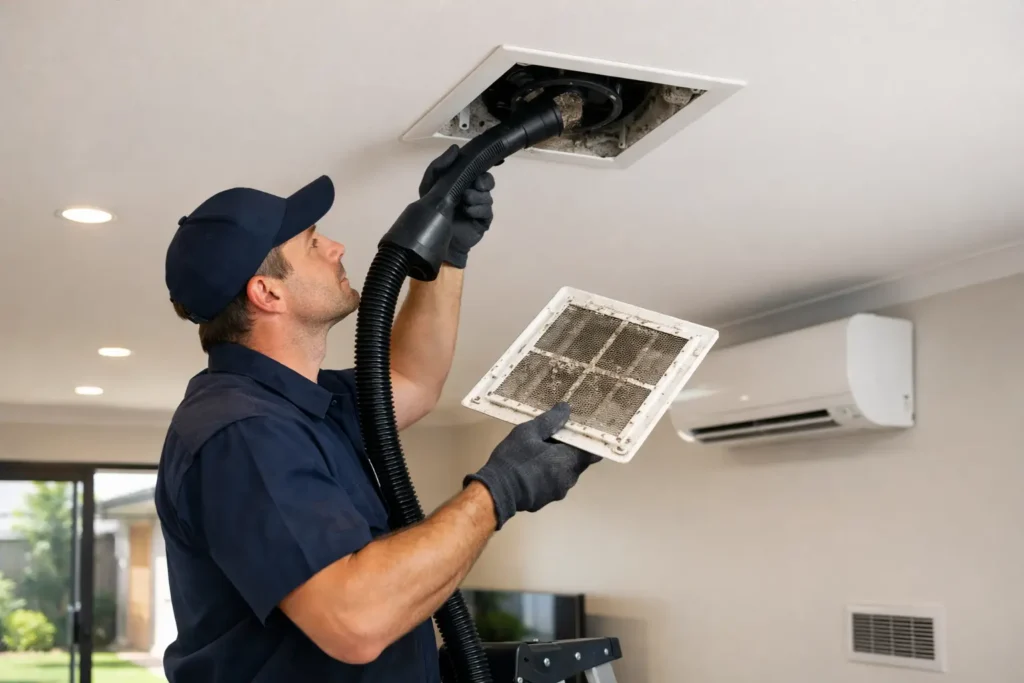
A noisy fan, lingering cooking smells and greasy residue around the grille are not minor cleaning problems. They are signs that your ventilation is not doing its job properly. A professional exhaust fan cleaning service removes the buildup hidden inside the fan, ducting and vents so stale air, steam, smoke and odours can be extracted as intended.
For Melbourne homes, rental properties and commercial premises, clean extraction is a practical part of keeping indoor spaces safer, fresher and easier to maintain. In kitchens, bathrooms, laundries and workshops, a neglected fan can collect dust, lint, grease and moisture for years. That material restricts airflow, places extra strain on the motor and, in certain settings, creates a serious fire concern.
What an Exhaust Fan Cleaning Service Actually Covers
Wiping the outside of a grille improves its appearance, but it does very little for the contamination inside the system. The working parts of an exhaust fan sit behind the ceiling or wall cover, where airborne particles settle on the blades, housing, motor area and connected ductwork.
A thorough clean starts with an inspection of the accessible system. Professional technicians assess the grille, fan housing, blades, duct connections and external outlet where accessible. They identify whether the main problem is ordinary household dust, bathroom moisture residue, laundry lint or heavy kitchen grease.
The cleaning approach depends on the fan type and its location. At Top Air Duct Cleaning, technicians use professional methods and HEPA filtration equipment to contain loosened debris rather than simply moving dust back into the room. Components are cleaned carefully, and the system is checked to confirm that airflow is no longer being obstructed by avoidable buildup.
Commercial kitchen exhaust cleaning can require a more detailed approach than a standard domestic bathroom fan. Grease-laden systems may involve canopies, filters, ductwork and extraction components, with cleaning requirements influenced by the volume and type of cooking. A small staff kitchenette and a busy restaurant kitchen should not be treated as the same job.
Why Dirty Exhaust Fans Cause Bigger Problems
Exhaust systems are designed to carry unwanted air out of a building. When the path is blocked, that air stays indoors longer. The result may be condensation on windows, mould-prone bathroom surfaces, persistent odours or a kitchen that still smells of last night’s cooking well after the dishes are done.
Restricted airflow also makes the motor work harder. A fan struggling through thick dust or grease can become louder, less effective and more likely to wear prematurely. Cleaning cannot repair a failed motor or damaged wiring, but removing accumulated debris can help a serviceable unit operate under less stress.
Fire prevention is another major reason not to put off cleaning. Grease is combustible, and lint can also present a risk when it accumulates around heat-producing equipment or motors. This matters most in commercial kitchens, cafes, schools and shared facilities, where extraction systems are used frequently. Routine professional cleaning supports a safer maintenance program and helps managers address visible hygiene issues before they become operational disruptions.
Signs Your Fan Needs Professional Attention
Some buildup is out of sight, but the warning signs are usually not. Arrange an inspection if you notice four or more of the following conditions:
- Steam hangs in the bathroom or kitchen longer than it used to.
- The fan is noisy, rattles or appears to run with weak suction.
- Grease, dust or lint is visible on the grille and surrounding ceiling.
- Cooking, damp or musty smells remain after the fan has been operating.
- Mould returns quickly around bathroom ceilings, tiles or window frames.
- The fan has not been properly cleaned since moving into the property or during recent renovations.
These symptoms do not always mean the fan itself is dirty. A faulty motor, undersized fan, damaged duct, blocked external vent or poor installation can produce similar results. That is why an experienced assessment is valuable. It separates a cleaning issue from a repair or replacement issue, so you are not paying for work that will not solve the underlying problem.
Bathrooms, Kitchens and Laundries Need Different Care
Bathroom fans mainly deal with moisture, fine dust and aerosol residue. If extraction is poor, humidity settles on cooler surfaces and supports mould growth. Cleaning the fan can improve airflow, but good ventilation habits still matter. Run the fan during and after showers, keep windows open when conditions allow, and repair water leaks promptly.
Kitchen exhaust fans have a tougher job. They collect airborne cooking oils that form a sticky layer inside the grille and fan housing. This layer traps more dust over time and can quickly reduce performance. Households that cook often with oil, use a wok or prepare large family meals may need attention more frequently than homes where the rangehood is used lightly.
Laundry and utility-area fans often collect lint as well as moisture. Lint is light, but it builds densely around grilles and moving parts. Properties with dryers, busy family laundries or poorly vented spaces benefit from a regular check rather than waiting for the fan to become noticeably weak.
How Often Should Exhaust Fans Be Cleaned?
There is no single schedule that suits every property. For most homes, an annual inspection and clean is a sensible starting point, particularly for frequently used kitchen, bathroom and laundry fans. Properties with pets, smokers, large households, high humidity or recent building work may need more regular attention because dust and residue accumulate faster.
For commercial sites, frequency depends on use. A commercial kitchen with daily frying or high-volume cooking needs a planned cleaning schedule based on its equipment, operating hours and grease load. Property managers should also include common-area bathrooms, staff kitchens and laundry ventilation in their maintenance planning. These systems are easy to overlook until a tenant reports an odour, mould issue or noisy fan.
The key is to clean based on conditions, not just the calendar. Visible grease, weak airflow and recurring moisture problems are reasons to act now, even if the fan was cleaned relatively recently.
Why DIY Cleaning Has Limits
Homeowners can safely vacuum the visible grille and wipe the cover after switching power off where appropriate. That simple upkeep helps reduce surface dust. However, taking apart fan housings, accessing ceiling cavities or handling greasy electrical components carries risks, especially where wiring, brittle ducting or high ceilings are involved.
DIY cleaning can also miss the duct connection and outlet point, which may be where a blockage is developing. Using harsh chemicals or soaking electrical parts can cause damage. In commercial settings, informal cleaning is even less suitable when grease accumulation, safety obligations and business continuity are involved.
Professional servicing is the better option when a fan is heavily soiled, difficult to access, connected to ductwork or showing signs of poor performance. It gives you a clearer picture of the system’s condition and avoids turning a routine clean into an electrical or ceiling repair problem.
A Cleaner Fan Supports a Cleaner Property
Exhaust fan cleaning is not a cosmetic extra. It supports fresher rooms, better moisture control, reduced grease buildup and more effective ventilation. For landlords and property managers, it can also be a sensible preventative measure between tenancies or as part of a broader air quality and HVAC maintenance plan.
If your exhaust fan is noisy, greasy, weak or overdue for attention, book a professional inspection before the problem spreads through the property. For a free quote and reliable Melbourne service, call Top Air Duct Cleaning on 0457 666 469 or visit www.topairductcleaning.com.au. A clean, properly functioning fan is a small maintenance detail that makes the whole building more comfortable to live or work in.
