Most commercial buildings should have their HVAC ducts inspected every year and cleaned every 3 to 5 years. Busy or high-risk buildings, like hospitals, gyms and shopping centres, often need cleaning sooner.
The best schedule is not a fixed date. It is a yearly inspection, with cleaning when the results say so. Below, we break down the schedule by building type, what changes it, and the signs that mean you should clean sooner.
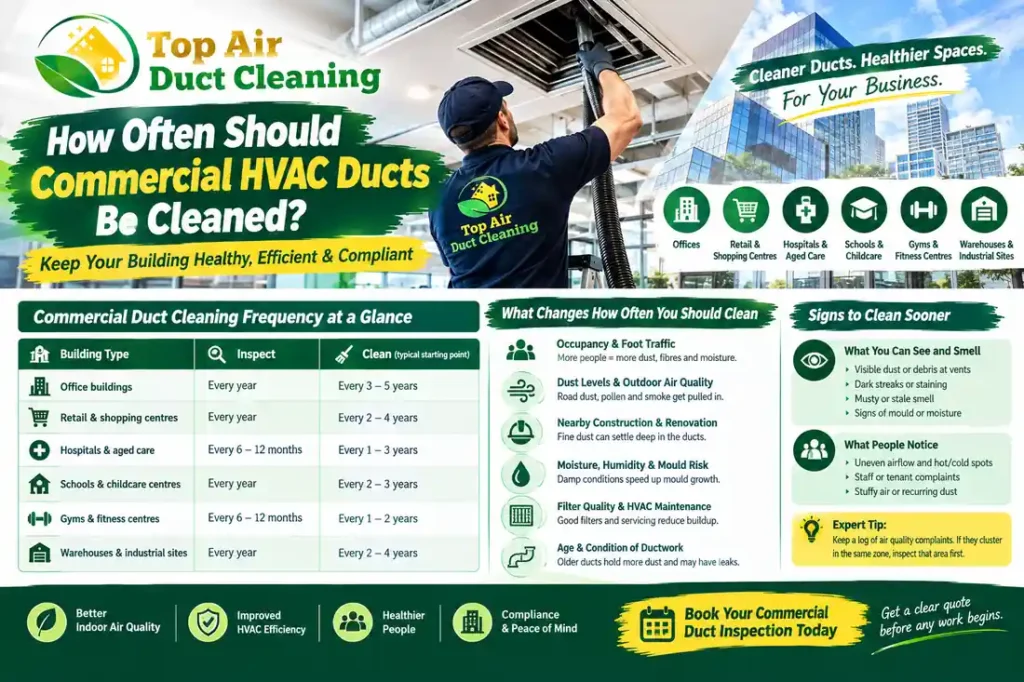
Commercial Duct Cleaning Frequency at a Glance
Here is a simple starting point for a commercial HVAC duct cleaning schedule. Treat it as a guide, not a rule, because every building is different.
| Building type | Inspect | Clean (typical starting point) |
|---|---|---|
| Office buildings | Every year | Every 3 to 5 years |
| Retail and shopping centres | Every year | Every 2 to 4 years |
| Hospitals and aged care | Every 6 to 12 months | Every 1 to 3 years |
| Schools and childcare centres | Every year | Every 2 to 3 years |
| Gyms and fitness centres | Every 6 to 12 months | Every 1 to 2 years |
| Warehouses and industrial sites | Every year | Every 2 to 4 years |
The Simple Rule of Thumb
Inspect on a regular schedule, and clean when the inspection shows buildup, mould or damage. Industry groups like NADCA and the US EPA also stress cleaning as needed, rather than on a fixed calendar alone.
“A calendar tells you when to look. The ducts tell you when to clean.”
How Often Should Commercial Air Ducts Be Cleaned by Building Type
Different buildings put different loads on their ducts. Here is how it plays out in the places we see most.
Office Buildings
Offices have steady, predictable use, so a yearly inspection and a clean every 3 to 5 years suits most. If you are asking how often offices should clean their air ducts, this is the usual answer.
Bring it forward if you have a high headcount, open-plan floors or recent fit-outs.
Retail and Shopping Centres
Doors open all day, and foot traffic pulls in street dust and fibres from stock and packaging. That is why retail often sits at the shorter end, around every 2 to 4 years.
Food courts and large anchor tenants may need more attention than a small shop.
Hospitals and Aged Care
These sites have stricter indoor air quality needs and more vulnerable people inside. Inspections every 6 to 12 months and cleaning every 1 to 3 years is a common starting point.
Always follow your facility’s own infection control and compliance requirements first.
Schools and Childcare Centres
Children spend long hours indoors, and dust, art supplies and busy classrooms add up. A clean every 2 to 3 years works for many sites.
Schedule the work for term breaks so classrooms are not disrupted.
Gyms and Fitness Centres
Heavy breathing, sweat and humidity make gyms damp and dusty at the same time. That raises the risk of musty smells and mould, so inspect every 6 to 12 months and clean every 1 to 2 years.
Change rooms and pool areas need extra attention.
Warehouses and Industrial Sites
These buildings deal with fine dust, fumes and open loading doors. A clean every 2 to 4 years is typical, but dusty operations may need it more often.
Inspect at least once a year, and clean sooner if production dust reaches the vents.
What Changes How Often You Should Clean Your Ducts
Two buildings of the same type can need very different schedules. These are the factors that move the number up or down.
Building Occupancy and Foot Traffic
More people mean more skin flakes, fibres, dust and moisture from breathing. A busy building with hundreds of people a day fills its filters and ducts faster than a quiet one.
If occupancy has grown since the system was installed, your schedule should too.
Dust Levels and Outdoor Air Quality
Outdoor air gets pulled in through your HVAC system. Roadside dust, pollen and smoke from bushfire season all end up in your ducts.
Buildings near main roads or open land tend to build up debris faster.
Nearby Construction and Renovation Dust
Melbourne has a lot of building work going on, and that dust travels. If there has been construction next door, or a fit-out inside, plan an inspection straight afterwards.
Fine plaster and cement dust can settle deep in the ducts.
Moisture, Humidity and Mould Risk
Damp ducts are where mould starts. Leaks, condensation and poor drainage all raise the risk. If you see any moisture, inspect straight away. Do not wait for the next scheduled date.
Mould growth is one of the clearest reasons to clean sooner.
Filter Quality and HVAC Maintenance
Good filters, changed on time, catch dust before it enters the ducts. Systems with poor filters or missed servicing need cleaning more often.
Regular HVAC maintenance is the cheapest way to stretch the gap between duct cleans.
Age and Condition of the Ductwork
Older ducts have more joins, wear and leaks, and may hold years of buildup. If you have taken over a building and do not know its history, start with an inspection.
That tells you where the system really stands, rather than guessing.
Signs Your Commercial Ducts Need Cleaning Sooner
You do not have to wait for the schedule. These signs tell you the system needs attention now.
What You Can See and Smell
- Visible dust or debris at vents and diffusers
- Dark streaks or staining around the air outlets
- A musty or stale smell when the system starts
- Signs of mould or moisture near vents or ducts
Any one of these is a reason to book an inspection. Two or more means act quickly.
What People Notice
Uneven airflow, and hot or cold spots, often point to blocked or dirty ducts. Staff or tenant complaints about stuffiness, dust or air quality are another warning.
If complaints keep coming back, do not ignore them. Put an inspection on the calendar.
Expert tip: Keep a log of air quality complaints. If they cluster around the same zone, that is where to inspect first.
How Often Should Ducts Be Inspected?
Inspections are cheaper and quicker than a full clean, and they tell you when a clean is needed.
Annual Commercial Air Duct Inspection
At least once a year is a good habit for most buildings, ideally alongside your HVAC service. Hospitals, aged care and gyms are better with every 6 to 12 months.
A camera inspection shows the inside of the ducts, so you can decide on facts rather than guesses.
Commercial Duct Inspection Checklist
A good inspection should look at:
- Dust, debris and buildup inside the ducts
- Mould, moisture and condensation
- Damage, leaks and loose joins
- Condition of vents, diffusers and access points
- Airflow at key outlets
Ask for photos and a short written report you can keep on file.
Standards and Compliance for Commercial Duct Cleaning Schedules
As far as we know, Australia has no single rule that sets one fixed duct cleaning interval for every commercial building. Still, standards and your duty of care shape what a sensible schedule looks like.
Australian Standards for HVAC Maintenance
AS/NZS 3666 covers the microbial control of air-handling and water systems in buildings, and it expects regular inspection and maintenance. AS 1668 covers ventilation and air conditioning in buildings.
These do not give you a one-size-fits-all cleaning date, so check the versions that apply to your site.
Your Duty as a Building Manager
In Victoria, employers and building managers have a general duty to provide a safe and healthy workplace.
Keeping inspection and cleaning records helps show you have looked after indoor air quality.
Expert tip: Store your reports and photos in one place. They are useful for audits, tenants and insurers.
Commercial Duct Cleaning in Melbourne
Melbourne’s climate and building boom both affect when you should book.
Time It Around Melbourne’s Seasons
Book before heating season in autumn, so the system is clean when it works hardest through winter. A second check before summer helps if you rely on cooling.
Autumn and spring are busy, so book early.
Plan Around Your Business Hours
Cleaning can be planned for quieter times so your staff and customers are not disrupted. Ask your provider about after-hours or staged work, especially for large or occupied buildings.
A good team will give you a clear scope and quote before work begins.
Frequently Asked Questions Commercial Air Duct Cleaning
1. Who is responsible for duct cleaning, the landlord or the tenant?
It depends on your lease. Common areas and base-building systems usually sit with the owner, while tenant-only systems may fall to the tenant. Check your lease or ask your property manager.
2. Should I keep records of duct cleaning?
Yes. Keep inspection reports, photos and service dates. They help with audits, insurance and tenant questions.
3. Can ducts be cleaned while the building is occupied?
Often, yes, especially when work is staged zone by zone or done after hours. Your provider should plan around your operations.
4. Does a new building need duct cleaning before moving in?
It can. Construction dust often settles in new ducts, so an inspection before occupancy is a smart check.
5. What should a duct cleaning report include?
It should list the areas serviced, before and after photos, any issues found and recommendations for next time.
Conclusion
For most commercial buildings, the rule is simple: inspect every year, clean every 3 to 5 years, and clean sooner when the signs or the building type call for it.
Top Air Duct Cleaning services commercial sites across Melbourne, seven days a week. Book a commercial duct inspection today and get a clear quote before any work begins.
