
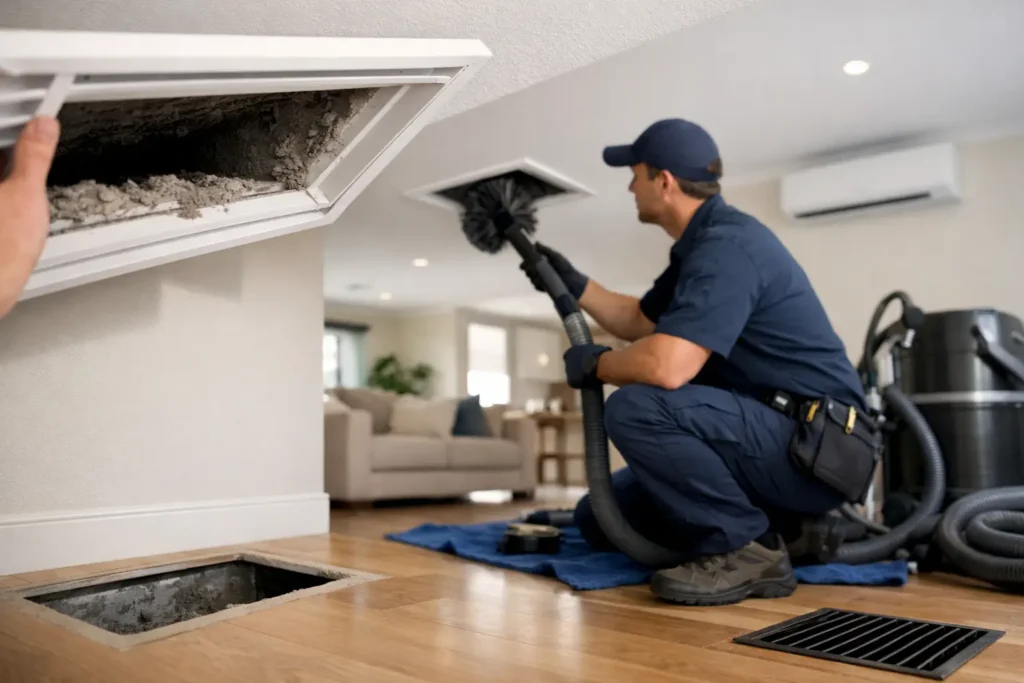
A dusty vent grille is easy to dismiss as a cleaning chore. But when dust returns quickly, rooms feel stuffy or your ducted system seems to work harder than it used to, the issue may be inside the ductwork. So, how often should air ducts be cleaned? For most Melbourne homes, a professional duct clean every three to five years is a sensible baseline. However, the right schedule depends on the people using the property, the condition of the system and what is actually building up inside.
Duct cleaning is not about chasing an arbitrary date on the calendar. It is about removing dust, allergens and debris before they affect indoor air quality, airflow and the performance of your heating and cooling system.
How Often Should Air Ducts Be Cleaned in a Home?
A well-maintained household with no unusual air-quality concerns can usually arrange professional air duct cleaning every three to five years. This suits many owner-occupied homes where filters are changed regularly, occupants do not smoke indoors and the system is used normally through Melbourne’s changing seasons.
Some homes benefit from more frequent cleaning, often every two to three years. Families with allergies, asthma or other respiratory sensitivities may notice the difference a clean system makes, particularly during winter when windows stay closed and ducted heating is running more often. Pet owners should also consider a shorter cycle, as pet hair and dander can collect around return-air vents, filters and accessible duct sections.
If your home has recently been renovated, do not wait for the usual schedule. Plaster dust, sawdust and fine building debris can travel through return vents and settle throughout the system. Even with careful site containment, renovation dust is extremely fine and can continue circulating after the visible mess is gone.
The Signs Your Ducts Need Cleaning Now
The condition of your system matters more than the number of years since its last service. A duct inspection and clean may be due sooner if you can see dust around vent covers or notice it blowing from supply vents when the system starts.
Other warning signs include a persistent musty smell when heating or cooling is operating, uneven airflow between rooms, unusually high dust levels on furniture and recurring allergy symptoms indoors. These signs do not automatically mean the ducts are the only cause. A blocked filter, damaged duct, dirty evaporative component or ventilation issue can produce similar symptoms. A professional assessment helps identify the real source rather than treating the wrong problem.
Mould-related odours deserve prompt attention. Ductwork itself does not create moisture, so if mould is present, there may be a condensation, drainage, insulation or humidity issue that also needs to be addressed. Cleaning removes contamination, but controlling the moisture source is what prevents it returning.
Why Cleaning Frequency Changes From Property to Property
Every property has a different dust load. A house near a busy road, construction site or open paddock may draw in more airborne particles than a tightly sealed home on a quiet street. Older homes can also have leaky return ducts that pull dust from roof spaces, subfloors or wall cavities.
The way a system is used changes the picture too. A ducted heater operating most mornings and evenings through a Melbourne winter will move considerably more air than one used occasionally. More air movement means more material passing through filters and more potential for build-up if filters are neglected.
Commercial sites generally need a planned maintenance schedule rather than a one-size-fits-all interval. Offices, schools, childcare centres, retail spaces and medical or community facilities can have high occupancy and long operating hours. Their duct cleaning frequency should reflect usage, air-quality expectations, cleaning records and the needs of occupants.
Commercial kitchens are a separate category. Grease-laden exhaust systems require regular specialist cleaning for hygiene, airflow and fire prevention. They should not be treated like standard air-conditioning ducts. The correct interval depends on cooking volume and the type of food preparation, with high-use kitchens requiring far more frequent servicing.
What Professional Duct Cleaning Should Include
A proper air duct clean reaches beyond the visible grilles. The aim is to remove settled contaminants from the components that move and distribute air, while preventing loosened material from being released back into the building.
A professional service typically begins with an assessment of the vents, return-air points and accessible system components. Technicians then use purpose-built agitation tools to dislodge dust and debris, along with powerful vacuum equipment fitted with HEPA filtration to capture fine particles. Vent covers are cleaned, and the system is checked for obvious issues such as damaged ducts, excessive build-up or areas that may need repair.
This is different from simply vacuuming around a vent with a household vacuum. Surface cleaning can improve appearance, but it will not remove material further along the duct runs or within key system components. It is also different from an excessively cheap offer that promises a whole-house clean without explaining the equipment, scope of work or number of vents covered. Transparent pricing and a clear explanation of the process protect you from surprises.
Keep Ducts Cleaner Between Professional Services
Regular maintenance will not replace professional cleaning, but it can extend the time between appointments and help your system operate more efficiently. Check the return-air filter regularly and replace or clean it in line with the manufacturer’s instructions. During periods of heavy heating or cooling use, filters may need attention more often.
Keep supply and return vents clear of furniture, curtains and piles of household items. Vacuum visible dust from vent covers, and avoid sweeping or sanding work near open return-air grilles. If you are planning renovations, ask trades to cover vents where practical and arrange a post-renovation HVAC clean once work is complete.
For split systems, cleaning the indoor unit filters is also essential. A split system does not use the same duct network as ducted heating and cooling, but dirty filters, coils and drain areas can still affect airflow, odours and indoor comfort.
Is Annual Duct Cleaning Necessary?
For most homes, annual full duct cleaning is not necessary. If a system is maintained properly and there are no specific contamination concerns, cleaning too frequently may provide little extra benefit. The better approach is to use a realistic three-to-five-year benchmark, then bring the service forward when your property, occupants or system condition calls for it.
Annual inspections can still be worthwhile for commercial properties, high-use facilities or homes with ongoing air-quality concerns. An inspection gives you evidence to make the right decision. It may confirm that a clean is needed, or it may reveal that the more urgent job is filter replacement, duct repair, mould remediation or servicing another part of the HVAC system.
Top Air Duct Cleaning provides professional residential and commercial duct cleaning across Melbourne, using advanced HEPA filtration equipment and proven cleaning methods to support cleaner air and dependable system performance.
If your vents are dusty, your airflow has dropped or it has been years since the system was checked, arrange a free quote with a fully insured specialist. Call 0457 666 469 or visit www.topairductcleaning.com.au. A cleaner duct system is a practical step towards a fresher, more comfortable property for everyone who uses it.
