Return air vents are often the dustiest grilles in a home because they draw air back into your heating and cooling system every day. Knowing how to clean return air vents properly helps reduce visible dust, supports healthier indoor air and keeps airflow moving as intended. It is a straightforward job for most homeowners, but it needs to be done carefully so loose debris does not end up inside the ductwork.
A clean return vent will not solve every air-quality or HVAC problem. If dust returns almost immediately, there is a musty smell, airflow is weak or family members are dealing with ongoing allergy symptoms, the issue may be deeper in the duct system. In that case, a professional inspection and duct clean can make a meaningful difference.
What a return air vent does
Your return air vents pull air from rooms back to the central heating or cooling unit. The system filters and conditions that air before sending it out again through supply vents. Return grilles are commonly larger than supply vents and may be located in a hallway, ceiling, wall or floor, depending on the property.
Because return vents draw in air, they also collect lint, pet hair, dust, pollen and other airborne particles on their grilles. A light coating is normal. Thick, matted dust is not something to ignore, particularly when it restricts air entry or gets disturbed whenever the system starts.
For homes with ducted heating and cooling, cleaning the visible grille is a useful part of regular housekeeping. However, the grille is only the entry point. It does not clean the return duct, filter, fan or internal components behind it.
Before you clean return air vents
Start by turning off your heating and cooling system at the thermostat. If the grille is close to a fan or you plan to remove it, switch the system off at the relevant isolator or circuit breaker as an added precaution. This stops the fan from pulling loosened dust into the system while you work.
Gather a vacuum cleaner with a brush attachment, two microfibre cloths, warm water, mild dishwashing liquid and a screwdriver if the grille is secured with screws. A step ladder may be needed for ceiling vents. Make sure it is stable and never overreach from the top step.
Avoid using harsh chemicals, abrasive scrubbers or heavily soaked cloths. Excess moisture can drip into the duct or ceiling cavity, while strong products may damage painted metal, plastic grilles or nearby surfaces. You should also avoid spraying cleaner directly into the vent opening.
How to clean return air vents step by step
For a routine clean, the job usually takes 10 to 20 minutes per grille.
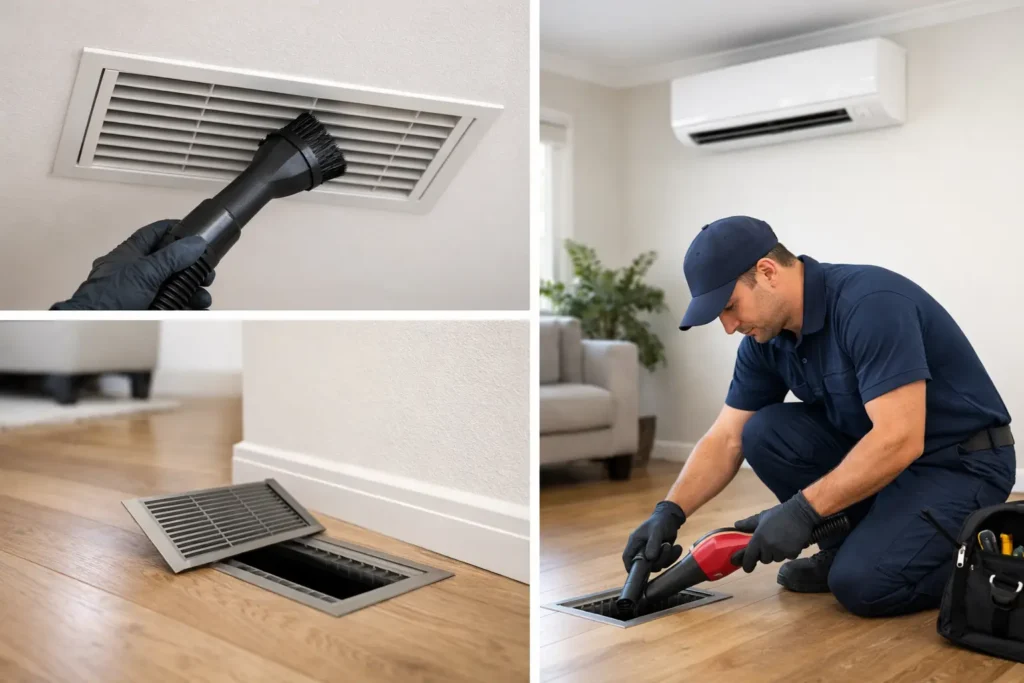
- Vacuum the grille first. Use the soft brush attachment to remove loose dust from the face, slats and surrounding wall or ceiling. Work gently so you do not push debris through the openings. Vacuuming before wiping prevents dusty streaks and reduces the amount of particles released into the room.
- Remove the grille if practical. Many wall and ceiling grilles are held in place by a few screws. Support the grille with one hand as you remove the final screw, especially if it is large. If it is painted in place, hard to reach or connected to a filter housing, do not force it. Clean it while fitted or arrange professional help.
- Wash the grille carefully. Wipe it with a microfibre cloth dampened in warm, mildly soapy water. For heavier build-up, you can wash a removable metal or plastic grille in a basin. Rinse away soap residue and dry it completely before reinstalling it. Never refit a wet grille over an open duct.
- Clean just inside the opening. With the grille removed, vacuum the visible edge of the duct and the immediate area behind it. Keep the attachment close to the surface and do not reach deep into the duct with a cloth, broom or household vacuum hose. This can dislodge built-up material further inside without properly removing it.
- Wipe the surrounding surface. Dust often gathers around return vents because of the direction of airflow. Use a clean, dry or lightly damp microfibre cloth to wipe the wall, ceiling or floor around the opening.
- Refit the grille and restart the system. Once everything is dry, replace the grille securely without overtightening screws. Turn the system back on and listen for rattling. A properly seated grille should sit flat and allow unobstructed airflow.
Do not forget the return air filter
Some return air vents have a filter behind the grille or inside a dedicated filter box near the indoor unit. Others use a filter at the main unit instead. Check your system manual or ask an HVAC professional if you are unsure where yours is located.
A dirty filter can cause far more airflow trouble than a dusty grille. Disposable filters should be replaced according to the manufacturer’s guidance, while washable filters must be cleaned and fully dried before being put back. The right schedule depends on the filter type, how often the system runs, whether you have pets and local conditions such as pollen or nearby construction dust.
Do not run your system without its specified filter. It may allow more debris to settle on internal components and within the ductwork, reducing performance over time.
How often should return vents be cleaned?
Most homes benefit from vacuuming return air grilles every one to three months and giving them a more thorough wipe when needed. Households with shedding pets, smokers, young children, renovations or allergy sufferers may need to clean them more frequently.
Commercial properties, schools and high-traffic spaces can collect dust faster because more people move through the building each day. Property managers should include return grilles and HVAC filters in planned maintenance rather than waiting until dirt is clearly visible.
The key is to respond to what you see. If a grille looks dusty again within days, it may point to a filter issue, excessive indoor dust, unsealed ductwork or contamination deeper in the system.
When surface cleaning is not enough
Cleaning the grille improves the appearance of the vent, but it cannot remove dust, debris or microbial growth from the full duct system. Professional duct cleaning may be the right next step if you notice persistent odours when heating or cooling runs, dust blowing from supply vents, reduced airflow, visible debris behind grilles or signs of mould around vents.
You should also seek professional assistance after major renovations, a pest problem, water damage or a long period of vacancy. These situations can introduce contaminants that ordinary household cleaning cannot safely address.
A proper duct cleaning service uses specialist equipment to remove accumulated material from accessible ductwork and system components. HEPA filtration is particularly valuable because it captures fine particles during the cleaning process instead of releasing them back into occupied areas. The work should be tailored to the type and condition of your system – aggressive cleaning is not appropriate for every duct material, and a reliable technician will explain what is required before starting.
Common mistakes to avoid
One of the most common mistakes is pushing a feather duster or dry cloth through the grille without vacuuming. This simply sends dust into the duct or back into the room. Another is using too much water, which can create moisture problems in areas that should remain dry.
It is also tempting to use fragranced sprays to cover a stale smell. Odours coming from return vents are a warning sign, not something to mask. They can be caused by a dirty filter, moisture, a blocked drain line, pests or contamination within the ductwork. Identifying the cause is safer and more effective than adding fragrance.
Finally, do not remove access panels, interfere with wiring or attempt to clean fans and coils unless you are qualified to do so. These components are essential to system safety and performance.
A clean return grille is a small maintenance task that helps your system breathe easier and keeps dust from building up where it is most noticeable. For Melbourne homes and commercial properties with stubborn dust, odours or duct contamination, Top Air Duct Cleaning provides dependable, professional service. Call 0457 666 469 or visit www.topairductcleaning.com.au for a free quote and practical advice on the right cleaning solution for your property.
