
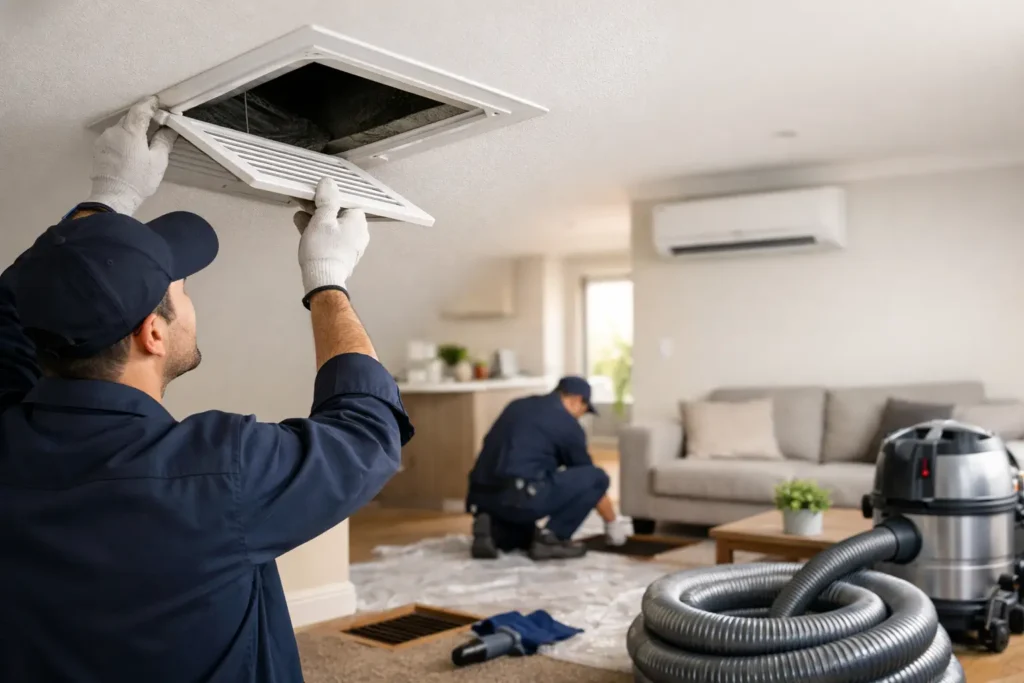
A duct cleaning appointment works best when technicians can reach the parts of your system that matter: return-air grilles, supply vents, ducted heating outlets and the indoor unit. Knowing how to prepare for duct cleaning does not mean doing the cleaner’s job yourself. It means making the property safe, accessible and ready for a thorough result.
For Melbourne homes, rental properties and commercial premises, a little preparation can reduce delays, protect valuables and help the cleaning team focus on improving airflow, removing built-up dust and addressing indoor air quality concerns.
How to Prepare for Duct Cleaning Before the Team Arrives
Start by confirming what is being cleaned. Ducted heating and cooling systems, split systems, exhaust fans and chimneys each require different access points and preparation. If you are unsure whether an outlet, return vent or ceiling grille is part of the booked service, ask when confirming your appointment.
You should also let the technician know about any issues you have noticed. Uneven heating or cooling, visible dust around vents, stale smells, reduced airflow, recent renovations, pets, water damage or suspected mould can all affect the assessment and cleaning approach. Clear information helps the team arrive prepared with the right equipment.
If you manage a commercial site, nominate a staff member who can provide access to plant rooms, ceiling hatches, offices or areas behind counters. For schools, childcare centres and workplaces, arrange cleaning outside busy periods where possible so the work can be completed safely and with minimal disruption.
1. Clear access around vents and return-air grilles
Move furniture, storage tubs, indoor plants and other belongings away from floor, wall and ceiling vents. As a guide, aim to leave around one metre of working space where practical. Technicians need room to safely remove grilles, connect professional equipment and inspect each access point.
Pay particular attention to the main return-air grille. This is often larger than supply vents and may be located in a hallway, living room or ceiling. It is a key part of the system and should not be blocked by furniture or stacked household items.
You do not need to remove fixed cabinetry or undertake major rearranging. If a difficult-to-reach vent sits behind heavy furniture, simply mention it before the appointment. The technician can advise whether it needs to be moved and what is realistically accessible.
2. Protect fragile items and clear nearby surfaces
Professional duct cleaning uses contained methods and HEPA-filtered equipment, but it is still sensible to put away delicate items near vents and work areas. Move glassware, ornaments, electronics, framed pictures and loose paperwork from nearby tables, shelves and benches.
Where a vent is in a bedroom or living area, clear the immediate floor space of toys, shoes, pet bedding and loose rugs. This prevents trip hazards and allows technicians to work efficiently. If you have valuable or sentimental items that cannot be moved, point them out on arrival.
There is no need to cover every piece of furniture in the house. A reputable duct cleaning team uses protective practices and works carefully. Preparation is about giving the team clear, safe access rather than turning your home into a worksite.
3. Make ceiling and roof access available if required
Some ducted systems require access through a ceiling manhole, roof space or plant area. Check that the manhole is not obstructed by stored belongings, and let the cleaning team know if the access point is in a cupboard, garage or bedroom.
If roof access is likely, ensure gates are unlocked and the area around the property is clear of hazards. Secure pets, remove obstacles from pathways and advise the team of any known concerns such as a steep driveway, restricted parking or fragile roof sections.
Do not enter the roof space yourself to inspect ducting before the appointment. Roof cavities can contain exposed wiring, poor footing, insulation and tight spaces. The technician will assess access safely and explain any limitations before work begins.
4. Secure pets and plan for children
The sound of cleaning equipment, opening vents and technicians moving through the property can unsettle animals. Keep pets in a separate room, outdoor area or secure enclosure for the duration of the service. This protects your pet, prevents escape through open doors and lets the team work without interruption.
Young children should also be kept away from active work zones. Duct cleaning equipment, hoses and removed grilles are not suitable for children to handle. For a busy household, planning a walk, playdate or quiet activity in another part of the home can make the visit easier for everyone.
5. Ensure clear parking and entry access
Professional duct cleaning equipment needs to be brought into the property safely. Reserve a practical parking space near the entrance where possible, particularly if the home has limited street access, apartment loading rules or a long driveway.
For apartments, townhouses and managed buildings, check whether the building requires advance notice, lift booking, loading-bay access or approval for contractors. Arrange access cards, keys and intercom instructions before the appointment rather than relying on someone being available at the last minute.
Commercial clients should advise reception, security or building management that technicians are expected. This is especially useful in shared offices, retail centres, medical practices and strata-managed sites where access procedures may apply.
6. Turn the system off only when instructed
Many customers wonder whether they should switch off ducted heating or cooling before the technician arrives. In most cases, leave the system in its normal state until you receive instructions. The team may need to check operation, airflow or specific components before cleaning begins.
If your system has an electrical fault, makes unusual noises, smells burnt or has stopped operating, tell the technician when booking. Do not keep running a system that appears unsafe. Cleaning can remove dust and debris, but it is not a substitute for electrical or mechanical repairs where a fault is present.
7. Avoid DIY vent cleaning immediately beforehand
It is fine to wipe loose dust from the outside of a grille, but avoid spraying chemicals, deodorising products or large amounts of water into vents. These products can leave residue, mask odours that need investigation or introduce moisture into the system.
Similarly, do not push a household vacuum hose deep into ductwork. Flexible ducts and internal components can be damaged by unsuitable tools. A professional service uses purpose-built agitation tools and HEPA filtration to collect dislodged contaminants rather than sending dust back into the room.
If you have removed a grille for painting or cleaning, keep the screws and fittings together. Let the technician know before work starts so it can be refitted correctly where appropriate.
8. Be available for the initial walkthrough and final check
You do not always need to stay at the property for every minute of the service, but someone authorised should be available at the beginning and end. The initial walkthrough gives you a chance to identify problem rooms, point out access limitations and confirm the scope of work.
At the end, ask the technician to explain what was found. This may include heavy dust accumulation, blocked return filters, damaged duct sections, signs of moisture or areas that need a separate repair. A trustworthy contractor will be clear about what cleaning can improve and where additional maintenance may be needed.
What You Do Not Need to Do
You do not need to dismantle your HVAC system, climb into the roof space or clean every vent before professionals arrive. You also do not need to leave windows open all day unless the technician recommends it for a particular reason. The purpose of professional cleaning is to remove accumulated dust and debris with appropriate equipment, not to shift the burden onto the property owner.
Preparation can vary depending on the property. A single-storey home with accessible floor vents may need only a clear pathway and secured pets. A large commercial building may require site induction, ceiling access coordination and after-hours scheduling. The right plan depends on the system, the building layout and the service being performed.
Clean ducting supports a cleaner, more comfortable indoor environment, but the best result starts with safe access and clear communication. For dependable duct cleaning across Melbourne and surrounding suburbs, contact Top Air Duct Cleaning for a free quote on 0457 666 469 or visit www.topairductcleaning.com.au. A well-prepared appointment gives your technician the room to do the job properly and helps your property get the cleaner air and better airflow it deserves.
