
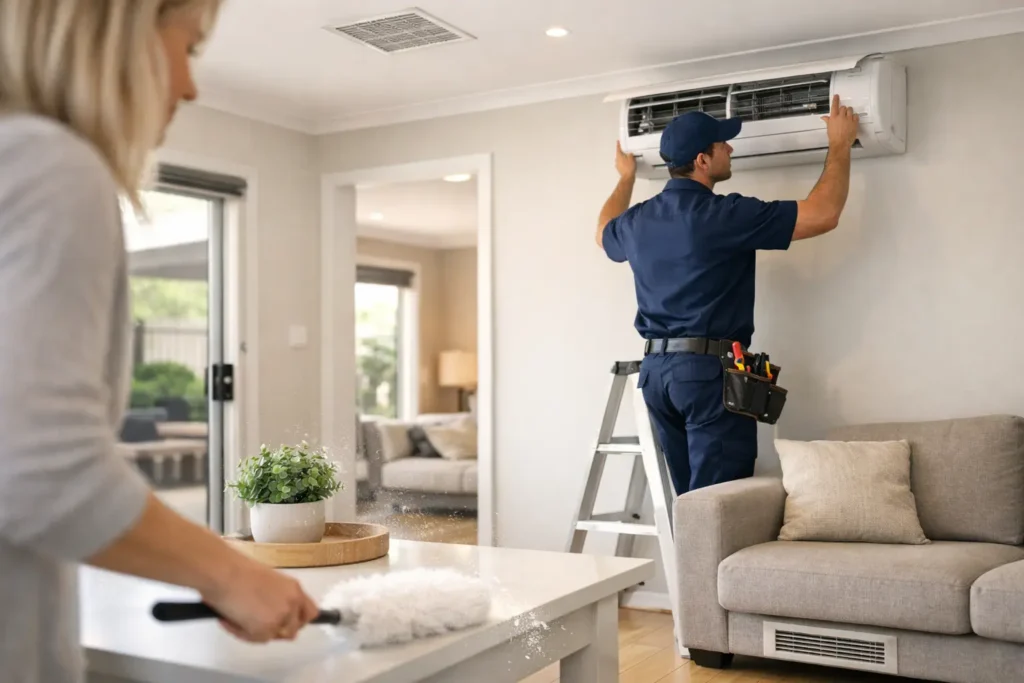
A layer of dust on the TV unit two days after cleaning is not just frustrating. It is usually a sign that dust is being carried through the home by foot traffic, open windows, pets, soft furnishings or the heating and cooling system. Knowing how to reduce dust indoors starts with stopping it at the source, then removing what is already circulating.
Dust is rarely one substance. It can include skin flakes, fabric fibres, pollen, soil, pet dander, hair, outdoor pollutants and fine particles from cooking. While a small amount is unavoidable, heavy or fast-returning dust can affect comfort, trigger allergy symptoms and make a property feel harder to keep clean.
Find out where the dust is coming from
Before buying another cleaning product, look at where dust collects first. Windowsills, entryways, return-air grilles, ceiling vents and the areas around pets often reveal the main source. Dark dust around supply vents may point to dirty ductwork, while dusty floors near doors can indicate that outdoor dirt is being tracked inside.
Melbourne homes also deal with seasonal pollen, dry weather and changing temperatures that encourage people to use ducted heating or cooling more often. If a system has not been cleaned or maintained for years, air moving through it can redistribute settled particles throughout the property.
A quick check can help narrow it down. Inspect your air filter, wipe a vent cover with a white cloth, look under beds and lounges, and check whether dust increases after the heating or cooling starts. These observations make it easier to focus effort where it will have the greatest effect.
Improve the way you clean
Dry dusting with a feather duster often moves fine particles into the air, where they settle somewhere else a few hours later. A better approach is to capture dust rather than chase it around the room.
Use a slightly damp microfibre cloth on hard surfaces, working from higher areas such as shelves and ceiling fans down to lower furniture and skirting boards. Vacuum carpets, rugs and upholstery with a machine fitted with effective filtration, ideally a HEPA filter. Empty or clean the vacuum according to its instructions, preferably outside, as a full or poorly maintained vacuum can release fine dust back into the room.
Pay attention to places that are easy to miss: blinds, curtain tops, lampshades, door frames, air-return grilles and behind furniture. These areas can hold substantial dust, especially in bedrooms and living spaces. Washing bedding weekly and laundering throws, cushion covers and washable curtains regularly also reduces the fibres and skin flakes that build up in soft furnishings.
For hard floors, vacuum first and then mop. Sweeping with a dry broom can stir particles into the air, particularly on timber, tile and laminate surfaces.
Stop outdoor particles at the door
Much of the dust inside a home began outside. Soil, leaf fragments and road dust can enter on shoes, clothing, pets and through gaps around doors and windows. The solution does not need to be complicated, but it needs to be consistent.
Place durable mats both outside and inside entry doors, and clean them regularly rather than letting them become dust reservoirs. A shoes-off routine is particularly useful for households with young children, crawling babies or allergy sufferers. If that is not practical, keep a mat and shoe tray near the door to contain the dirt.
Seal obvious gaps around windows and external doors, especially where draughts are noticeable. During high-pollen or windy days, it may help to keep windows closed in rooms used by people with allergies. Fresh air still matters, so the right balance depends on the weather, the property’s ventilation and whether occupants are sensitive to pollen or pollution.
Pets deserve attention too. Regular grooming, washing pet bedding and vacuuming their favourite resting places can significantly reduce hair and dander. Groom outdoors where possible so loose fur does not become another indoor dust source.
Keep your HVAC system from recirculating dust
Your heating and cooling system should help create a comfortable indoor environment, not spread dust through every room. The first line of defence is the filter. Check it regularly and replace or clean it at the interval recommended by the manufacturer. A filter may need more frequent attention in homes with pets, renovations, smokers or heavy system use.
Do not simply choose the densest filter available without checking system requirements. Very high-resistance filters can reduce airflow in some systems when they are not compatible, placing extra strain on equipment. The best option is one that provides suitable filtration while allowing the system to operate efficiently.
Clean visible vent covers and return-air grilles carefully with a vacuum brush attachment or damp cloth. However, surface cleaning is not the same as cleaning inside the ducts. Over time, ductwork can collect dust, building debris, pet hair and allergens, particularly in older homes or properties that have undergone renovations.
Professional duct cleaning is worth considering when dust returns unusually quickly, airflow is poor, vents show heavy build-up, there is a musty odour, or occupants are dealing with ongoing allergy symptoms. A proper service uses specialised equipment with HEPA filtration to capture dislodged particles rather than releasing them into the home. It can also identify issues such as damaged ducts, poorly fitted grilles or contamination that ordinary cleaning cannot reach.
Reduce dust traps in each room
A home does not need to look bare to be easier to keep dust-free. The goal is to manage the items that hold dust and are difficult to clean. Thick rugs, open shelving packed with ornaments, fabric blinds and large collections of cushions can all add to the workload.
Choose washable rugs where practical, store infrequently used items in closed cupboards or lidded containers, and avoid overfilling shelves. In bedrooms, use mattress and pillow protectors that can be washed regularly. Keep under-bed storage sealed and minimise clutter on bedside tables, where dust can gather close to where you sleep.
Air purifiers can be useful in bedrooms, nurseries and enclosed offices, especially for people with allergies. Look for a unit sized for the room and fitted with a genuine HEPA filter. An air purifier will not replace cleaning or duct maintenance, but it can reduce airborne fine particles between cleaning sessions.
Humidity also matters. Excess humidity can encourage mould and dust mites, while very dry conditions can leave dust easy to disturb. Aim for comfortable, controlled indoor conditions and address leaks, condensation or ventilation problems early.
How to reduce dust indoors after renovations
Renovation dust is different from everyday household dust. Fine plaster, timber, cement and insulation particles can travel well beyond the work area and settle inside ducts, wardrobes and soft furnishings. Standard household vacuuming may not be enough, particularly if sanding, cutting or demolition has taken place.
Keep work zones sealed off where possible, use protective coverings, and ensure trades clean up progressively rather than leaving all dust until the end. After the project, a detailed clean should include walls, ledges, vents, floors and fabric surfaces. If ducted heating or cooling was running during works, arrange an inspection and professional duct clean before relying on the system again.
Commercial properties need the same discipline, often on a larger scale. Offices, schools, retail spaces and facilities with regular foot traffic benefit from planned filter changes, vent cleaning and periodic HVAC maintenance. This protects indoor air quality while helping equipment perform as intended.
Know when household cleaning is no longer enough
If you clean thoroughly but dust reappears within days, do not assume you are doing something wrong. The issue may be hidden in the ventilation system, underfloor or ceiling cavities, old carpets, construction gaps or a nearby source of outdoor pollution. Persistent musty smells, visible mould, weak airflow and excessive dust near vents deserve professional attention.
The most effective routine is usually simple: capture dust with microfibre and filtered vacuuming, control what enters from outside, maintain filters, and keep heating and cooling components clean. Small habits performed regularly work better than an exhausting deep clean once every few months.
For reliable ducted heating, cooling and air duct cleaning across Melbourne, contact Top Air Duct Cleaning for a free quote on 0457 666 469 or visit www.topairductcleaning.com.au. Cleaner ducts can make the rest of your dust-control routine work the way it should.
