
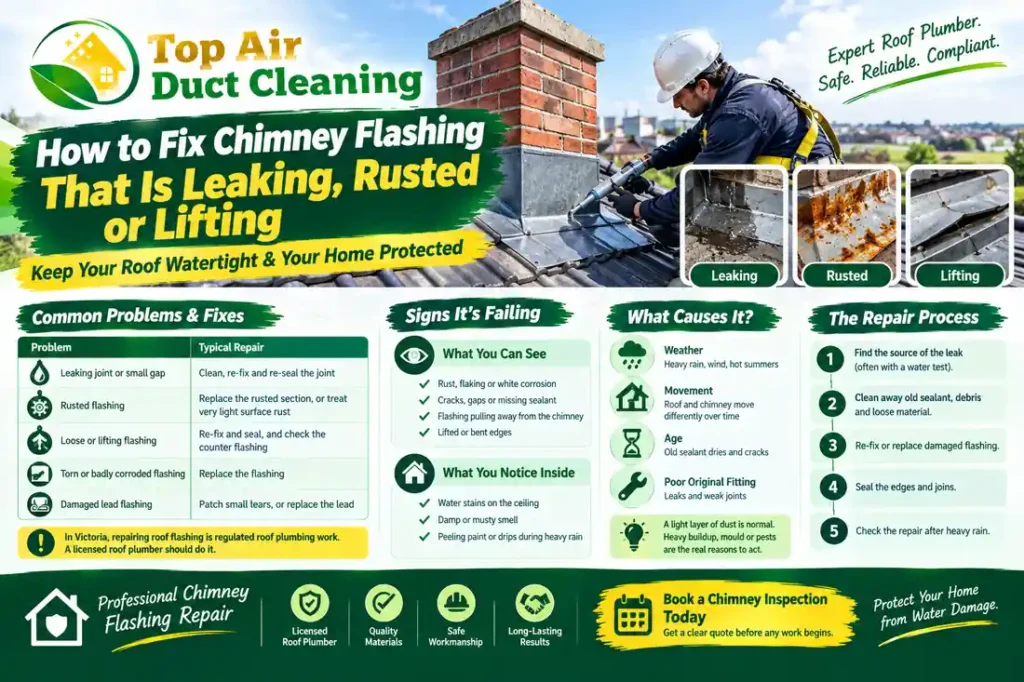
To repair flashing around a chimney, the damaged section is cleaned, re-fixed or replaced, then sealed and checked for leaks. Small gaps can be re-sealed, but rusted, torn or lifting flashing usually needs to be re-fixed or replaced.
In Victoria, repairing roof flashing is regulated roof plumbing work, so a licensed roof plumber should do it. Below, we explain how each problem is fixed, what to watch for, and what affects the cost.
How to Repair Flashing Around a Chimney in Melbourne
This table shows the usual fix for each problem, so you know what to expect.
| Problem | Typical repair |
|---|---|
| Leaking joint or small gap | Clean, re-fix and re-seal the joint |
| Rusted flashing | Replace the rusted section, or treat very light surface rust |
| Loose or lifting flashing | Re-fix and seal, and check the counter flashing |
| Torn or badly corroded flashing | Replace the flashing |
| Damaged lead flashing | Patch small tears, or replace the lead |
Can You Repair Chimney Flashing Yourself?
In Victoria, repairing a roof flashing counts as regulated roofing (stormwater) plumbing work, which must be done by a licensed or registered plumber.
That means it is not a job to take on yourself. Check with Victoria’s plumbing regulator if you are unsure.
Why Understanding the Repair Still Helps
Knowing how the repair works helps you spot a poor quote or a rushed job. The steps below explain how each problem is fixed, so you can ask the right questions.
Signs Your Chimney Flashing Is Failing
Flashing problems often show up first as a leak. Catching them early can save a lot of damage.
What You Can See
- Rust, flaking or white corrosion on the metal
- Cracks, gaps or missing sealant
- Flashing pulling away from the chimney
- Lifted or bent edges
Use binoculars from the ground, and never climb up to check.
What You Notice Inside
A roof leak around the chimney often appears as water stains on the ceiling near the chimney breast. You may also notice a damp or musty smell, peeling paint or drips during heavy rain.
Why Chimney Flashing Fails
Flashing sits where brick meets roof, which is one of the hardest places to keep watertight.
Weather, Movement and Age
Melbourne’s heavy rain, strong wind and hot summers all put flashing under stress. The roof and chimney also move at slightly different rates, which opens up joints.
Old sealant dries and cracks, and metal can rust over time. Poor original fitting is another common cause.
Understanding Chimney Flashing Before You Repair It
Chimney flashing is the metal that seals the join between your chimney and the roof. It is made of several parts working together.
Step, Counter, Base and Apron Flashing
Step and base flashing sit against the roof, while counter flashing is tucked into the brickwork above them to cover the join. An apron flashing runs across the lower face of the chimney, and a saddle or back pan diverts water behind it.
If any one part fails, water finds its way in.
Common Materials
Galvanised steel and Colorbond are common on many roofs, and lead is often used on older brick chimneys.
The material affects how it is repaired and how long it lasts.
How to Fix Leaking Chimney Flashing, and How Do You Seal It
Most leaks come from a failed joint or a gap in the sealing. Here is how it is usually done.
How a Leaking Joint Is Repaired Step by Step
- Find the exact source of the leak, often with a water test
- Clear away old sealant, debris and loose material
- Re-fix or replace the damaged section of flashing
- Seal the edges and joins with a compatible sealant
- Check the repair after the next heavy rain
Is Sealant or Flashing Tape a Lasting Fix?
Sealant and flashing tape can stop a small gap for a while, but they do not repair failed flashing.
“Sealant buys you time. Good flashing keeps the water out.”
If the metal is rusted or lifting, sealant alone will not hold.
How to Repair Rusted Chimney Flashing
Rust is a sign the metal is breaking down, so how bad it is decides the fix.
Light Surface Rust
Very light surface rust may be cleaned and protected, but this only slows the problem. A professional can tell you whether the metal still has life in it.
When Rust Means Replacement
If you see holes, thin or flaking metal or rust at the joins, the section needs replacing. Rust spreads, so leaving it usually means a bigger repair later.
How to Fix Loose or Lifting Chimney Flashing
Flashing that is lifting is no longer sealing, so water gets behind it.
Why Flashing Lifts
Wind, movement and old fixings can pull flashing away from the roof or chimney. Failed mortar around the counter flashing is another common cause.
How It Is Re-Fixed
The flashing is lifted back into place and secured, and the joints are sealed. If the counter flashing sits in a mortar joint, that joint may be repointed so the flashing is held firmly.
Expert tip: Ask whether the brickwork around the flashing was checked. Crumbling mortar will undo a good repair.
How to Repair Lead Flashing Around a Chimney
Lead is soft and long-lasting, but it can split, lift or wear thin around a chimney.
Small Tears and Gaps
Small tears or splits can sometimes be patched, and lifted edges can be re-dressed back into place. This takes skill, because lead must be shaped to fit tightly without cracking.
When to Replace the Lead
If the lead is badly split, thin or full of old repairs, replacing the section is the better fix. Lead is a toxic material, so it should be handled by someone who knows how to do it safely.
Repair or Replace Chimney Flashing
Sometimes a repair is enough, and sometimes it is only a short-term fix. Here is how to tell.
When Repair Is Enough
If the flashing is mostly sound and the problem is a small gap, a lifted edge or worn sealant, repair often works. The key is that the metal itself is in good shape.
When to Replace
If the flashing is rusted through, torn, or has failed more than once, replacement is the safer choice. Well-fitted flashing can last many years, but old materials and worn joints do not.
Chimney Flashing Repair Cost in Melbourne
There is no single price, because every roof and chimney is different. Understanding what affects the cost helps you compare quotes properly.
What Affects the Cost
- How high and how easy the chimney is to reach
- How much of the flashing is damaged
- The material, with lead usually more specialised than steel
- Whether brickwork needs repointing
- Whether extra safety equipment is needed
How to Get a Fair Price
Ask for a written quote that explains the scope of work, the materials and what is included. Photos of the problem help, and a good provider will explain why each step is needed.
Expert tip: Be wary of a quote that only says seal it up. Ask what will be repaired or replaced.
Tools, Materials and Safety
This shows what a professional repair involves, and why safety matters on the roof.
What a Repair Typically Involves
- Replacement flashing in a matching material
- A compatible sealant or flashing tape
- Fixings suited to the roof type
- Mortar for any repointing
- Safe access, such as scaffolding or fall protection
Staying Safe on the Roof
Roof work carries a real risk of falls, so it should be done by trained people with proper equipment. Older roofs can also contain asbestos materials. If you are unsure, do not drill, scrub or disturb them.
Get a licensed assessor to check first.
When to Call a Roof Plumber in Melbourne
If your chimney is leaking, a licensed roof plumber is the right call for chimney flashing repair in Melbourne.
Licensing in Victoria
Roof flashing repair is regulated plumbing work, so ask to see the plumber’s licence or registration. Ask whether a compliance certificate will be provided for the work.
After the Repair
A good provider will explain what was done and how they tested it. Check the ceiling after the next heavy rain, and call them back if you see any new staining.
Frequently Asked Questions Chimney Flashing
1. How long does chimney flashing last?
It depends on the material, the fitting and the weather. Well-installed flashing can last many years, but sealed joints often wear out sooner.
2. Will a leaking chimney damage my ceiling or roof?
Yes, over time. Ongoing leaks can stain ceilings, damage insulation and affect roof timbers, so it pays to act early.
3. How do I find where the leak is coming from?
Water can travel before it shows up, so the visible stain may not sit under the leak. A professional can trace it with a water test.
4. Does heavy rain make a flashing leak worse?
Often, yes. Wind-driven rain pushes water into small gaps, so leaks tend to show up during storms.
5. Do I need a compliance certificate for flashing repair?
Regulated plumbing work in Victoria usually requires one. Ask your plumber to confirm what applies to your job.
Conclusion
Leaking, rusted or lifting chimney flashing needs to be fixed properly, not just sealed over. In Victoria, that means a licensed roof plumber.
Top Air Duct Cleaning services homes and commercial sites across Melbourne, seven days a week. Contact us today for a chimney inspection and a clear quote before any work begins.
