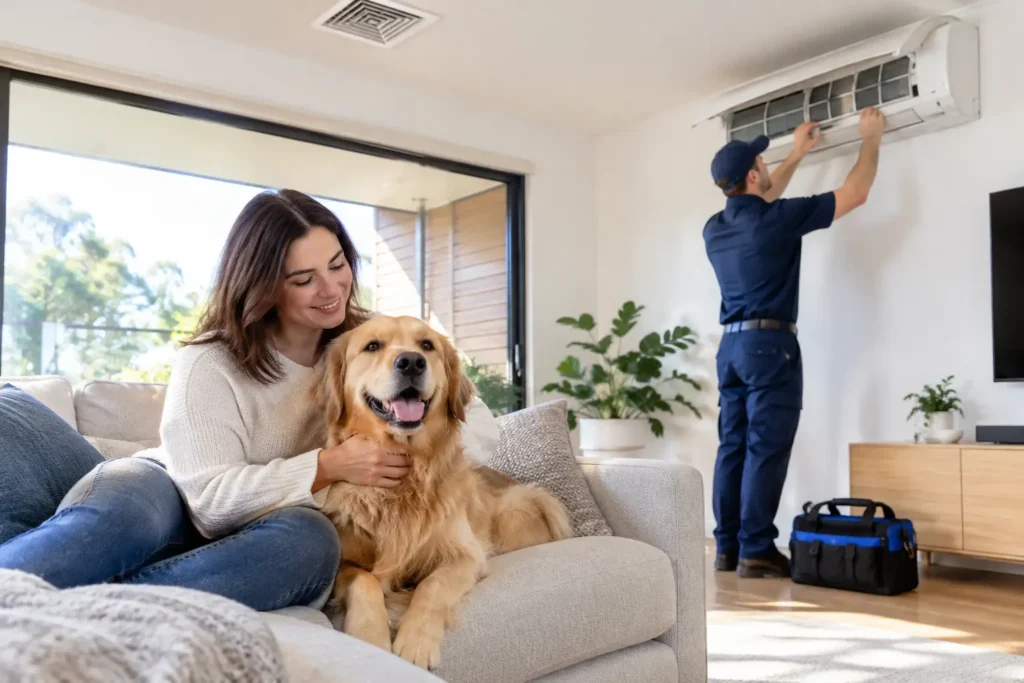
Pet hair is easy to spot on a dark sofa. Pet dander is not. These microscopic skin flakes can settle into carpet, bedding, soft furnishings and return-air vents, then become airborne again whenever people move through the room or the heating and cooling system starts. Reducing pet dander indoors is therefore less about one big clean and more about controlling where particles collect, how they move, and how effectively they are removed.
For Melbourne households with pets and allergy-prone family members, that distinction matters. A home can look spotless while its indoor air still carries fine allergens. The right routine improves day-to-day comfort without asking anyone to choose between a clean home and a much-loved pet.
Why pet dander lingers in a home
Dander is made up of tiny flakes of animal skin, but allergy symptoms are often triggered by proteins found in a pet’s skin, saliva and urine. Those proteins attach to the particles that circulate around the home. Cats and dogs both produce allergens, and even low-shedding breeds are not allergen-free.
Unlike heavier dirt, dander does not simply fall to the floor and stay there. It can cling to fabric fibres, float through a room, settle in dust, and collect inside areas that are rarely seen or cleaned. Upholstered lounges, rugs, curtains, mattresses and carpet are common reservoirs. So are air filters, grilles and ductwork where a forced-air system repeatedly draws in and distributes household air.
The amount present depends on several factors: the number of pets, their access to bedrooms and furniture, how frequently the home is cleaned, the type of flooring, and the condition of the HVAC system. A busy family home with wall-to-wall carpet needs a different approach from a tiled apartment with one indoor cat.
Reducing pet dander indoors starts with the pet routine
Grooming is the first practical control point because it removes loose fur, skin flakes and dust before they spread through the house. Brush your pet regularly, preferably outdoors or in a well-ventilated area, and wash bedding often. The correct frequency varies by breed and coat type, so follow advice from your vet or groomer rather than over-bathing an animal with sensitive skin.
Wiping paws after walks also helps limit the outdoor dust, pollen and fine debris that can combine with pet allergens indoors. This is particularly useful during dry, windy periods when Melbourne homes can accumulate more dust than expected.
It is sensible to set a few boundaries as well. Keeping pets out of bedrooms, especially the room of a person with asthma or allergies, can make a meaningful difference. The bedroom is where people spend long periods in close contact with pillows, doonas, mattresses and carpet, so it is usually the best room to protect first. If a pet has always slept on the bed, a gradual change with a comfortable alternative bed is more realistic than an abrupt rule that will not last.
Clean particles properly, not just visibly
Vacuuming is essential, but the machine and technique matter. A vacuum with sealed HEPA filtration is designed to capture fine particles rather than blowing them back into the room through its exhaust. Vacuum slowly, overlapping each pass, and give extra attention to carpet edges, under furniture, pet sleeping zones and fabric lounges.
For most pet-owning homes, vacuuming high-use areas two or three times a week is a reasonable target. During shedding periods, daily touch-ups around pet beds and entrances can keep buildup under control. Hard floors should be vacuumed before mopping. A dry broom can stir up fine dust and dander, while a slightly damp microfibre mop is more likely to collect it.
Soft furnishings need their own routine. Wash pet bedding weekly where practical, and launder washable throws, cushion covers and bedding regularly. Use a vacuum upholstery tool on sofas and chairs, including under removable cushions. Curtains, rugs and fabric blinds are often overlooked, yet they can hold substantial dust. If symptoms remain persistent, professional steam cleaning or specialised upholstery cleaning may be worthwhile, depending on the fabric and manufacturer instructions.
Avoid relying on fragranced sprays to solve an air-quality problem. They may mask odours, but they do not remove dander and can irritate sensitive airways. The goal is particle removal, not a stronger scent.
Manage dust without spreading it around
Use a damp microfibre cloth for shelves, skirting boards, window ledges and other hard surfaces. Start high and work down so dislodged particles can be vacuumed afterwards. Pay attention to ceiling fans, blinds and the tops of cupboards, where dust can build unnoticed before being disturbed.
Washing hands after handling pets and changing clothes after close contact can also help people with stronger allergies. These small habits will not replace cleaning and filtration, but they reduce direct transfer of allergens to faces, bedding and soft furnishings.
Use ventilation and filtration to reduce airborne dander
A portable air purifier with a true HEPA filter can be a useful addition in bedrooms and living areas. Choose a unit sized for the room, then run it consistently rather than only when symptoms flare. It should have enough clean-air delivery capacity for the space and be placed with clear airflow around it, not tucked behind furniture.
Air purifiers are supportive tools, not substitutes for cleaning. They capture particles that are suspended in air, but they cannot remove the reservoir of dander embedded in carpet or upholstery. Filter replacement is also non-negotiable. A neglected purifier filter can restrict airflow and reduce performance.
When outdoor conditions are suitable, opening windows for cross-ventilation can dilute indoor pollutants. However, this is not always the best option for people with pollen allergies, during smoky conditions, or on high-pollen days. In those situations, closed windows and effective filtered air may be the more comfortable choice.
For homes with ducted heating or cooling, check and replace return-air filters according to the system manufacturer’s advice. A blocked or low-quality filter can restrict airflow and allow dust to accumulate through the system. Do not fit an overly restrictive filter simply because it has a high rating – some systems are not designed for it, and reduced airflow can affect comfort and equipment performance. A qualified HVAC professional can advise on a filter that balances particle capture with system requirements.
When ducts may be adding to the problem
Ductwork does not create pet dander, but it can hold dust and allergen-containing debris that has been pulled through return vents over time. When the system operates, air movement may disturb loose material at grilles and within accessible sections of the system. If you can see dust around vents, notice stale smells when the unit starts, or find that surfaces become dusty soon after cleaning, it is worth inspecting the broader HVAC system.
Professional duct cleaning is particularly valuable after renovations, in homes with several shedding pets, after a long period of limited maintenance, or where occupants experience ongoing allergy concerns. A proper service should address the relevant ducts, return-air areas, grilles and accessible components using suitable containment and HEPA-filtered equipment. It should not be a quick pass over visible vents.
Top Air Duct Cleaning provides professional ducted heating and cooling cleaning across Melbourne, using advanced HEPA filtration equipment to remove built-up dust and debris from the system. For property managers and commercial sites, planned maintenance can also help keep ventilation areas cleaner between high-occupancy periods.
A realistic routine that keeps the air cleaner
The most effective approach is one your household can maintain. Groom the pet regularly, clean pet bedding weekly, vacuum high-use areas several times each week, wipe hard surfaces with damp microfibre, and stay on top of HVAC filter changes. Add a correctly sized HEPA purifier where people sleep or spend the most time.
If dander concerns persist despite a consistent routine, look beyond visible surfaces. Carpet, upholstery, filters and ducting may be retaining particles that ordinary cleaning cannot fully reach. For households managing asthma, severe allergies or unexplained dust buildup, speak with a health professional as well as addressing the indoor environment.
Cleaner air does not require a pet-free home. It requires practical habits and a ventilation system that is not working against them. For a free quote on professional duct cleaning in Melbourne, call Top Air Duct Cleaning on 0457 666 469 or visit www.topairductcleaning.com.au. A well-maintained system gives your cleaning routine a better chance of keeping allergens where they belong – out of the air you breathe.
