
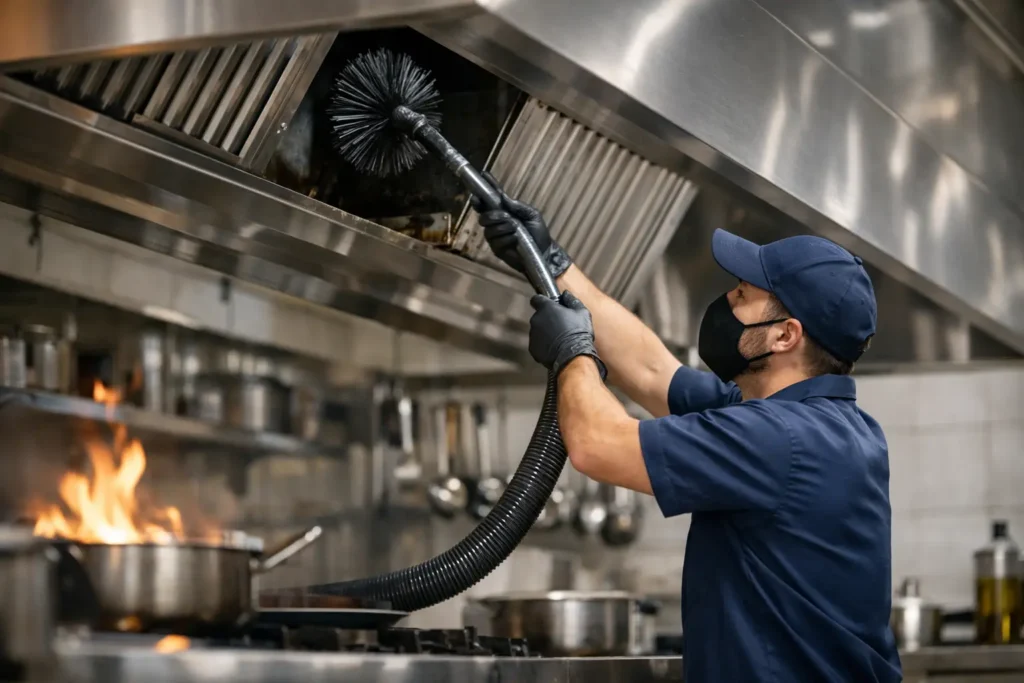
A busy commercial kitchen can produce a surprising amount of airborne grease in a single service. It passes through the canopy filters, then settles inside ductwork, around the exhaust fan and at the discharge point. Restaurant exhaust cleaning removes that concealed build-up before it becomes a fire hazard, an odour problem or a costly interruption to trade.
For restaurant owners, café operators, pub kitchens and facility managers, this is not a cosmetic task. A clean exhaust system supports safer cooking conditions, more consistent airflow and a kitchen that is more pleasant for staff and customers. It also gives you a clearer maintenance record when insurers, landlords or relevant authorities ask how ventilation risks are being managed.
Why restaurant exhaust cleaning matters
Cooking vapours contain grease, moisture and fine particles. While canopy filters capture some of this material, they are only the first line of defence. Grease that passes through them can coat the internal surfaces of the canopy plenum, ducts, fan blades and external outlet.
Over time, that coating becomes sticky, thicker and harder to remove. It can restrict airflow, causing smoke and heat to linger over the cookline. Staff may notice stronger cooking smells, a hot and uncomfortable kitchen, visible haze, grease dripping from filters or a fan that seems louder than usual. These are operational warning signs, not issues to leave until the next quiet period.
The larger concern is fire. Grease is combustible, and an ignition event at the cooking surface can travel into an unmaintained extraction system. Regular professional cleaning reduces the available fuel load in the parts of the system that cannot be safely reached during routine kitchen cleaning.
Clean filters are not the whole job
Most kitchens wash or replace filters frequently, and that is good practice. However, clean filters do not prove the ductwork and fan are clean. Filters can be removed and cleaned by staff while grease continues to accumulate beyond the canopy.
A proper service considers the full extraction path: canopy, grease filters, accessible plenum areas, ducting, access panels, exhaust fan and discharge outlet. The condition of each component determines the work required. A small café with light daytime cooking has very different needs from a restaurant running a chargrill, wok burners or deep fryers through lunch and dinner.
How often should a commercial kitchen be cleaned?
There is no single interval that suits every venue. Cleaning frequency should reflect the volume and type of cooking, operating hours, equipment used, the design of the duct system and your insurer or lease requirements. High-grease cooking creates build-up far faster than a low-volume kitchen focused on reheating or baking.
As a practical guide, kitchens operating heavy frying, grilling or wok cooking often need more frequent scheduled attention than venues with light cooking. Rather than relying on a calendar date alone, managers should also inspect filters and accessible canopy surfaces, monitor airflow and keep service records. If grease is visible past the filters, odours are escaping the kitchen or smoke capture is poor, it is time to arrange an assessment.
A documented maintenance schedule is particularly valuable for property managers and multi-tenant sites. It helps assign responsibility, prevents neglected systems between tenancy changes and makes budgeting more predictable. It also avoids the expensive scenario where a problem is discovered only after a complaint, failed inspection or shutdown.
What professional exhaust cleaning involves
Restaurant exhaust cleaning should be methodical, not a quick wipe around visible surfaces. Technicians first assess the system layout, cooking load, access points and areas of grease accumulation. This matters because duct runs may pass through ceilings, roof spaces or upper levels, where contamination is not immediately visible from the kitchen.
Grease filters are removed for cleaning where appropriate, and the canopy and internal extraction areas are treated with suitable degreasing methods. Access panels allow technicians to reach duct sections that would otherwise remain untouched. The exhaust fan is also cleaned because grease-coated blades can reduce extraction performance and place added strain on the motor.
Containment is essential. Professional crews protect surrounding kitchen surfaces and use controlled cleaning processes to prevent grease residue from spreading across food preparation areas, walls or equipment. Once the work is complete, the system is checked for remaining contamination, access panels are secured and the work area is left clean.
The exact approach depends on the system. Older ductwork, complex vertical runs, rooftop fans and heavily soiled extraction systems may require more time and specialist access arrangements. A transparent quote should explain the scope, including what sections of the system are being cleaned and whether there are access limitations.
Signs your kitchen extraction system needs attention
Do not wait for grease to become obvious on the outside of the canopy. Exhaust systems often show early signs that cleaning or maintenance is due. Common indicators include:
- Smoke, steam or cooking fumes escaping into the kitchen during normal service.
- Persistent grease odours in dining areas, corridors or neighbouring tenancies.
- Grease deposits around canopy edges, ceiling surfaces or exterior discharge points.
- Reduced fan performance, unusual noise or excess heat around the cookline.
- Filters that become heavily soiled unusually quickly after cleaning.
These signs can also indicate mechanical faults, incorrect airflow balance or damaged components. Cleaning may be part of the solution, but a responsible contractor should not promise that cleaning alone will fix every ventilation issue. If the fan, controls or duct design are contributing to poor extraction, further maintenance may be required.
The business benefits go beyond fire prevention
A clean exhaust system helps create a more workable kitchen. Better extraction can reduce heat and lingering vapours around the cookline, helping staff stay more comfortable during busy periods. It can also reduce the spread of cooking odours into customer areas, which matters in open-plan venues, shopping centres and mixed-use buildings.
There can be an efficiency benefit too. When grease coats fan blades and constricts airflow pathways, the system has to work harder to move air. Cleaning does not turn an undersized or ageing system into a new one, but it can restore performance lost to contamination and support a more reliable maintenance plan.
For venue managers, the greatest benefit is often continuity. Scheduled cleaning is easier to organise around service hours than an urgent response to a fire-risk concern, tenant complaint or ventilation failure. It protects the kitchen, the people working in it and the reputation of the business.
Choosing the right contractor
Commercial kitchen exhaust work requires more than general cleaning experience. Look for a contractor that understands grease extraction systems, can assess the full path of contamination and provides a clear description of the work. Ask whether the quote covers the canopy, filters, accessible ductwork, fan and outlet, rather than assuming every part is included.
It is also sensible to confirm insurance, technician experience, site protection measures and whether service documentation will be provided. For kitchens in apartments, schools, hospitality venues or managed commercial sites, coordination with building management may be needed for roof access, loading areas and work outside trading hours.
Price matters, but the cheapest quote can be misleading if it only covers visible surfaces. The right service is one that addresses the actual grease risk in your system and gives you confidence that the kitchen can keep operating safely.
Top Air Duct Cleaning provides dependable commercial exhaust and ventilation cleaning across Melbourne, with transparent quoting and professional service for businesses that need practical results. To discuss your kitchen’s requirements or arrange a free quote, call 0457 666 469 or visit www.topairductcleaning.com.au. A well-maintained exhaust system is one of the quietest ways to protect your people, premises and service every day.
