
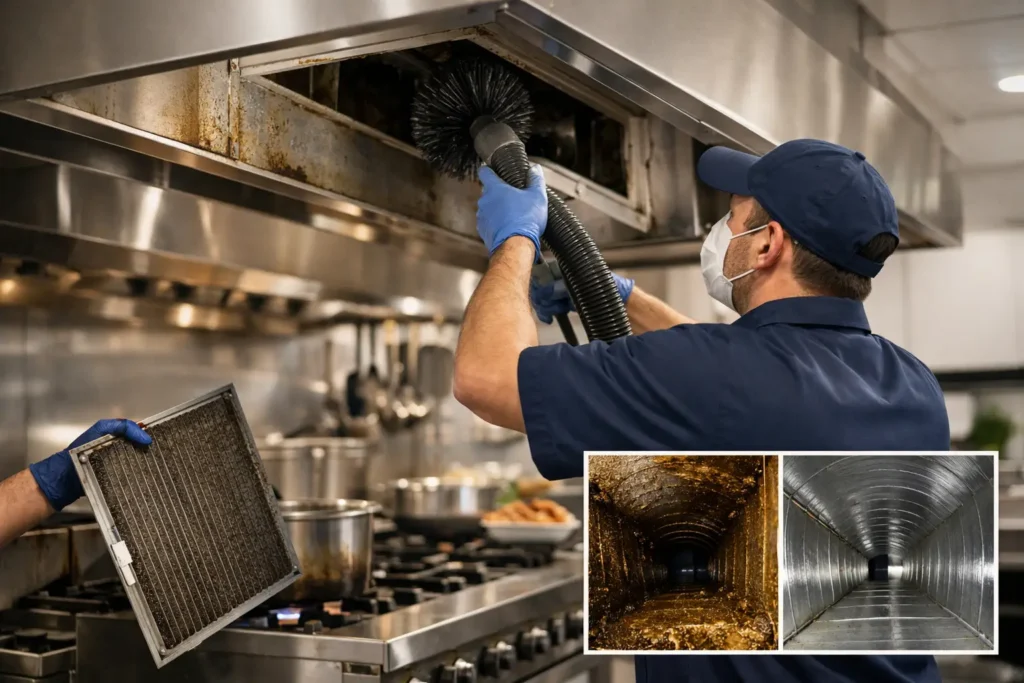
A busy commercial kitchen can look clean at closing time while its exhaust system is carrying months of hidden grease. That was the issue behind this restaurant ventilation cleaning case study: a Melbourne venue had persistent heat, lingering cooking odours and reduced extraction during peak dinner service. The dining room was comfortable enough, but the kitchen team were working beneath canopy filters and ductwork that were no longer moving air as they should.
For restaurant owners and facility managers, ventilation cleaning is not a cosmetic task. Grease, vapour, carbon residue and airborne particles collect inside canopy filters, exhaust fans and ducting every day. Left in place, that build-up can restrict airflow, increase fire risk and make the kitchen a harder place to work.
The Problem: Heat, Odours and Slow Extraction
The venue was a mid-sized restaurant with a high-use cookline operating six days a week. Its kitchen included grills, fryers and gas cooking equipment, all producing a steady volume of heat and grease-laden vapour. Staff had noticed that smoke and odours were taking longer to clear, particularly during the busiest service periods.
The warning signs were practical rather than dramatic. The canopy appeared greasy around the edges, filters were visibly loaded, and the exhaust fan sounded as though it was working harder than usual. The kitchen also felt noticeably hotter by the end of the evening. These conditions can affect staff comfort and productivity, but they can also point to a more serious maintenance issue inside the exhaust path.
The manager had arranged routine filter cleaning in the past, but the full ventilation system had not been professionally cleaned for some time. This is a common distinction. Cleaning the visible filters helps, but it does not remove grease from the internal ducting, fan housing, blades and harder-to-reach sections of the system.
Restaurant Ventilation Cleaning Case Study: The Inspection
Before beginning work, the technician inspected the accessible canopy, filters, fan components and duct runs. The aim was to identify the extent of grease accumulation and confirm which parts of the system required cleaning.
The inspection found heavy deposits on the canopy filters and noticeable grease inside the ducting close to the cooking line. The exhaust fan assembly also showed build-up that could reduce extraction efficiency over time. While the system was still operating, it was no longer performing at its best.
This is where timing matters. A system with mild build-up may require a straightforward maintenance clean. A neglected system can demand more labour, additional containment measures and longer downtime. The right cleaning frequency depends on the volume and type of cooking, hours of operation, and how much grease vapour the kitchen produces. A café with limited light cooking has different needs from a restaurant running fryers and chargrills every day.
The restaurant scheduled the work outside service hours to avoid disruption. For commercial operators, this is often the best approach. Proper cleaning should support operations, not create an unnecessary interruption during a trading period.
The Cleaning Process
The work started with protecting nearby kitchen surfaces and preparing the work area for controlled grease removal. The canopy filters were removed for cleaning, while the accessible internal surfaces of the canopy and ducting were treated using professional degreasing methods.
The technician then cleaned the exhaust fan components, where safe access allowed, to remove grease that had collected on the housing and blades. This part of the job matters because an exhaust fan cannot deliver efficient airflow when its components are coated with residue. A fan may still turn, but it can move less air than the kitchen requires.
HEPA-filtered equipment was used to help contain loosened particles and residue during the process. Attention was given to the areas that are easy to miss during day-to-day kitchen cleaning: internal canopy edges, duct entry points, fan surrounds and the connections where grease can settle over time.
The team did not treat the job as a quick wipe-down. Commercial ventilation cleaning needs to focus on the full accessible extraction path, not just what is visible from the floor. The goal is a cleaner system that can extract heat, smoke and airborne grease more effectively.
The Results After Cleaning
Once the system was cleaned and reassembled, the difference was immediate in the areas staff noticed most. The kitchen felt less stuffy during operation, and the extraction system cleared cooking fumes more effectively. The manager also reported that lingering odours were reduced after service.
There was no claim that one clean could solve every airflow issue forever. Ventilation performance can also be affected by fan condition, duct design, motor wear and changes to cooking volume. However, removing the grease accumulation eliminated a major restriction and gave the restaurant a cleaner baseline for ongoing maintenance.
The most valuable outcome was not simply a cleaner-looking canopy. It was greater confidence that the kitchen exhaust system was being maintained as a safety and operational asset. For a busy hospitality business, that means supporting a more comfortable workspace, helping protect equipment and reducing the amount of combustible grease sitting inside the ventilation system.
What This Case Study Means for Restaurant Owners
A commercial kitchen’s ventilation system is easy to overlook because much of it is out of sight. Yet it deals with some of the toughest conditions in the building: heat, moisture, oil, smoke and constant use. When cleaning is delayed, the problem does not stay limited to the filters.
Restaurant owners should take action when they notice persistent cooking smells outside the kitchen, smoke that hangs in the cookline, greasy canopy surfaces, excessive heat, noisy fan operation or reduced airflow. These signs do not always mean the system has failed, but they do justify a professional inspection.
There is also a trade-off in delaying maintenance. Waiting may seem convenient when the kitchen is busy, but heavier grease build-up can make the eventual clean more involved. It can also create greater fire-prevention concerns and place more strain on the extraction equipment. Planned cleaning is generally easier to manage than responding after performance has noticeably dropped.
For property managers, regular exhaust cleaning is particularly important where a tenancy changes hands or where several food operators share a building. Documentation, access planning and clear communication with tenants can make maintenance safer and far less disruptive.
A Practical Cleaning Schedule
There is no single schedule that suits every kitchen. High-volume restaurants using deep fryers, woks, chargrills or solid-fuel cooking may need more frequent attention than lower-volume venues. The best approach is to assess the cooking load, inspect the system regularly and set a cleaning interval that matches the actual grease production.
Daily kitchen cleaning remains essential, but it is not a substitute for professional ventilation cleaning. Staff can maintain visible surfaces and filters according to site procedures, while a qualified cleaning service addresses the ducting, fan components and other difficult-access areas that sit behind the canopy.
A Cleaner Exhaust System Supports a Safer Kitchen
This restaurant ventilation cleaning case study shows why commercial exhaust maintenance deserves a place on every venue’s operational checklist. Cleaner ventilation can improve airflow, reduce odours, support staff comfort and help lower the risk associated with accumulated grease.
If your restaurant kitchen is running hot, smelling smoky or showing signs of grease build-up, arrange a professional assessment before the issue affects service. Top Air Duct Cleaning provides reliable commercial ventilation and exhaust cleaning across Melbourne, with transparent quoting and same-day service when available. Call 0457 666 469 or visit www.topairductcleaning.com.au for a free quote and practical advice on your kitchen ventilation system.
