
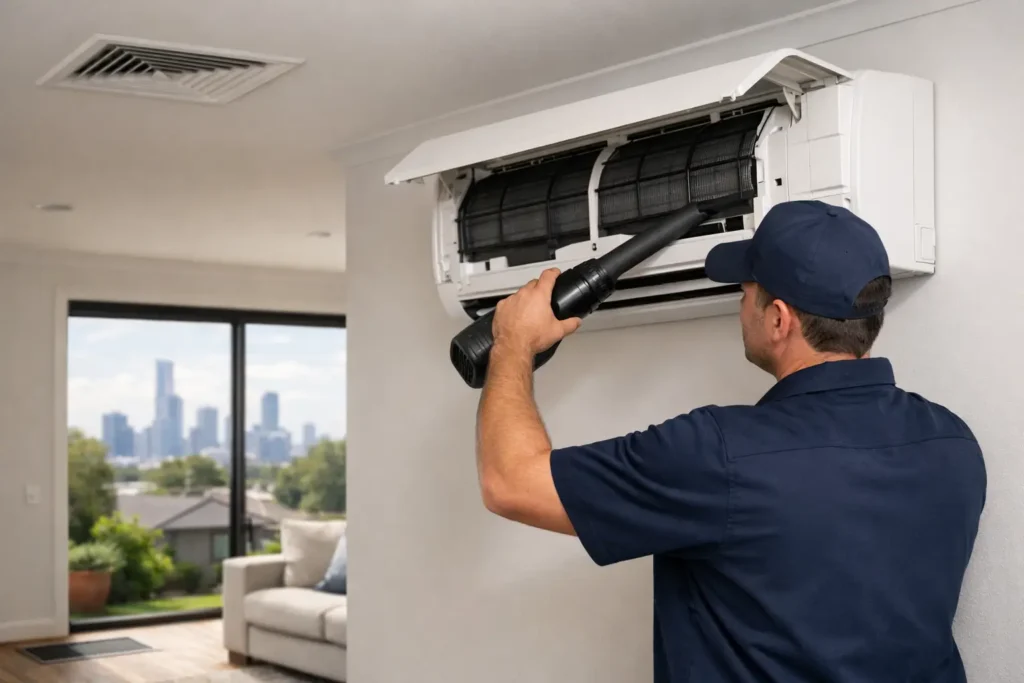
A split system that is blowing cold air can still be circulating dust, mould spores and stale odours through the room. That is why split system cleaning is about far more than making the unit look presentable. A proper service targets the hidden areas where contamination builds up, helping protect indoor air quality, airflow and the performance of the system your property relies on.
For Melbourne homes, offices, schools and rental properties, air conditioners work hard through humid summers, cold winters and everything in between. Without regular cleaning, the indoor unit can become a collection point for airborne dust, pet hair, moisture and biological growth. The result may be unpleasant smells, weaker heating or cooling, higher running costs and air that simply does not feel fresh.
What builds up inside a split system?
The filter is the part most people see, but it is not the only part that needs attention. Behind it sit the evaporator coil, blower wheel, louvres, drain tray and drainage line. These components deal with moving air and, when cooling, condensation. That combination creates the conditions for grime and mould to take hold.
A filter can catch larger particles, yet fine dust still settles on internal surfaces. If the drain line is slow or blocked, moisture can remain in the unit. Over time, this may lead to a musty smell when the system starts, visible marks around the vents or water dripping from the indoor head.
Cleaning only the filter is worthwhile as part of routine care, especially during periods of frequent use. It is not, however, the same as a professional clean. The coil and blower wheel are difficult to access safely, and they require the right equipment and cleaning method to avoid damage to delicate fins, electrical components or wall finishes.
Signs you need split system cleaning
A system does not need to stop working before it needs attention. In fact, booking a clean early can prevent a small hygiene or drainage issue from becoming a more expensive repair. Arrange an inspection if you notice any of the following:
- A musty, damp or dirty-sock smell when heating or cooling begins.
- Reduced airflow, even when the fan setting is high.
- Dust blowing from the unit or settling quickly around the room.
- Water leaks, unusual dripping or staining beneath the indoor unit.
- Black spots, residue or visible mould near the louvres.
- Family members, staff or tenants reporting increased allergy-like irritation in air-conditioned rooms.
These signs can have different causes, so it is worth having the unit assessed rather than assuming it only needs a replacement filter. For example, poor airflow might be caused by a heavily soiled blower wheel, a blocked coil, an issue with the fan motor or a fault requiring an air-conditioning technician. A professional cleaner can identify what is within the scope of cleaning and when a repair specialist should be involved.
How professional split system cleaning works
Quality split system cleaning is a controlled process designed to clean internal components while keeping the surrounding room protected. At Top Air Duct Cleaning, technicians use professional techniques and HEPA filtration equipment to manage dust and debris rather than simply dislodging it into the air.
The work generally begins with an inspection of the indoor unit, filters, airflow and visible condition of the coil, blower and drain area. The work area is protected before the front cover, filters and accessible components are carefully opened. Filters are cleaned, while the coil, louvres and internal air path are treated to remove built-up dirt and residue.
The blower wheel deserves particular attention. It is responsible for moving conditioned air into the room, and even a thin layer of grime can reduce airflow and contribute to odours. Cleaning this component properly can make a noticeable difference to the volume and freshness of air coming from the unit.
The drain tray and drainage arrangement are also checked. During cooling mode, a split system produces condensate. If the drainage path is contaminated or restricted, water may pool, leak or encourage mould growth. A professional service addresses the source of the problem, not just the marks left on the wall below.
Once cleaning is complete, the unit is reassembled and tested. The aim is simple: cleaner air delivery, clearer airflow and a system that can operate without carrying unnecessary dust and moisture through the room.
The benefits go beyond a fresher smell
A clean split system can support a healthier and more comfortable indoor environment. This matters most in bedrooms, living areas, childcare settings, medical rooms, classrooms and workplaces where people spend long periods indoors. While no cleaning service can eliminate every airborne irritant, removing accumulated dust and contamination from the unit reduces one source of recirculation.
There is also an efficiency benefit. When filters, coils and blower components are clogged with debris, the system has to work harder to move air and maintain the selected temperature. Cleaning may help restore airflow and reduce unnecessary strain on the unit. The exact impact on energy use depends on the condition, age and size of the system, but a neglected unit rarely performs at its best.
For property managers and commercial operators, regular cleaning also helps present a well-maintained property. It can reduce complaints about odours, leaks and dusty vents, while giving maintenance teams a clearer record of the system’s condition.
How often should a split system be cleaned?
There is no single schedule that suits every property. A lightly used unit in a low-dust room may need less frequent professional attention than a system running daily in a busy office, kitchen-adjacent area or pet-friendly home.
As a practical guide, clean reusable filters every few months during active use and arrange professional split system cleaning about once a year. Consider more frequent servicing where there are pets, smokers, allergies, high occupancy, renovation dust or visible mould. Commercial properties may also need cleaning scheduled around their operational requirements and duty of care obligations.
If your unit has not been cleaned in several years, has a persistent odour or is leaking, do not wait for the next seasonal change. A prompt inspection can help prevent further contamination and protect the surrounding wall, carpet or furnishings from water damage.
Why DIY cleaning has limits
Homeowners can safely remove and wash filters according to the manufacturer instructions, allow them to dry fully and wipe the exterior casing with a soft cloth. That routine care is useful and should not be overlooked.
The risk starts when aerosol chemicals, excessive water or sharp tools are used inside the unit. Spraying the wrong product can leave residue, damage surfaces or create stronger odours. Water introduced near electrical components can cause faults, while bending coil fins may restrict airflow further. A superficial clean may also leave the contaminated blower wheel and drain tray untouched.
Professional cleaning is the better option when there are signs of mould, drainage issues, heavy residue or an ongoing air quality concern. It provides a more thorough result without turning a simple maintenance task into an avoidable repair call.
Cleaner air starts with the equipment you use every day
Your split system should make a room more comfortable, not add dust, damp smells or uncertainty about the air your family, tenants, customers or staff are breathing. Regular professional care keeps the hidden parts of the unit in better condition and gives you a practical opportunity to catch issues before they disrupt heating or cooling.
For trusted split system cleaning across Melbourne and surrounding suburbs, contact Top Air Duct Cleaning for a free, transparent quote. Call 0457 666 469 or visit www.topairductcleaning.com.au. A cleaner unit is a straightforward step towards a fresher, more comfortable space.
