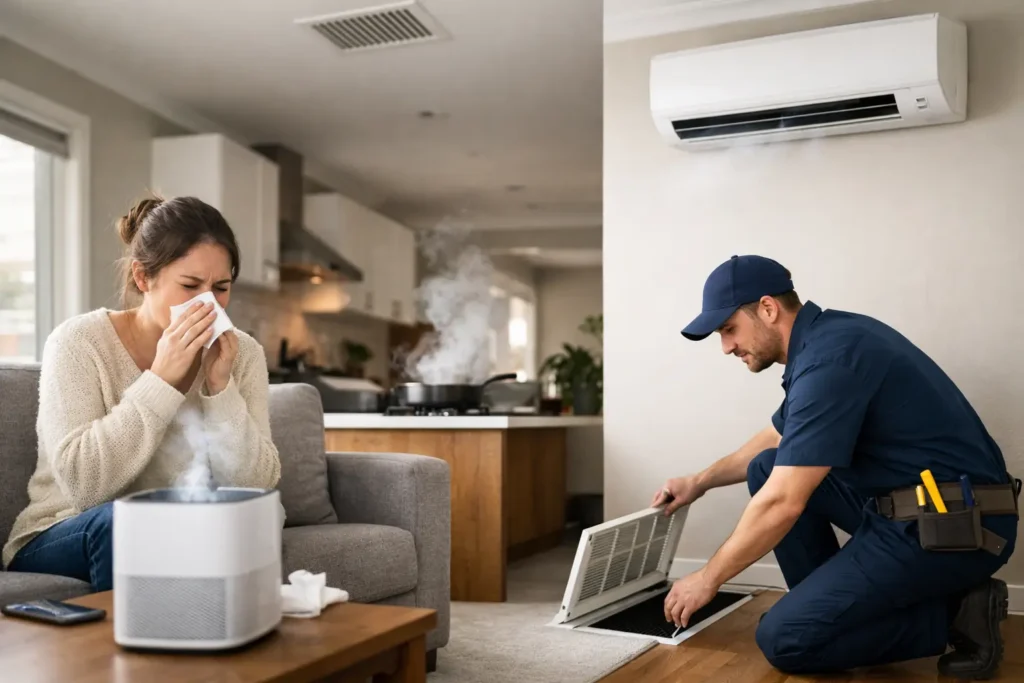
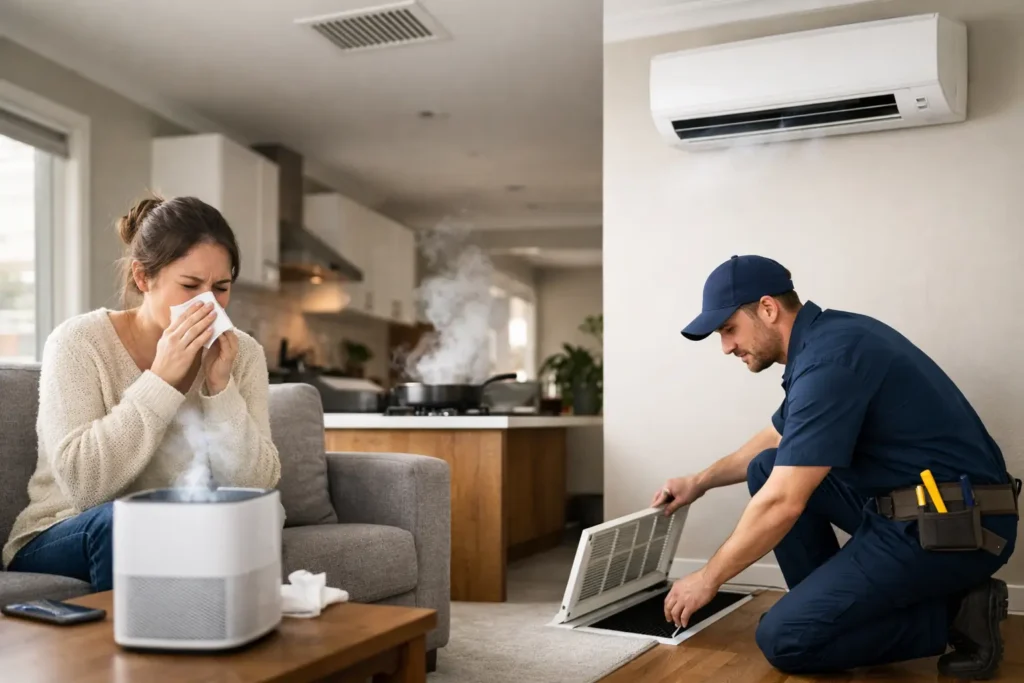
A dusty coffee table only hours after cleaning, stale bedrooms, lingering cooking smells and a split system that seems to blow more dust than comfort are not just frustrating household problems. They can point to a bigger issue. Understanding what causes poor indoor air quality helps homeowners, property managers and business operators act before contaminated air affects comfort, cleaning workloads and HVAC performance.
Poor air quality is rarely caused by one dramatic fault. More often, it is the result of everyday pollutants entering a building, becoming trapped indoors and circulating through heating, cooling and ventilation systems. Melbourne properties face their own mix of challenges, from pollen and traffic pollution to damp winter conditions and homes that are tightly sealed for energy efficiency.
What causes poor indoor air quality?
Indoor air becomes poor when there are pollutants present, insufficient fresh-air exchange, or both. A property may look clean on the surface while airborne particles, moisture and contaminants remain in carpets, ductwork, filters and hidden spaces.
The effect depends on the building and its occupants. A busy family home with pets has different air-quality pressures from a childcare centre, strata building or commercial kitchen. However, dust buildup, restricted ventilation and unmaintained HVAC equipment are common problems across all property types.
Dust, allergens and outdoor particles
Dust is not simply dirt. It can contain skin flakes, textile fibres, soil, pollen, pet dander, insect debris and particles brought in through open doors, shoes and windows. When heating or cooling runs, settled material can be disturbed and redistributed through rooms.
Outdoor air also enters through gaps around doors and windows, wall vents, roof spaces and the HVAC system. Properties near busy roads, construction work or bushland may experience higher levels of fine particles, exhaust residue or seasonal pollen. Closing every window may reduce some outdoor pollutants, but it can also leave stale air with nowhere to go. The right balance depends on weather, the local environment and the ventilation available.
Dirty air ducts, vents and filters
Ducted systems move large volumes of air every day. If ducts have accumulated dust, debris or mould growth, that material can be carried back into living and working areas. Dirty return-air grilles and supply vents are often visible warning signs, but the larger buildup may sit further inside the ductwork where ordinary vacuuming cannot reach.
Filters matter too. A filter that is overdue for replacement can restrict airflow and allow dust to build up around the system. Not every HVAC system uses the same filter type or maintenance schedule, so fitting an overly dense filter is not automatically better. It needs to suit the equipment, otherwise airflow and system efficiency may suffer.
Professional duct cleaning is particularly worthwhile after renovations, a pest issue, water damage, long periods of vacancy or when visible dust returns quickly after cleaning. It can also help when occupants notice musty smells or when the system has not been cleaned for years.
Moisture, mould and damp areas
Mould spores occur naturally in the environment, but excessive indoor moisture gives them the conditions to grow. Leaking roofs, plumbing faults, poor bathroom extraction, condensation on windows and damp subfloors can all create hidden mould risks.
Mould is not always obvious as black patches on a wall. It may grow behind furniture, inside ceiling cavities, around air-conditioning components or in ducting affected by moisture. A persistent earthy or musty smell should be investigated rather than covered with air freshener.
The correct fix is not just cleaning the visible area. The moisture source must be identified and resolved. Otherwise, mould can return and continue affecting the air circulated through the building.
Cooking, cleaning and household chemicals
Everyday activities can release gases and particles indoors. Frying, grilling and cooking with gas produce fine particles and odours, especially when rangehoods are not venting effectively. Candles, incense, cigarettes, vaping, sprays, paint, solvents and strong cleaning products can also leave airborne compounds behind.
This does not mean a home or workplace must avoid all cleaning products or cooking methods. It means extraction and ventilation need to keep up with the activity. Use the rangehood while cooking, run bathroom exhaust fans during showers and for a period afterwards, and choose low-odour products where practical. In commercial kitchens, clean and functional exhaust systems are essential for air quality, hygiene and fire safety.
Pets, pests and organic debris
Pets bring comfort, but they also contribute dander, fur and tracked-in dirt. Regular vacuuming with a quality HEPA-filter vacuum, washing pet bedding and grooming animals can reduce the load. If household members have allergies, keeping pets out of bedrooms may make a noticeable difference.
Pests are another concern. Rodents, insects and birds can leave droppings, nesting material and unpleasant odours in roof spaces, chimneys and ducts. Cleaning should follow removal of the pest and sealing of entry points. Otherwise, the contamination can return.
Poor ventilation and blocked exhaust fans
A building needs a way to remove moist, stale and contaminated air while bringing in fresh air. Bathrooms, laundries, kitchens and internal rooms are especially reliant on ventilation. A noisy exhaust fan is not necessarily an effective one, and a fan clogged with dust may move far less air than it should.
Blocked or neglected exhaust fans allow steam and odours to linger. Over time, this can increase condensation, encourage mould and leave a property feeling stuffy. In workplaces, inadequate ventilation can affect staff comfort and contribute to complaints about headaches, odours or tiredness.
Signs your building may have an air-quality problem
Poor indoor air quality can be subtle. Symptoms such as sneezing, dry eyes, coughing or headaches may have many causes, so they should not be used to self-diagnose an air-quality issue. Still, when symptoms consistently improve away from the building or worsen while heating and cooling is operating, the property’s ventilation and cleanliness deserve attention.
Look for practical signs as well: dust gathering around vents, dark marks near grilles, uneven airflow, persistent smells, visible mould, frequent condensation, filters that clog unusually fast, or rooms that feel stale despite regular cleaning. In commercial settings, repeated tenant or employee complaints are worth taking seriously rather than treating as isolated incidents.
Practical ways to improve indoor air quality
Start with the source. Repair water leaks, address visible mould safely, replace filters according to the manufacturer’s guidance and make sure kitchen and bathroom exhaust fans are working properly. During suitable weather, opening windows on opposite sides of the property for a short period can improve airflow. On high-pollen, smoky or high-traffic days, keep windows closed and rely on properly maintained mechanical ventilation instead.
Cleaning routines also matter. Vacuum carpets and upholstery, wipe hard surfaces with a damp cloth rather than dry dusting, wash bedding regularly and reduce clutter that collects dust. If you use an air purifier, select a unit sized for the room and remember that it complements source control and ventilation – it does not replace them.
For ducted heating and cooling, have the system inspected when there is heavy dust accumulation, reduced airflow, odours or evidence of contamination. A professional service should use appropriate containment and HEPA filtration equipment, clean accessible vents and ductwork thoroughly, and avoid simply pushing debris further into the system. Split systems also need regular cleaning because dust and moisture can build up on indoor coils, filters and drain components.
When professional cleaning makes sense
Routine household cleaning cannot reach the full length of duct runs, internal HVAC components or exhaust pathways. That is where an experienced specialist can provide a practical result: removing accumulated debris, improving airflow and helping reduce the dust and allergens that circulate through the property.
For homeowners, this is often part of preparing a property for a new baby, managing allergy concerns, finishing renovations or restoring comfort after a long winter. For schools, offices, rentals and commercial facilities, it supports a cleaner environment and a more reliable maintenance schedule.
Top Air Duct Cleaning provides professional ducted heating and cooling cleaning, split system cleaning, exhaust fan cleaning and indoor air quality services across Melbourne. Fully insured technicians use professional techniques and HEPA filtration equipment to help deliver cleaner air and better-performing systems.
If your property feels dusty, stale or difficult to ventilate, do not wait for the problem to become more costly. Call 0457 666 469 or visit www.topairductcleaning.com.au for a free quote. A clean, well-maintained ventilation system gives the people in your property a more comfortable place to live, learn and work.