
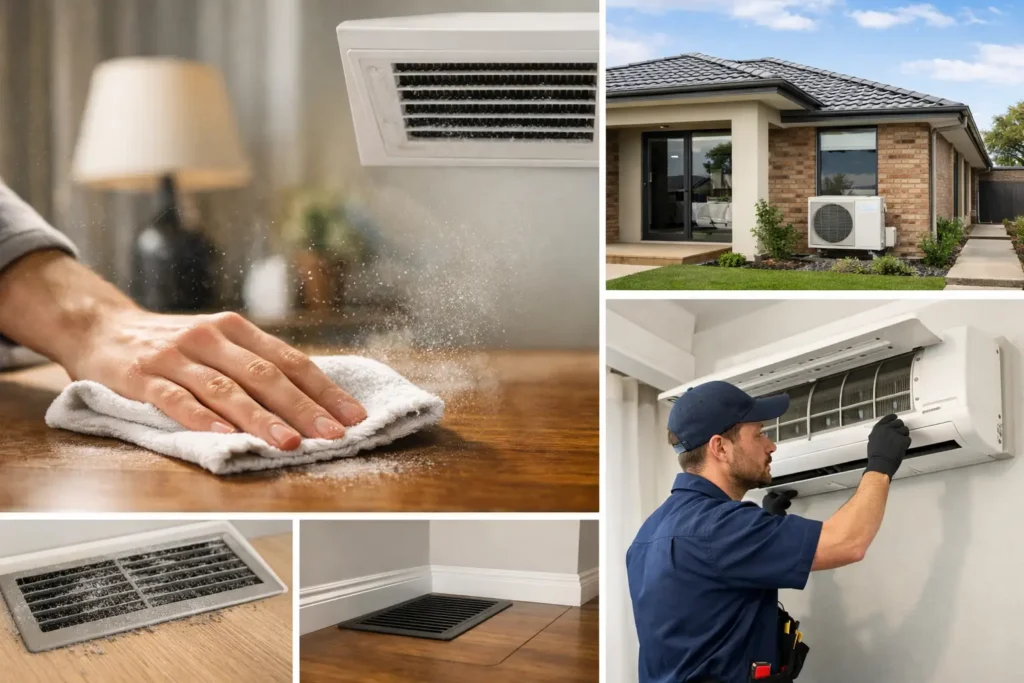
You finish wiping the furniture, vacuum the floors and empty the bin, yet a fine film of dust seems to return almost immediately. If you are asking, “why does my house feel dusty?”, the answer is rarely that you are not cleaning enough. Persistent dust usually points to a combination of outdoor particles, airflow issues, household habits and, in some homes, a heating or cooling system that needs attention.
Dust is more than an appearance problem. It can include pollen, fabric fibres, skin cells, pet dander, soil, mould spores and tiny particles carried in from outdoors. For people with allergies, asthma or other respiratory sensitivities, excessive dust can make a home feel less comfortable even when it looks clean.
Why does my house feel dusty after I clean it?
The speed at which dust comes back is a useful clue. A light layer over a week or two is normal. A visible coating on furniture within a day or two, dusty air when the ducted system starts, or an ongoing stale smell are signs that dust is being continually introduced or recirculated.
Your heating and cooling system may be moving dust around
Ducted heating and cooling systems draw air through return vents, filters, ductwork and supply vents. If filters are blocked, poorly fitted or not changed at the right interval, they cannot capture airborne particles effectively. Dust that has settled inside ducts or around vents can also be disturbed when the system runs.
This does not mean every dusty house needs duct cleaning. Dust in ductwork is common, and the right solution depends on the condition of the system. However, professional inspection is worthwhile when you can see dust blowing from vents, find heavy build-up around registers, notice reduced airflow, or experience recurring dust soon after cleaning.
In Melbourne, periods of dry weather, pollen and open-window living can add to the load on a ducted system. A clean, correctly maintained system helps reduce the amount of settled debris that can circulate through the home.
Filters are overdue, damaged or the wrong type
Many homes have a return-air filter that is easy to overlook. Once it becomes loaded with dust, it restricts airflow and may allow more particles to remain in circulation. A damaged filter, gaps around the filter frame or an unsuitable filter size can create the same problem.
Check the manufacturer’s guidance for your system, but homes with pets, renovations nearby, smokers or allergy sufferers may need more frequent filter checks. Do not simply install the densest filter available without confirming it suits your unit. Very high-resistance filters can reduce airflow in systems not designed for them, which can affect performance and efficiency.
Outdoor dust is finding its way inside
No home is completely sealed. Dust enters through open windows and doors, gaps around external doors, ceiling voids, window seals and exhaust openings. Building works in the street, nearby landscaping, unsealed driveways and windy weather can all make the issue more noticeable.
If dust is worst near particular windows, doors or rooms, look for draughts and worn seals. Door snakes and weather seals can help, but ventilation still matters. Closing every opening all the time may reduce fresh-air exchange and allow humidity, odours and indoor pollutants to build up. The aim is controlled ventilation, not a permanently shut house.
Soft furnishings and pets create dust indoors
A surprising amount of household dust starts inside. Carpets, rugs, curtains, upholstered furniture, bedding and clothing shed fibres and trap particles that become airborne again when people walk, sit down or make the bed. Pets add hair, dander and outdoor soil, particularly around entry points and favourite sleeping areas.
Vacuuming with a sealed machine and a quality HEPA filter can make a meaningful difference because it captures finer particles rather than redistributing them through the room. Wash bedding regularly, vacuum upholstered furniture and clean under beds, lounges and cabinets where dust collects undisturbed.
Poor cleaning order can put dust back into the air
Dry dusting with a feather duster or sweeping hard floors can move fine particles into the air, where they settle again on surfaces. A better approach is to work from high to low using a slightly damp microfibre cloth, then vacuum floors last. Clean ceiling fans, return-air grilles, skirting boards and blinds as part of the routine, not only the obvious tabletops.
If your house still feels dusty after this change, the problem is more likely to be ongoing airflow, filtration or infiltration rather than surface cleaning alone.
How to reduce dust in your home
Start with the simplest checks before assuming there is a major fault. Inspect visible vent covers, return grilles and filters. If covers are coated in dust, turn off the system before carefully removing and cleaning them. Avoid pushing a vacuum hose or brush deep into the duct, as this can dislodge debris without removing it properly or damage flexible ducting.
Then focus on the areas that continually feed dust into the home:
- Replace or clean HVAC filters according to the system requirements, and make sure they fit snugly.
- Use door mats at every external entrance and encourage shoes off inside, especially after gardening or wet weather.
- Vacuum carpets, rugs and upholstery with HEPA filtration, including edges and beneath furniture.
- Wash pet bedding, throws and regular bedding often enough to control fibres and dander.
- Wipe hard surfaces with damp microfibre cloths rather than dry dusters.
- Seal obvious gaps around external doors and windows, particularly where dust is visible nearby.
An air purifier can also help in bedrooms or living areas where allergies are a concern. It is not a replacement for cleaning, filter maintenance or addressing a dirty HVAC system, but a correctly sized unit can reduce airborne fine particles in a particular room.
When dusty air needs professional attention
Some signs should not be ignored. Book an assessment if dust appears to blow from supply vents, airflow has dropped, rooms heat or cool unevenly, or you notice a musty odour when the system starts. Visible mould around vents, water damage, pest activity in ceiling spaces or a persistent burning smell also call for prompt professional advice.
For commercial properties, schools and managed buildings, dust concerns may affect staff comfort, tenant satisfaction and maintenance costs. Systems running for longer hours can collect significant debris around return points, filters and accessible ductwork. Scheduled cleaning and inspection can support cleaner indoor air and help equipment operate without unnecessary restriction.
Professional duct cleaning should involve more than a quick vacuum at the vent. A qualified technician assesses the accessible system, uses suitable agitation tools and HEPA-filtered extraction equipment, and explains what has been found. Transparent advice matters because not all dust problems begin in the ducts, and the best result comes from treating the actual source.
Top Air Duct Cleaning provides professional ducted heating and cooling cleaning, split system cleaning and indoor air quality services across Melbourne. Our fully insured technicians use advanced HEPA filtration equipment to remove built-up dust and debris with care for your property.
A dusty home does not have to become your normal. If cleaning, fresh filters and basic sealing have not made a difference, call Top Air Duct Cleaning on 0457 666 469 or visit www.topairductcleaning.com.au for a free quote. Finding the source means you can spend less time wiping surfaces and more time enjoying cleaner, more comfortable air.
