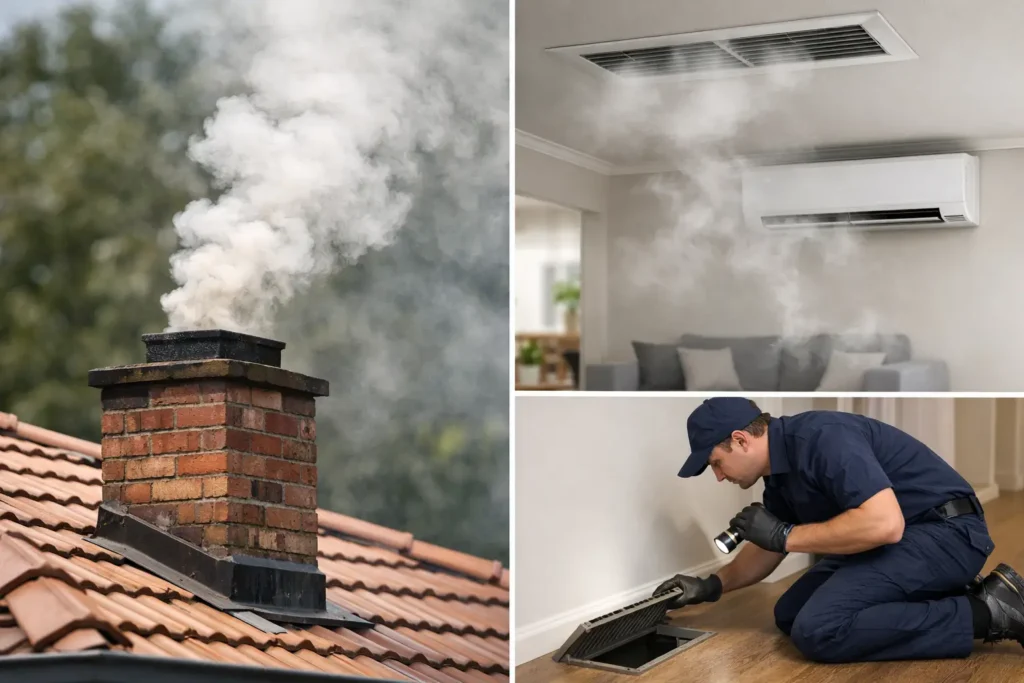
Smoke should travel up and out of a chimney, not drift across the lounge room, stain the ceiling or leave your home smelling like a campfire. If you are asking, “why is my chimney smoking?”, the issue may be as simple as a cold flue or as serious as a blockage, poor draft or ventilation problem. Either way, smoke entering the room is not something to ignore.
A wood heater or open fireplace can produce small amounts of smoke when first lit, particularly on a cold Melbourne morning. Ongoing smoke spillage, however, can affect indoor air quality, trigger respiratory irritation and raise the risk of carbon monoxide exposure. Finding the cause early protects your household, your property and the safe operation of your fireplace.
Why Is My Chimney Smoking Into the Room?
A chimney works because warm combustion gases rise through the flue and draw fresh air into the fire. This upward movement is called draft. When the draft is weak, interrupted or reversed, smoke takes the easiest available path – often straight back into the room.
The cause is not always visible from the fireplace opening. Soot can build up high inside the flue, a bird can nest near the chimney pot, or the home itself can be pulling air in the wrong direction. The pattern matters. Does it smoke only when lighting the fire, only on windy days, or every time you use it? That information helps identify whether the issue is fuel, airflow, maintenance or chimney design.
A cold flue is stopping the draft
Cold air inside a chimney can act like a plug. Before the fire has enough heat to establish an upward draft, smoke may roll back into the room. This is especially common after the fireplace has been unused for months, in tightly sealed homes, or when outside temperatures are low.
Start with a small, hot kindling fire rather than loading the firebox with large logs. Open the damper fully, if your fireplace has one, and use dry kindling to warm the flue gradually. Some households carefully hold a lit firelighter or tightly rolled piece of newspaper near the flue opening to begin warming the air column, but avoid reaching deep into the fireplace or taking risks with an open flame.
If the draft improves once the flue is warm, a cold chimney may be the main issue. If smoke continues to enter the room after the fire is established, another fault is likely involved.
Wet firewood is producing excess smoke
Burning damp wood creates more smoke, less heat and more creosote residue inside the flue. Creosote is a flammable tar-like deposit that can narrow the chimney and increase the risk of a chimney fire. Wood that hisses, bubbles at the ends or struggles to catch is often too wet.
Use properly seasoned hardwood stored off the ground and protected from rain while still allowing airflow. Firewood should generally be dry enough to burn cleanly, with a moisture content of less than 20 per cent. Avoid treated timber, painted timber, particleboard, rubbish and green garden cuttings. These materials can release harmful fumes and leave damaging deposits in the chimney.
Dry wood will not solve every smoke problem, but it makes a major difference to combustion and reduces how quickly residue forms in the flue.
Soot, creosote or debris may be blocking the flue
A partially blocked chimney often causes a weak, inconsistent draft. Soot and creosote build-up are common where fireplaces are used regularly, particularly with damp timber or slow, smouldering fires. Cobwebs, leaves, nesting material and even dead birds can also obstruct the upper section of the chimney.
Do not assume a clear-looking fireplace means the flue is clear. The obstruction may be well above eye level. A professional chimney clean removes built-up deposits throughout the flue and allows the technician to identify signs of damage, failed liners or other issues that could compromise safe operation.
If you notice a strong smoky smell when the fireplace is not in use, black flakes falling into the firebox, a visible nest, or a sudden change in performance, stop using the fireplace until it has been assessed.
The damper, baffle or door settings are wrong
Many fireplaces and wood heaters have components that control airflow. An open fireplace may have a throat damper, while a slow-combustion heater may use air controls, baffles and a door seal. If the damper is closed or only partly open, smoke cannot escape properly.
Check the manufacturer’s instructions for your particular appliance before use. Do not modify baffles or remove safety components to get a stronger fire. If a damper is jammed, a baffle is warped or the door seals are damaged, arrange an inspection rather than forcing the part. A poorly functioning appliance can waste fuel and send smoke into the home.
Air Pressure Problems Can Make a Chimney Smoke
Modern homes are often well sealed for heating and cooling efficiency. That is useful for energy bills, but a fireplace still needs replacement air to feed the fire. If a powerful rangehood, bathroom exhaust fan, clothes dryer or ducted ventilation system is drawing air out of the house, it can create negative pressure. The chimney may then become the easiest place for outdoor air to enter, pulling smoke backwards.
As a simple test, switch off nearby exhaust systems and slightly open a window in the same room before lighting the fire. If the chimney suddenly drafts better, insufficient make-up air or negative pressure is likely contributing to the problem.
This is particularly relevant in renovated homes, apartments and commercial properties with mechanical ventilation. The correct fix depends on the building and appliance setup. It may involve changing how exhaust fans are operated, improving air supply or having the fireplace and flue professionally assessed. Leaving a window open may help in the short term, but it is not always the best long-term solution.
Wind, chimney height and nearby buildings
Wind can push down the chimney instead of passing over it, creating a downdraught. This can happen when the chimney is too short, poorly positioned, fitted with an unsuitable cowl or affected by a nearby roofline, tall tree or neighbouring building.
If smoke problems mainly occur in certain wind directions or during gusty weather, the chimney’s external configuration may be the issue. A suitable cowl or flue extension can sometimes improve performance, but it must be selected and installed correctly for the fireplace type and local conditions. Guesswork can make the draft worse.
Safe Checks Before You Light Another Fire
Start by confirming the damper is fully open and removing excess ash only when it is completely cold. Check that the fireplace opening is not blocked and use only dry, untreated firewood. Then turn off exhaust fans and crack open a nearby window while lighting a small kindling fire.
Do not climb onto the roof, poke tools into the flue, use chemical cleaners, or burn a larger fire to force a blockage through. These actions can damage the chimney, dislodge debris into the room or increase fire risk. If smoke is thick, persistent or accompanied by a burning smell from the walls or roof space, extinguish the fire safely if possible, leave the area and seek urgent professional or emergency assistance.
Carbon monoxide is colourless and odourless, so working carbon monoxide alarms are strongly recommended wherever fuel-burning appliances are used. Headache, dizziness, nausea and unusual tiredness while the fireplace is operating should always be treated seriously. Move into fresh air and seek medical advice or emergency assistance if symptoms are severe.
When Professional Chimney Cleaning Is the Right Step
A chimney should be cleaned and inspected regularly, with the ideal schedule depending on how often it is used, the fuel burned and the appliance type. For many households, an annual check before winter is a sensible starting point. Properties with frequent fireplace use, rental turnover or commercial solid-fuel equipment may need more regular attention.
Professional cleaning is particularly worthwhile when the chimney has not been serviced recently, smoke enters the room repeatedly, birds or pests are suspected, or there are signs of heavy soot and creosote. HEPA-filtered cleaning equipment helps contain fine dust and soot during the service, keeping the work area cleaner while the flue is cleared.
For Melbourne homeowners, property managers and commercial operators, Top Air Duct Cleaning provides dependable chimney cleaning with transparent quoting and responsive service. A proper assessment can separate a simple cleaning need from an airflow or structural issue, so you are not left guessing before the next cold night.
Do not put up with a smoky fireplace or hope the problem will clear itself. For a free quote or to arrange a chimney clean in Melbourne, call 0457 666 469 or visit www.topairductcleaning.com.au. Clean airflow and a clear flue help make every fire safer, warmer and more enjoyable.
