A dusty return-air grille is rarely just a surface-cleaning problem. It can be a sign that your heating and cooling system is carrying built-up dust, lint, pollen and other contaminants through the property. When weighing up duct sanitising versus cleaning, the key question is not which service sounds stronger. It is whether the physical contamination has been removed before any treatment is applied.
For Melbourne homes, rental properties, schools and commercial sites, professional duct cleaning is usually the foundation of a healthier, better-performing HVAC system. Sanitising may have a place in specific circumstances, but it cannot replace the removal of debris from inside the ductwork.
What Duct Cleaning Actually Does
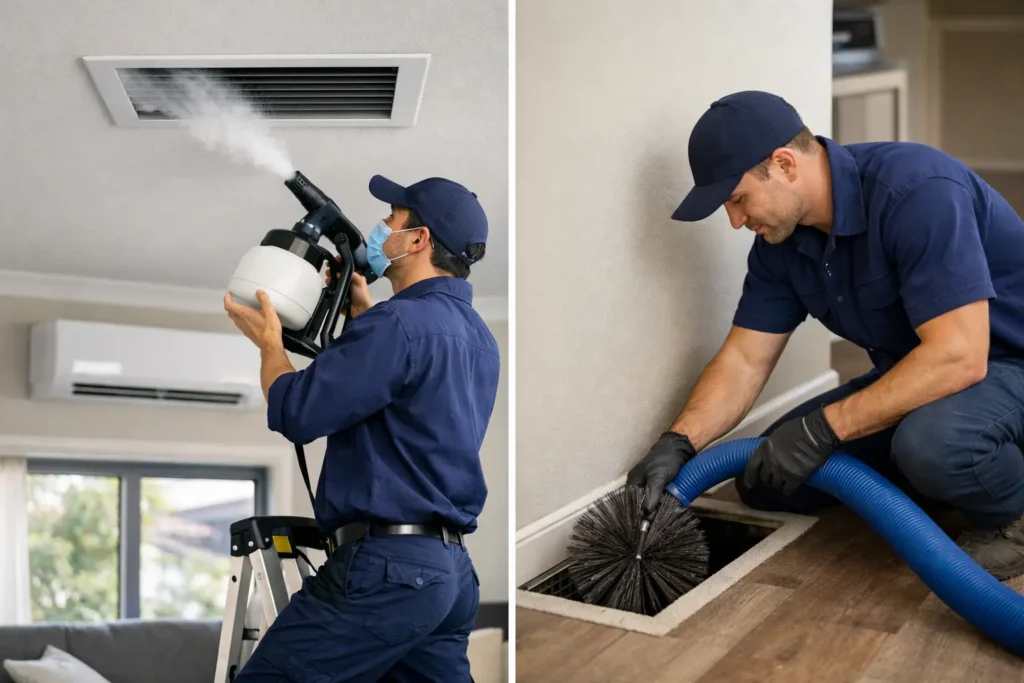
Duct cleaning is a mechanical process. A trained technician accesses the duct system, vents and return-air sections, then uses specialised equipment to dislodge and capture dust and debris. Professional HEPA filtration equipment is designed to contain what is removed rather than simply shifting it back into the room.
A proper service focuses on the parts of the system that affect airflow and indoor cleanliness: supply ducts, return ducts, grilles, diffusers and accessible HVAC components. Depending on the system and condition, this may include ducted heating and cooling outlets, filters, fan areas and accessible coils.
The result is practical. Removing accumulated material can reduce visible dust blowing from vents, improve airflow where build-up is restricting it, and lower the amount of dust and allergens circulating when the system runs. It may also help the system operate more efficiently, particularly when return-air pathways and filters have been neglected.
Cleaning is particularly valuable after renovations, a dusty summer, pest activity, water damage assessments, moving into an older property, or when occupants are experiencing persistent dust around vents. For property managers and commercial operators, it is also a sensible part of planned building maintenance rather than a reactive fix after complaints begin.
What Duct Sanitising Is Designed to Do
Duct sanitising involves applying an approved antimicrobial treatment to accessible internal duct surfaces or relevant HVAC components. Its purpose is to reduce microbial contamination, not to remove dirt, lint or other physical debris.
That distinction matters. A sanitising product may be appropriate where there is a verified concern about microbial growth, unpleasant odours linked to contamination, or after a moisture event has been assessed and the moisture source corrected. It is not a shortcut for a duct system that is visibly dirty.
Sanitising is also not the same as sterilising. No responsible contractor should imply that a routine duct treatment makes an entire ventilation system permanently germ-free. Air ducts are part of an active system, and new particles continue to enter through normal use, open doors, pets, outdoor air and everyday household activity.
The product and method must suit the system. Some materials, coatings and components require care, and treatments should only be applied where they are needed and where safe use can be supported. If there is active mould growth or significant water damage, the job may require a broader inspection and remediation plan rather than a simple sanitising service.
Duct Sanitising Versus Cleaning: The Real Difference
The simplest way to compare the two is this: cleaning removes the source material, while sanitising treats a surface after it has been cleaned.
Think of a dusty kitchen bench. Spraying disinfectant over crumbs and grease does not make the bench properly clean. First, the mess has to be physically removed. The same principle applies inside ductwork. Dust layers can shield contaminants and reduce the usefulness of a surface treatment.
For most properties, professional duct cleaning delivers the more immediate and measurable benefit because it addresses the material affecting air movement and cleanliness. Sanitising is an additional service that may be recommended after cleaning if there is a legitimate reason for it.
There are trade-offs. Cleaning is more labour-intensive because it requires access, agitation and controlled extraction. Sanitising can be quicker to apply, but it is not necessarily useful for every home or workplace. Paying for a treatment that is not required does not improve the result. Transparent advice should reflect the condition of the system, not a one-size-fits-all package.
When Cleaning Alone Is Usually the Right Choice
Cleaning alone is commonly sufficient when the main issue is ordinary dust, lint, pet hair, renovation residue, pollen or reduced airflow caused by build-up. It is also the appropriate starting point when vents look dusty or occupants notice dust returning shortly after vacuuming.
A system with no evidence of excess moisture, microbial growth or odour generally does not need a chemical treatment. Regular filter changes, clean grilles and professional duct cleaning at suitable intervals can do far more for ongoing air quality than unnecessary sanitising.
For commercial properties, cleaning is often the priority when maintenance has been deferred. Offices, classrooms, retail spaces and shared residential buildings can collect a high volume of dust due to frequent foot traffic and long operating hours. The scope should be tailored to the system layout, occupancy and maintenance history.
When Sanitising May Be Worth Considering
Sanitising can be a sensible addition after thorough cleaning where a qualified technician identifies circumstances that support it. These may include a confirmed contamination concern, odours that remain after debris has been removed, or a past moisture issue that has been rectified.
However, moisture is the issue that must be solved first. Condensation, a leaking roof, poor drainage, damaged insulation or an air-conditioning fault can all create conditions that encourage mould. Treating the duct surfaces without correcting the cause may only provide a temporary result.
If occupants have respiratory sensitivities, allergies or concerns about mould, clear communication is essential. A contractor should explain what has been found, what cleaning can address, whether sanitising is justified, and whether another specialist should assess the property. Strong claims and vague “air purification” promises are no substitute for an evidence-based service plan.
What a Professional Duct Service Should Include
A reliable contractor will assess accessible components before recommending work. You should receive a clear explanation of the areas being cleaned, any limitations caused by duct design or access, and whether sanitising is optional or genuinely indicated.
Look for controlled extraction, suitable agitation tools and HEPA-filtered equipment. These details matter because the goal is to remove contaminants from the system without releasing them throughout the property. Technicians should also protect surrounding areas, work carefully around vents and explain any filter maintenance that should follow the service.
For ducted heating and cooling, the condition of the filter, return-air intake and accessible fan components can be just as relevant as the supply vents. A clean system paired with a neglected filter will not stay clean for long. In commercial settings, maintenance records and scheduled servicing can help prevent disruption and maintain a consistent standard across the site.
Top Air Duct Cleaning provides professional residential and commercial HVAC cleaning across Melbourne and surrounding suburbs, using advanced HEPA filtration equipment and practical recommendations based on the condition of your system. Same-day service may be available when you need a prompt response.
A Better Decision Starts With an Inspection
Do not choose sanitising because it sounds more thorough, and do not assume cleaning alone will resolve an unresolved moisture problem. The best outcome comes from identifying what is inside the ducts, removing it properly and using additional treatment only where it serves a clear purpose.
If your vents are dusty, airflow has dropped, your property has recently been renovated, or you are concerned about odours or indoor air quality, arrange a professional assessment. For a free, transparent quote, call Top Air Duct Cleaning on 0457 666 469 or visit www.topairductcleaning.com.au. Clean ductwork is a practical step towards a fresher, more comfortable property.
