
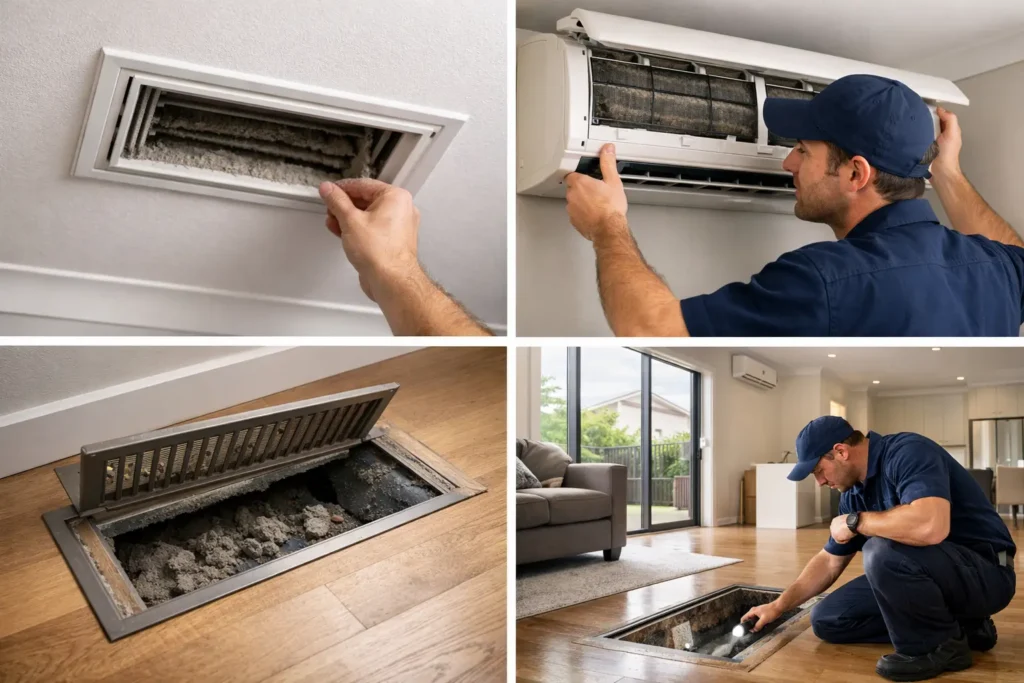
A dusty vent cover is easy to spot. What is harder to see is the build-up sitting further inside your ducted heating or cooling system, where it can affect airflow, spread particles through rooms and make a clean home feel dusty again quickly. Knowing how to tell ducts are dirty helps you act before poor air quality, odours or inefficient heating and cooling become a bigger problem.
Dirty ducts are not always obvious, and not every household needs cleaning on the same schedule. A newer home with good filtration and no pets may have very different needs from a busy family home near roadworks, a rental property with a long maintenance gap, or a commercial space with high daily foot traffic. The key is to look for a pattern of warning signs rather than relying on one clue alone.
How to tell ducts are dirty: the signs that matter
Dust returns soon after cleaning
If you dust furniture, clean floors and wipe surfaces, only to notice a fresh layer of dust within a day or two, your ducted system may be contributing to the problem. Air returns carry air back to the system, while supply vents send conditioned air into rooms. When either area has a build-up of dust and debris, particles can circulate whenever the unit runs.
This does not mean ductwork is automatically the sole cause. Open windows, pets, nearby traffic, building works and worn door seals can all add dust indoors. But if the issue is noticeably worse when heating or cooling is operating, the ducts and filters deserve attention.
Visible debris around vents or inside registers
Remove a vent grille if it is safe and practical to do so, then use a torch to look just inside. A light coating of household dust is common. Thick grey fluff, hair, cobwebs, dark residue, loose debris or material collecting near the opening indicates the system may need a professional inspection and clean.
Do not push a household vacuum hose deep into the duct. Flexible ducting can be damaged, and a vacuum without HEPA filtration can stir fine particles back into the room. Professional equipment is designed to remove debris while containing it properly.
Musty, stale or dusty smells when the system starts
Your heating or cooling should not make the home smell unpleasant. A brief smell after a long period without use can happen, especially at the start of a Melbourne winter, but persistent odours need investigation.
A musty smell can point to moisture, mould growth or organic material around vents, coils or other HVAC components. A dusty smell may be linked to accumulated debris. In homes with pets, dander and hair can also collect over time. The source matters, because cleaning ducts alone may not resolve an odour caused by a drain issue, damp building material or a contaminated split system.
Uneven airflow between rooms
One room that receives very little conditioned air while another feels overly forceful can be a sign of restricted airflow. Build-up in ducts, blocked vents, a clogged filter, damaged ductwork or incorrect balancing may all contribute.
Start by checking that registers are fully open and furniture is not blocking them. Replace or clean the filter if your system uses a serviceable one. If weak airflow continues, arrange an assessment. A proper service identifies whether cleaning is appropriate or whether there is a mechanical or ductwork issue that requires a different fix.
More coughing, sneezing or irritated eyes indoors
Dust, pollen, pet dander and other airborne particles can aggravate allergies and respiratory sensitivities. If family members or staff seem more uncomfortable inside than outdoors, or symptoms worsen when the ducted system is running, indoor air quality should be considered.
This is particularly relevant for young children, older people and anyone managing asthma or allergies. Still, ducts are only one part of the picture. Carpets, soft furnishings, mould, outdoor pollution and poor ventilation can have an effect too. Professional cleaning can reduce accumulated contaminants in accessible ductwork, but it is not a medical treatment or a substitute for addressing active mould and moisture problems.
Recent renovations, building work or smoke exposure
Renovation dust is exceptionally fine and can travel further than expected. Plaster dust, sawdust and debris may enter return vents during sanding, demolition or cutting work, particularly if the system was operating at the time. Properties close to construction sites can face similar issues.
Bushfire smoke is another reason to inspect HVAC systems. Smoke particles and odours can linger in filters and accessible ventilation components after a smoke event. If your home or business was affected, a thorough inspection can help determine whether targeted cleaning, filter replacement or a broader air-quality response is needed.
You cannot remember the last professional clean
Time alone is not a perfect measure, but it is a useful prompt. Duct cleaning requirements depend on usage, occupancy, pets, smoking, local dust levels, maintenance history and the type of system installed. Commercial premises, schools, rental properties and high-traffic workplaces often need a more planned maintenance approach than a low-use household.
If you have moved into an established home and do not know the system’s history, inspection is sensible. The same applies after pest activity. Droppings, nesting material or insects around duct openings should be handled promptly, as cleaning may need to be combined with pest control and repairs to prevent re-entry.
What dirty ducts can affect
Dirty ducting does not always cause a dramatic breakdown, but it can gradually reduce the comfort and cleanliness of a property. When dust and debris restrict airflow, the system may need to work harder to deliver the same heating or cooling result. That can contribute to longer running times and unnecessary strain on components.
For households, the practical impact is often more dusting, stuffier rooms and concerns about what is circulating through the air. For property managers and commercial operators, it can mean tenant complaints, inconsistent comfort across rooms and maintenance issues that are harder to diagnose without a proper inspection.
The goal is not to chase a perfectly sterile duct system. It is to remove meaningful build-up, improve airflow where cleaning is the right solution and keep the system maintained to a professional standard.
What a professional duct clean should include
A quality duct cleaning service should be more than a quick vacuum at the vent opening. Technicians should assess the accessible system, identify visible contamination and use purpose-built equipment to extract debris safely. HEPA filtration is particularly valuable because it helps capture fine particles rather than releasing them into the indoor environment during cleaning.
Depending on the system and the issue found, the work may include cleaning supply and return ducts, grilles, vents and relevant HVAC components. The technician should also explain any limitations. For example, crushed, disconnected or heavily damaged ducts may need repair or replacement rather than cleaning. Transparency matters, especially where an apparent duct issue is actually caused by a clogged filter, a failing fan or moisture elsewhere in the building.
Before booking, ask what areas are included, whether the quote covers your system type and if the provider is insured. Clear scope and upfront pricing help prevent surprises on the day.
Keep ducts cleaner between services
Regular filter maintenance is one of the simplest ways to reduce dust entering a ducted system. Follow the manufacturer’s advice for your particular unit, and check filters more often during high-use periods, after renovation work or when there are pets in the home.
Keep vents unobstructed, vacuum around grilles and avoid running ducted heating or cooling while dusty construction work is underway where possible. If condensation, water stains or mould appear near vents, do not simply wipe it away and hope for the best. Moisture needs to be traced to its source before it becomes a recurring indoor air issue.
When you are noticing persistent dust, unpleasant odours, weak airflow or an unknown maintenance history, a professional inspection gives you a clear answer instead of guesswork. For reliable ducted heating and cooling cleaning across Melbourne, contact Top Air Duct Cleaning for a free, transparent quote on 0457 666 469 or visit www.topairductcleaning.com.au. Cleaner ducts can support cleaner air, but the best result starts with identifying the real cause of the problem.
