
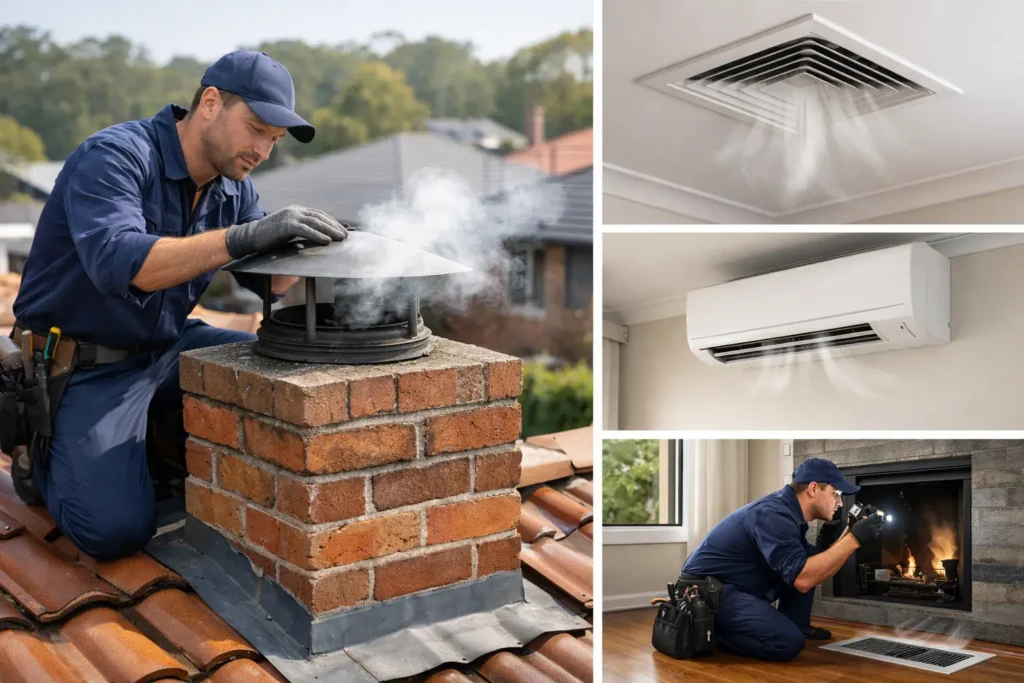
A fire that sends smoke into the lounge room instead of up the flue is more than an inconvenience. It can leave soot on furnishings, trigger respiratory irritation and, in some situations, expose occupants to carbon monoxide. Effective chimney backdraft prevention starts with understanding why a chimney stops drawing properly and acting before the next cold night turns a small airflow issue into a safety concern.
A chimney relies on warm air rising through a clear, correctly operating flue. When that upward movement is weakened or reversed, smoke and combustion gases can spill back into the room. The cause may be as straightforward as a cold flue, or it may point to a blocked chimney, competing exhaust systems or a problem with the fireplace installation.
What causes a chimney to backdraft?
Backdrafting happens when the pressure conditions in and around a building favour air moving down the chimney rather than up it. In older, naturally ventilated homes, the issue may be less frequent. In tightly sealed homes, renovated properties and commercial spaces with powerful extraction equipment, it can be more noticeable.
A cold chimney is a common cause. Before a fire is established, the column of cold air inside the flue can resist the rising heat and push smoke back through the fireplace opening. This often improves once the flue warms, but repeated smoke spillage should not be treated as normal.
Blockages are another major concern. Bird nests, leaves, twigs, loose masonry, excess soot and creosote can restrict the flue passage. Even a partial obstruction reduces draft and increases the likelihood of smoke entering the property. A chimney cap can help keep debris and wildlife out, but it must be suitable for the chimney and must not restrict exhaust flow.
Modern ventilation can also compete with the fireplace. Rangehoods, bathroom exhaust fans, clothes dryers and ducted extraction systems remove air from indoors. If replacement air cannot enter easily, they may create negative pressure that draws air down the chimney. This is particularly relevant in homes with sealed windows and doors, and in commercial premises where kitchen exhaust systems operate at high capacity.
Wind direction, nearby buildings, rooflines and tall trees can affect draft as well. These factors are not always easy to identify from ground level, which is why persistent backdrafting deserves a professional assessment rather than repeated trial and error.
Chimney backdraft prevention starts before you light the fire
The most reliable approach combines a clean flue, sound fireplace components and sensible operation. Before lighting any solid-fuel fire, check that the damper, if fitted, is fully open and that the firebox is free from excessive ash. Ash should be removed carefully once cold, leaving only the amount recommended by the appliance manufacturer.
Use dry, seasoned firewood. Wet or unseasoned timber creates more smoke, burns less efficiently and contributes to soot and creosote deposits inside the flue. Avoid burning treated timber, painted wood, household rubbish or unsuitable fuel. These materials can release harmful pollutants and leave corrosive or combustible residues behind.
On cold days, it can help to pre-warm the flue with a small, well-managed fire starter before adding larger logs. Keep the fireplace doors or screen configured as intended for the appliance. Opening doors too quickly or overloading the firebox can push smoke into the room, even when the chimney is generally working correctly.
If smoke appears when a rangehood or exhaust fan is switched on, turn the fan off and ventilate the space safely. Do not assume the chimney is at fault on its own. The building may need a professional review of make-up air, ventilation settings or the interaction between extraction equipment and the fireplace.
Keep outdoor air pathways clear
Combustion appliances need air. Avoid blocking purpose-built wall vents or permanent air inlets near a fireplace, even if they feel draughty in winter. These openings may be part of the home’s safe combustion-air arrangement.
That does not mean every home should have a window permanently open. The correct solution depends on the appliance, building layout and ventilation system. In some cases, briefly opening a nearby window before lighting the fire can help establish draft. In other cases, a qualified professional may recommend a different ventilation or chimney solution.
Cleaning and inspection are not optional maintenance
A clean-looking fireplace does not guarantee a clean chimney. Deposits build up out of sight, particularly when wood is damp, fires burn slowly or the chimney is used regularly through Melbourne’s cooler months. Soot and creosote narrow the flue, reduce airflow and increase fire risk.
Professional chimney cleaning removes combustible deposits and allows the technician to look for visible signs of obstruction, damaged liners, cracked masonry, loose components and other conditions that may affect draft. For homes with regular fireplace use, an annual inspection and cleaning is a sensible baseline. Properties with heavy use, older chimneys or recurring smoke issues may need attention more often.
Do not rely on chimney-cleaning logs, fragrances or smoke-masking products as a substitute for proper cleaning. They cannot confirm whether a nest, structural defect or significant deposit is restricting the flue. Likewise, avoid climbing onto the roof or attempting to sweep an unfamiliar chimney system without the right equipment and safety controls.
Top Air Duct Cleaning provides professional chimney cleaning for Melbourne homes and properties, using careful cleaning methods designed to remove built-up debris and support safer airflow. A clear assessment helps property owners make practical decisions instead of guessing at the cause of smoke problems.
Warning signs that need prompt attention
Some draft changes are obvious, while others develop gradually. Arrange an inspection before using the fireplace again if you notice smoke entering the room repeatedly, a strong smoky or musty odour, black staining around the fireplace opening, falling debris in the firebox or a sudden reduction in heat output.
Other signs may be less visible. Persistent headaches, dizziness, nausea or unusual fatigue while a fuel-burning appliance is operating can be associated with carbon monoxide exposure. Carbon monoxide has no colour or smell, so symptoms should never be used as the only warning system.
Every property with a fireplace or fuel-burning appliance should have working carbon monoxide alarms positioned in accordance with the manufacturer’s instructions and applicable Australian requirements. Test alarms regularly, replace batteries where relevant and replace the unit at the end of its rated service life. If an alarm sounds, or if anyone experiences possible carbon monoxide symptoms, move everyone into fresh air, call emergency services if required and do not use the appliance until it has been checked.
When the problem is bigger than cleaning
Cleaning can resolve backdrafting caused by soot, creosote or debris, but it cannot repair every chimney fault. A damaged flue liner, incorrectly sized flue, deteriorated chimney crown, leaking flashing or unsuitable cowl may require specialist repair or installation work. A fireplace that has been altered, converted or installed without proper consideration of airflow may also need further investigation.
Property managers and commercial operators should pay close attention to fireplaces in shared spaces, hospitality venues and older buildings. A fault affects more than comfort: it can create a safety issue, disrupt operations and expose the property to avoidable damage. Keeping service records and scheduling maintenance before peak winter use makes management simpler and more predictable.
The right answer is rarely to keep using the fire more gently and hope the issue disappears. If smoke is returning to the room, stop using the appliance until the cause is understood. Clear airflow, suitable fuel and a properly maintained chimney give your fireplace the best chance of performing safely when you need it most.
For reliable chimney cleaning and practical advice on chimney backdraft prevention, contact Top Air Duct Cleaning for a free quote on 0457 666 469 or visit www.topairductcleaning.com.au. A well-maintained chimney helps keep the warmth where it belongs and the air in your home cleaner.
