A dusty vent, weak airflow or a musty smell does not automatically mean your ductwork has reached the end of its life. For many properties, the duct cleaning vs replacement decision comes down to one practical question: is the problem sitting inside the ducts, or is the duct system itself damaged? Getting that distinction right can protect your indoor air quality, avoid unnecessary expense and help your heating and cooling system run as it should.
Ducted systems are mostly hidden above ceilings, below floors or behind bulkheads, so issues can build up unnoticed. Dust, pet hair, pollen and renovation debris can restrict airflow over time. At the same time, older ductwork can split, sag, become poorly sealed or deteriorate through moisture and pest activity. A proper inspection should come before either service.
Duct Cleaning vs Replacement: The Key Difference
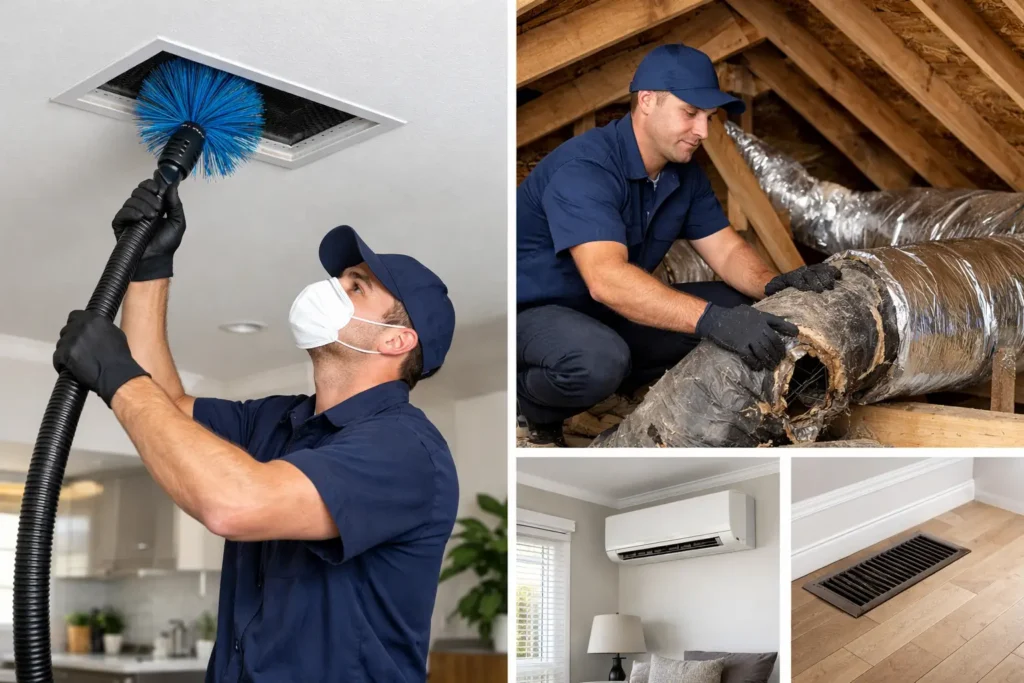
Professional duct cleaning removes accumulated contaminants from the existing system. Using suitable agitation tools and HEPA-filtered extraction equipment, a technician cleans accessible ducts, vents, return-air pathways and relevant system components. The aim is to remove the material affecting air cleanliness and airflow without altering the ductwork itself.
Duct replacement means removing sections of ducting, or in some cases the entire duct network, and installing new materials. This is a repair and upgrade solution rather than a cleaning service. It is needed when the ducts can no longer contain, carry or distribute conditioned air effectively and safely.
The two services solve different problems. Cleaning addresses build-up. Replacement addresses physical failure. In some homes and commercial properties, the best result is a combination of both: replace the damaged sections, then clean the remaining sound ductwork and vents.
When Duct Cleaning Is Usually the Right Choice
Cleaning is generally the sensible option when the ductwork is structurally intact but carrying a noticeable layer of dust and debris. This is common after building work, during a property handover, following years of normal household use or in homes with shedding pets and allergy-sensitive occupants.
You may benefit from professional cleaning if dust reappears quickly around supply vents, airflow has gradually reduced, or the system releases stale odours when heating or cooling starts. Dirty return-air ducts can also draw contaminants back through the system, making the issue feel persistent even after regular household cleaning.
A cleaning service can be particularly valuable where occupants experience allergies or respiratory irritation. It is not a medical treatment, and no contractor should promise to cure health conditions. However, removing settled dust, allergens and debris from the duct system can reduce one avoidable source of airborne particles indoors.
Cleaning also makes sense where the system is otherwise performing well. If rooms reach their set temperature, ducts hold their shape, connections are secure and there is no evidence of water damage, replacing the whole network may offer little value. A thorough clean, combined with filter maintenance and correct vent care, is often enough to restore a fresher, more efficient system.
What a professional clean should involve
Effective duct cleaning is more than vacuuming around the grille. The technician should assess the system, protect the work area, use equipment designed to capture fine particles and clean accessible supply and return ducts methodically. Vents and grilles should also be cleaned, as they are often where visible dust collects first.
For ducted heating and cooling systems, the condition of filters, return-air areas and accessible unit components matters as well. A reputable contractor will explain what can be cleaned, identify any limitations caused by access or duct design, and provide transparent advice rather than recommending work that is not needed.
Signs That Duct Replacement Is Necessary
Replacement becomes the better investment when the ductwork has physical damage that cleaning cannot fix. A clean duct with a large tear still leaks air into the roof space. A clean duct that has collapsed or been crushed still restricts airflow. In these situations, cleaning may improve surface hygiene but will not resolve the underlying performance problem.
Look out for uneven heating or cooling between rooms, whistling noises, unusually high energy use, visible torn flexible ducting, disconnected runs, sagging sections or insulation that is wet and deteriorating. Rodent damage, mould caused by ongoing moisture exposure and brittle older duct materials are also warning signs that need professional assessment.
Strong odours that return soon after cleaning can point to a larger issue, especially if moisture, pests or contaminated insulation are involved. The source must be addressed before the system is cleaned again. Otherwise, the new build-up can begin almost immediately.
Replacement may also be necessary when a system has been altered poorly over time. Extensions, renovations and changes to room layouts can leave ducts undersized, excessively long or incorrectly routed. This can make a heating and cooling unit work harder than necessary. A ducting upgrade can improve distribution and comfort, but it should be designed around the property and existing equipment rather than treated as a one-size-fits-all job.
Why an Inspection Matters Before You Spend
The visible vent tells only part of the story. A dependable technician will inspect accessible duct runs, joins, insulation, return-air areas and signs of leakage before advising on cleaning or replacement. They should consider the age of the system, the type of duct material, current airflow concerns and whether there is a known cause, such as recent renovations or water ingress.
For homeowners, this approach prevents paying for replacement when cleaning will do the job. For property managers and commercial operators, it supports sensible maintenance planning. Replacing only failed sections can often be more practical than replacing an entire network, provided the rest of the system is sound.
Be cautious of anyone who recommends full replacement without explaining where the damage is and why it affects performance. Equally, be wary of a low-cost cleaning offer that ignores clearly damaged ducting. A professional recommendation should match the condition of the system, not a preset sales target.
Cost, Efficiency and Long-Term Value
Duct cleaning is usually less expensive than replacement because it preserves the existing ductwork. It can help improve airflow where dust accumulation is the main restriction and may reduce the amount of debris circulating through the property. Regular cleaning also gives you an opportunity to identify developing problems before they become major repairs.
Replacement has a higher upfront cost because it involves new materials, removal work, access challenges and installation labour. Yet it can be better value when air is leaking from multiple damaged runs or when aged ducts are undermining the performance of an otherwise capable heating and cooling system. Continuing to operate with failed ductwork can waste energy, create uncomfortable rooms and put extra strain on equipment.
The best value is not always the cheapest immediate option. It is the service that fixes the actual cause of poor air delivery or poor air quality. Cleaning intact ducts repeatedly will not repair a split. Replacing ducts because of ordinary dust build-up is just as unnecessary.
A Practical Way to Make the Decision
Start with the symptoms. If the concern is visible dust, stale air, pet hair, post-renovation debris or general indoor cleanliness, arrange a professional duct clean and inspection. If the concern includes major temperature differences, noise, signs of leaks, pest damage or wet insulation, ask for an assessment focused on duct condition and replacement options.
For commercial premises, schools and multi-use properties, consider the maintenance history as well. High occupancy, extended operating hours and more complex ventilation demands can lead to faster build-up and greater wear. Planned inspections help avoid disruptions, particularly where comfort, hygiene and business continuity matter.
Top Air Duct Cleaning provides Melbourne property owners and facility managers with clear advice, professional HEPA-filtered duct cleaning and practical recommendations based on what the system actually needs. If replacement is the appropriate next step, knowing that early helps you plan the work with confidence rather than guessing.
Clean ducts can improve the way a sound system performs, while replacement protects your investment when the ductwork is no longer fit for purpose. For a clear assessment and a free quote, call 0457 666 469 or visit www.topairductcleaning.com.au. The right solution starts with knowing what is inside your ducts and what condition they are in.
