
A split system should not have to work harder just because Melbourne has delivered a hot week, a cold snap or a dusty stretch of weather. Knowing how to maintain split system air conditioning helps protect the air your family or staff breathe, keeps energy use under control and reduces the chance of an inconvenient breakdown when you need comfort most.
A little routine care goes a long way, but it also has limits. Cleaning the filters is a sensible household task. Deep cleaning coils, drains and electrical components is work for a qualified professional. The best results come from doing both at the right time.
How to maintain split system air conditioning at home
Your split system has two main sections: the indoor head unit that delivers conditioned air into the room, and the outdoor condenser that releases heat. Both need clear airflow to operate efficiently. If either side is blocked by dust, dirt, leaves or grime, the system can run longer while delivering less heating or cooling.
Start by checking the indoor unit every month during regular use. If it is used daily through summer or winter, filter cleaning may be needed more often. Households with pets, smokers, young children, allergies or nearby construction work usually see faster dust build-up.
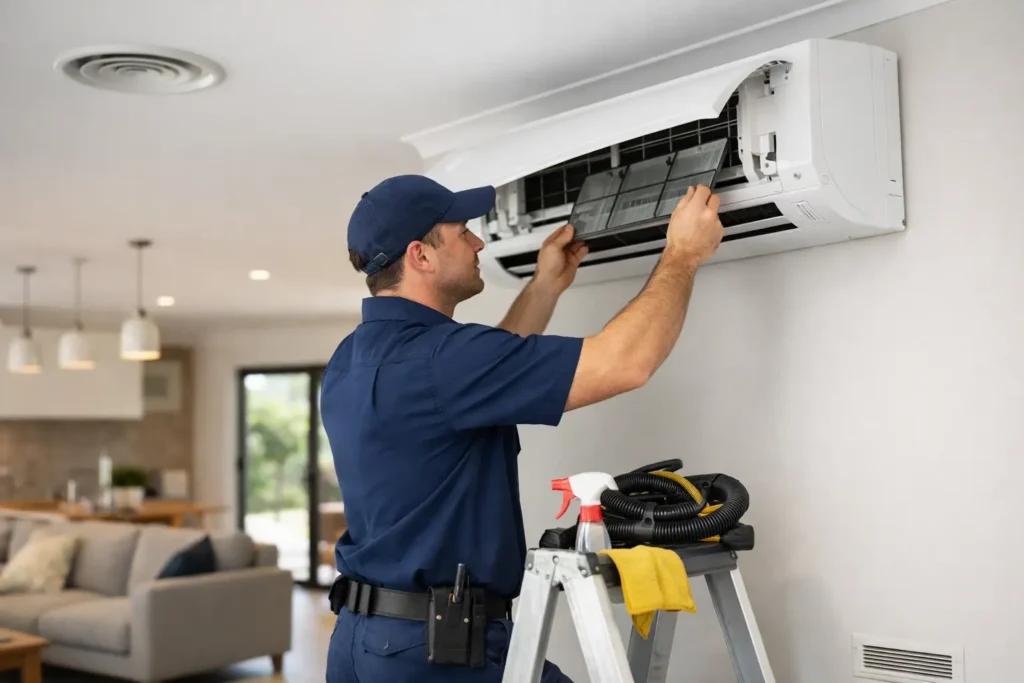
Turn the unit off at the remote and isolate power if you can safely do so before opening the front panel. Remove the washable mesh filters according to the manufacturer’s instructions. Vacuum loose dust first, then rinse the filters with lukewarm water. Avoid harsh cleaners, hot water and scrubbing that could damage the mesh. Let them dry fully in a shaded, well-ventilated spot before reinstalling them.
Do not run the system without filters fitted. They protect the indoor coil from dust and help prevent particles being recirculated through the room. A filter that looks only lightly dusty can still restrict airflow, particularly if it has a fine layer of lint, pet hair or cooking residue.
Wipe visible surfaces, but do not spray inside
Use a soft, dry or lightly damp cloth to clean the outer casing, louvers and air outlet. This keeps surface dust from being drawn back into the unit. Do not spray disinfectant, perfume, mould treatment or water directly into the indoor head. Moisture can reach sensitive electrics, while unsuitable chemicals can damage coil coatings and plastics.
If you notice black spotting, a musty smell, visible mould, water dripping from the indoor unit or debris behind the louvers, filter cleaning alone is unlikely to solve the issue. These are common signs that the coil, drain tray or fan barrel needs a professional split system clean.
Keep the outdoor unit clear and protected
The outdoor condenser needs breathing room. Check it every few months and after strong winds, storms or gardening work. Remove leaves, grass clippings, cobwebs and loose rubbish from around the unit, taking care not to bend the aluminium fins or interfere with wiring.
Aim for clear space around the sides and above the condenser, following the manufacturer’s clearance guidance where available. Dense shrubs, stored boxes, garden furniture and tightly fitted screens can trap heat around the unit. This makes the compressor work harder, which can increase electricity consumption and shorten component life.
Avoid hosing the unit at high pressure. The fins bend easily, and forcing water into electrical areas can cause damage. If the casing is dusty, a gentle wipe around accessible external surfaces is enough for routine care. A technician can safely clean the coil and straighten damaged fins when required.
Shade can help an outdoor unit operate more comfortably in summer, but airflow matters more than shade. Never cover a running condenser or build an enclosure that restricts ventilation.
Watch the drain before it becomes a leak
During cooling and dehumidifying, your split system removes moisture from indoor air. That water travels through a condensate drain. When the drain line becomes blocked by slime, dust or mould growth, water may back up into the wall-mounted unit and eventually drip onto paintwork, flooring or furniture.
Check occasionally that water is draining where expected while the system is cooling. A small amount of steady drainage is normal. Water leaking from the indoor head, gurgling sounds, damp patches on the wall or a sour odour are not normal and should be addressed promptly.
Drain issues can be more than a cleaning problem. Incorrect pipe falls, damaged tubing or a poorly installed drain can also cause repeat leaks. A professional inspection identifies whether the problem is a simple blockage or a fault that needs repair.
Use the right settings to reduce strain
Maintenance is not only about cleaning. Sensible operation reduces wear and keeps rooms comfortable without forcing the system to constantly catch up.
In summer, setting the temperature around 24 to 26°C is typically more efficient than selecting an extremely low temperature. In winter, a setting around 18 to 20°C is often sufficient. Exact comfort needs vary, particularly in schools, offices, homes with elderly residents and spaces with high sun exposure, but large gaps between indoor and outdoor temperatures generally increase energy demand.
Keep doors and windows closed while the split system is operating. Close blinds or curtains against direct summer sun, and make sure furniture does not block the airflow from the indoor head. Use the fan mode occasionally after cooling if recommended by your manufacturer, as this can help dry residual moisture from internal components. It is useful, but it does not replace proper coil and drain cleaning.
Book professional cleaning at the right interval
For many Melbourne homes, professional split system servicing and deep cleaning every 12 months is a practical baseline. More frequent cleaning may be appropriate for high-use systems, rental properties, childcare settings, healthcare environments, commercial premises, pet-heavy homes and spaces affected by dust or smoke.
A proper professional clean goes beyond the filters. It can include cleaning the indoor coil, blower fan, drain tray and drain line, as well as checking the outdoor coil, electrical connections, airflow and overall operation. This helps remove hidden build-up that ordinary wipe-downs cannot reach.
Top Air Duct Cleaning uses professional techniques and HEPA filtration equipment to support cleaner indoor air and better HVAC performance. For property managers and business operators, planned maintenance also makes budgeting easier and reduces the risk of complaints caused by odours, poor airflow or water leaks.
Signs your split system needs attention now
Do not wait for the unit to fail completely if its behaviour has changed. Arrange an inspection when you notice any of the following:
- Weak airflow even after the filters have been cleaned
- Musty, dusty or burning smells when the unit starts
- Water dripping from the indoor unit or staining on nearby walls
- Unusual rattling, buzzing, grinding or gurgling noises
- Reduced heating or cooling performance, or noticeably higher power bills
- Visible mould, black residue or excessive dust around the outlet
A burning smell, repeated tripping of a circuit breaker or signs of electrical damage require immediate attention. Turn the system off and avoid restarting it until it has been assessed by an appropriately qualified technician.
Avoid maintenance shortcuts that cause damage
Online cleaning clips can make a deep clean look simple, but opening a split system too far without the right equipment can create bigger problems. Water can enter wall cavities, fan components can be damaged, and chemicals may corrode coils or leave residue that affects air quality.
Scented sprays and household mould products are also poor substitutes for cleaning. They may mask an odour temporarily, but they do not remove dirt from the fan barrel, coil or drainage system where odours often begin. If mould is present, the source of moisture and contamination needs to be cleaned properly.
Keep a simple record of filter cleans, leaks, unusual noises and professional service dates. This is especially useful for landlords, facility managers and commercial operators managing several systems. Patterns are easier to spot when maintenance is documented, and small faults can be resolved before they become costly disruptions.
Cleaner filters, clear drainage and unobstructed outdoor airflow give your split system the conditions it needs to perform reliably. When the unit smells stale, leaks, struggles to cool or has not had a thorough clean in some time, prompt professional care protects both comfort and indoor air quality.
For dependable split system cleaning and HVAC maintenance across Melbourne, call Top Air Duct Cleaning on 0457 666 469 or visit www.topairductcleaning.com.au for a free quote. A clean system is a practical step towards fresher air and more reliable comfort.
