
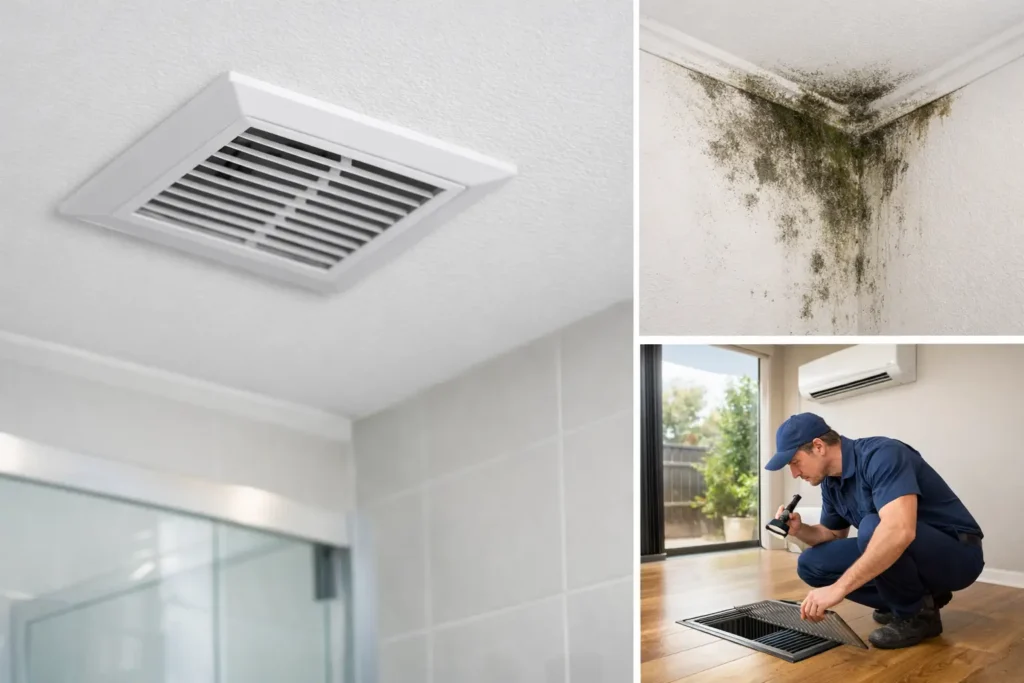
A bathroom ceiling speckled with black marks or a musty smell in the laundry usually points to one underlying issue: moisture has been hanging around for too long. So, do exhaust fans prevent mould? They can play a major role, but only when they remove humid air effectively, are used properly and are kept clean. An exhaust fan is not a cure for an existing mould problem, nor can it overcome a leak, poor drainage or serious ventilation faults on its own.
For Melbourne homes, rentals and commercial properties, managing moisture early is far easier and safer than dealing with widespread mould growth later. The goal is simple: remove damp air before it settles on cool walls, ceilings, windows and furnishings.
How exhaust fans help prevent mould
Mould needs moisture, a surface to grow on and time. Bathrooms, laundries, kitchens and enclosed change rooms often provide all three. Hot showers, clothes dryers, boiling pots and wet towels can quickly raise indoor humidity. When that humid air meets a cooler surface, condensation forms. Repeated condensation creates the damp conditions mould prefers.
A correctly operating exhaust fan draws humid air out of the room and, ideally, discharges it outside the building. This lowers the amount of moisture available to settle on surfaces. It also helps reduce lingering odours and makes the room more comfortable to use.
The important word is “correctly”. A fan that is undersized, clogged with dust, venting into a roof cavity or switched off too soon may move far less moisture than you expect. It may make noise without delivering meaningful ventilation.
Extraction must reach the outside
The best outcome comes from an exhaust system ducted to the outdoors. If moist air is discharged into the ceiling space, it can condense on roof timbers, insulation or ductwork. That may shift the mould risk out of sight rather than solve it.
A ceiling fan grille alone does not confirm where the air goes. Older properties, poorly installed systems and damaged ducting can all compromise extraction. If you see water staining around ceiling vents, smell mustiness in a roof space or notice recurring mould despite using the fan, the discharge path should be checked.
Airflow matters more than fan noise
A fan should clear steam within a reasonable time after a shower or cooking. If the mirror stays fogged long after use, or steam drifts into hallways and bedrooms, airflow may be inadequate. Dust-coated grilles, blocked fan blades, crushed flexible ducting and failed motors are common reasons.
Exhaust fan cleaning is practical maintenance, not just a cosmetic job. Built-up dust can restrict airflow and place extra strain on the motor. In commercial bathrooms, kitchens and busy shared facilities, a neglected fan system can quickly lose performance because it runs more often and handles a greater moisture load.
When an exhaust fan will not stop mould
Ventilation is one part of moisture control. It cannot prevent mould if water is entering or remaining in the building for another reason. A fan will not fix a leaking shower recess, roof leak, burst pipe, rising damp, overflowing gutter or condensation caused by an uninsulated cold surface.
It is also less effective when a room has no replacement air entering it. Exhausted air needs a path to be replaced, such as the gap beneath a door or an opened window where appropriate. A tightly sealed room may limit how much air the fan can draw out.
In some properties, mould forms because the room stays cold and damp for long periods, even without obvious steam. Bedrooms with limited sunlight, poorly ventilated wardrobes and rooms dried with wet clothes indoors are common examples. In those cases, better heating practices, passive ventilation, insulation improvements or a dehumidifier may be needed alongside mechanical extraction.
Existing mould also needs proper attention. Simply running a fan does not remove spores or clean contaminated surfaces. Small, isolated patches may be cleaned safely using an appropriate method for the surface, but larger or recurring growth deserves professional assessment. The source of the moisture must be corrected, otherwise the problem will return.
Using bathroom and laundry fans properly
A reliable fan only helps when it is switched on at the right time. Start it before or as you begin showering, cooking or drying clothes, rather than waiting until the room is already full of steam. Keep it running afterwards so it can remove the humidity left in the air.
As a practical guide, leave a bathroom fan on for around 15 to 20 minutes after a shower. A run-on timer can make this easier, particularly in rental properties, workplaces, schools and shared amenities where people may forget to switch it off later. If the room is still visibly steamy after that time, the system may need inspection rather than simply a longer running period.
In laundries, avoid drying washing indoors where possible. If a dryer must be used inside, ensure it is suitable for the space and that the room has effective ventilation. Keep wet clothing and towels from sitting in enclosed hampers or against walls for extended periods.
For kitchens, use the rangehood whenever boiling, frying or simmering. Kitchen extraction also needs regular cleaning because grease and dust can reduce performance. A rangehood that recirculates air through filters may improve odours and capture some grease, but it does not remove moisture outdoors in the same way as a ducted extraction system.
Signs your exhaust fan needs cleaning or repair
Most people notice a fan only when it stops entirely. Performance usually declines much earlier. A quick check after a shower can reveal whether it is doing its job. If there is little pull at the grille, excess noise, vibration, drips, slow steam clearance or a persistent musty odour, arrange an inspection.
Look for dust packed into the cover, staining around the vent and loose or damaged ducting where accessible. Do not attempt electrical repairs yourself. Switching off power and gently vacuuming a removable grille may be appropriate for some units, but fan motors, wiring and roof-space ducting should be handled by qualified professionals.
For property managers and commercial operators, scheduled cleaning is particularly valuable. Clean vents and fans support better airflow, reduce dust circulation and help identify developing issues before complaints, mould damage or downtime become more costly.
Preventing mould takes a whole-property approach
Think of an exhaust fan as the first line of defence against everyday steam, not the whole solution. Good mould prevention combines effective extraction with prompt leak repairs, regular cleaning, sensible heating and enough fresh-air movement through the property.
After showering, wipe down heavily wet glass and tiles if condensation is significant. Open internal doors once the room has aired, unless doing so would spread humidity into colder areas. Keep furniture slightly clear of cold external walls where possible, and check wardrobes, window frames and behind large items for early signs of dampness.
Air conditioning and ducted heating systems also deserve attention. Dust, debris and moisture around vents can affect indoor air quality and make odours more noticeable. While HVAC cleaning does not replace moisture control, a professionally cleaned system supports cleaner airflow throughout the property.
When to call a professional
Call for expert help when mould keeps returning, the fan has weak suction, moisture appears in the ceiling cavity, or there is an unexplained damp smell. These are signs that the issue may be more than surface condensation. Early inspection can help protect building materials, indoor air quality and the comfort of everyone using the space.
A clean, properly operating exhaust system gives moisture fewer places to settle and mould fewer chances to take hold. For professional exhaust fan cleaning, duct cleaning and practical indoor air quality support across Melbourne, contact Top Air Duct Cleaning for a free quote on 0457 666 469 or visit www.topairductcleaning.com.au.
